AfricaHeadline | Africa Digital Economy
Across sub-Saharan Africa, a decade of heavy investment in digital infrastructure has produced mixed economic returns. Mobile broadband coverage now exceeds 70% of the population in several countries, according to GSMA estimates, yet less than 45% of Africans actively use mobile internet.

AfricaHeadline Reports Team
editorial@africaheadline.com
This persistent gap between access and adoption, widely described as the “usage gap”, represents not only a social challenge but a misallocation of capital. Benin’s Alafia digital microcredit platform offers a contrasting approach, shifting the focus from infrastructure expansion to use-case-driven digital economics.
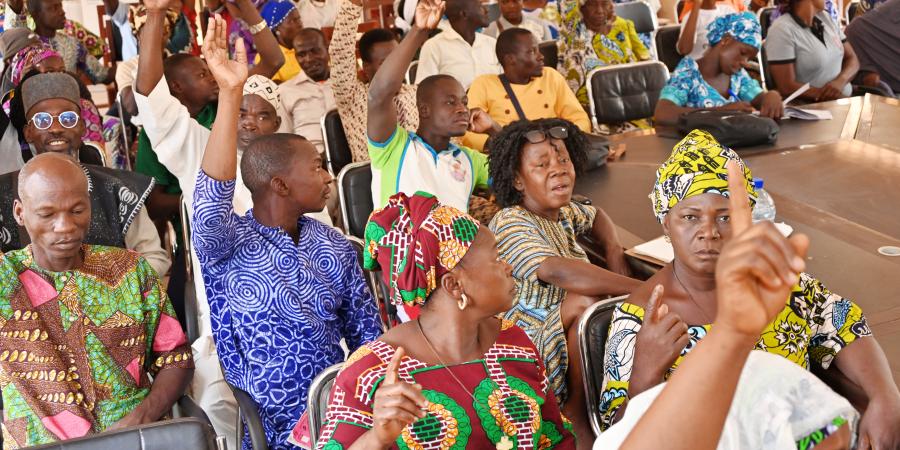
Launched as a government-backed, mobile-based microcredit service, Alafia allows citizens to access small loans through basic mobile phones, without bank accounts or formal credit histories.
This matters in a region where financial inclusion averages below 50%, compared with more than 80% in Kenya, where mobile money platforms such as M-Pesa dominate. Benin’s strategy differs fundamentally.
Rather than prioritising payments or lowering data prices, it uses credit as the primary adoption trigger, directly linking digital access to income generation. World Bank studies suggest that microcredit, when paired with basic digital and financial literacy, can increase household income by 10–20%, particularly among women in the informal economy.
The comparative advantage becomes clearer when African digital strategies are viewed through three broad models. The first is infrastructure-led, focused on fibre rollout and network coverage.
The second is price-led, relying on tax cuts or subsidies that typically reduce costs by 5–10% but show limited long-term impact on usage. The third is use-case-led, exemplified by Alafia, where adoption is driven by immediate economic value. GSMA data indicate that relevance and trust can explain up to 30% of the variance in mobile internet adoption, a larger effect than affordability alone.
Benin’s experience supports this finding: many first-time Alafia users subsequently adopt other digital services, increasing usage without additional infrastructure spending.
From a cost-benefit perspective, the implications are significant. Extending broadband infrastructure into remote rural areas is capital-intensive and often delivers low short-term returns.
By contrast, deploying targeted digital services with clear economic utility requires far lower public investment while generating faster adoption. Over time, such platforms can contribute to higher productivity, gradual formalisation of informal economic activity and a broader future tax base, improving the overall efficiency of digital public spending.
As African governments pursue the African Union’s 2030 digital transformation targets, Benin’s Alafia illustrates a critical policy lesson.
Africa’s digital divide is no longer primarily an engineering problem. It is an economic design challenge, and the evidence increasingly suggests that use-case-driven digital finance can deliver higher social and economic returns than connectivity expansion alone.