


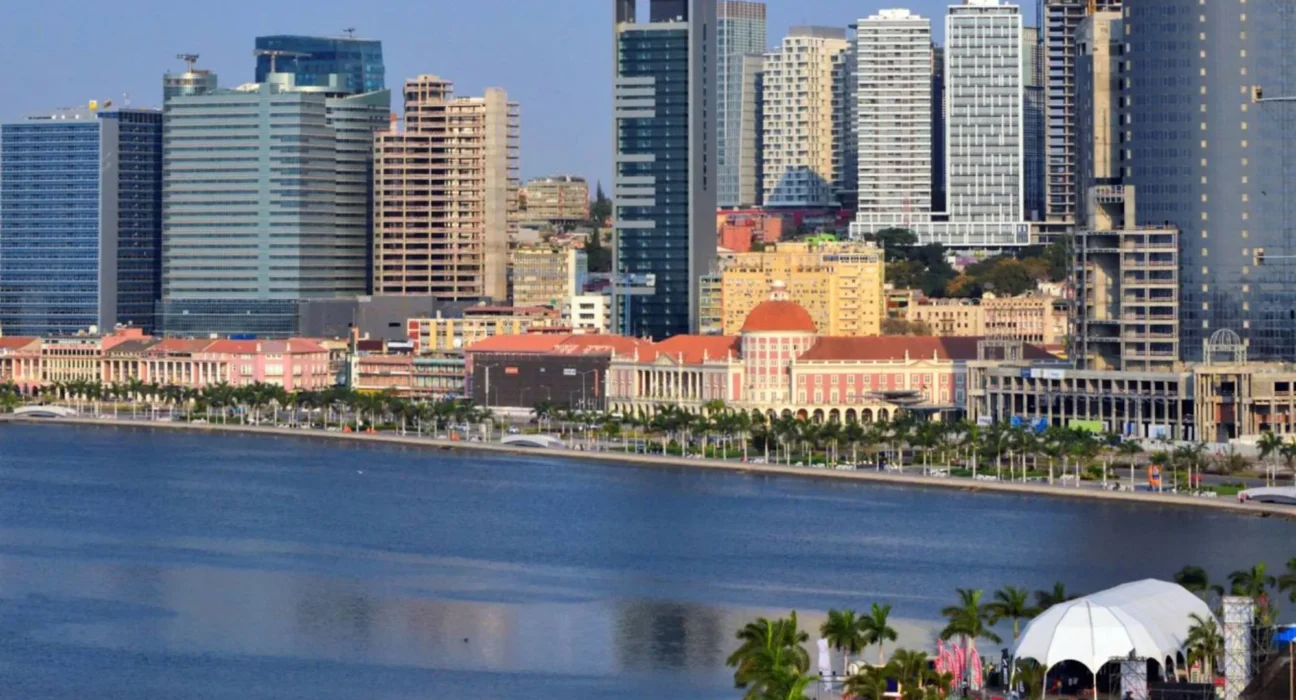
AfroBasket 2025 | Luanda
Luanda , August, 2025 – The group phase of AfroBasket 2025, taking place in Angola from August 12 to 24, has come to a close, offering a clear snapshot of Africa’s basketball hierarchy.
Sixteen national teams competed fiercely across five groups, with the results highlighting both the dominance of traditional powerhouses and the rise of new challengers. Packed arenas, passionate crowds and outstanding individual performances defined the first round, setting the stage for high-stakes elimination games.

AfricaHeadline Reports Team
editorial@africaheadline.com
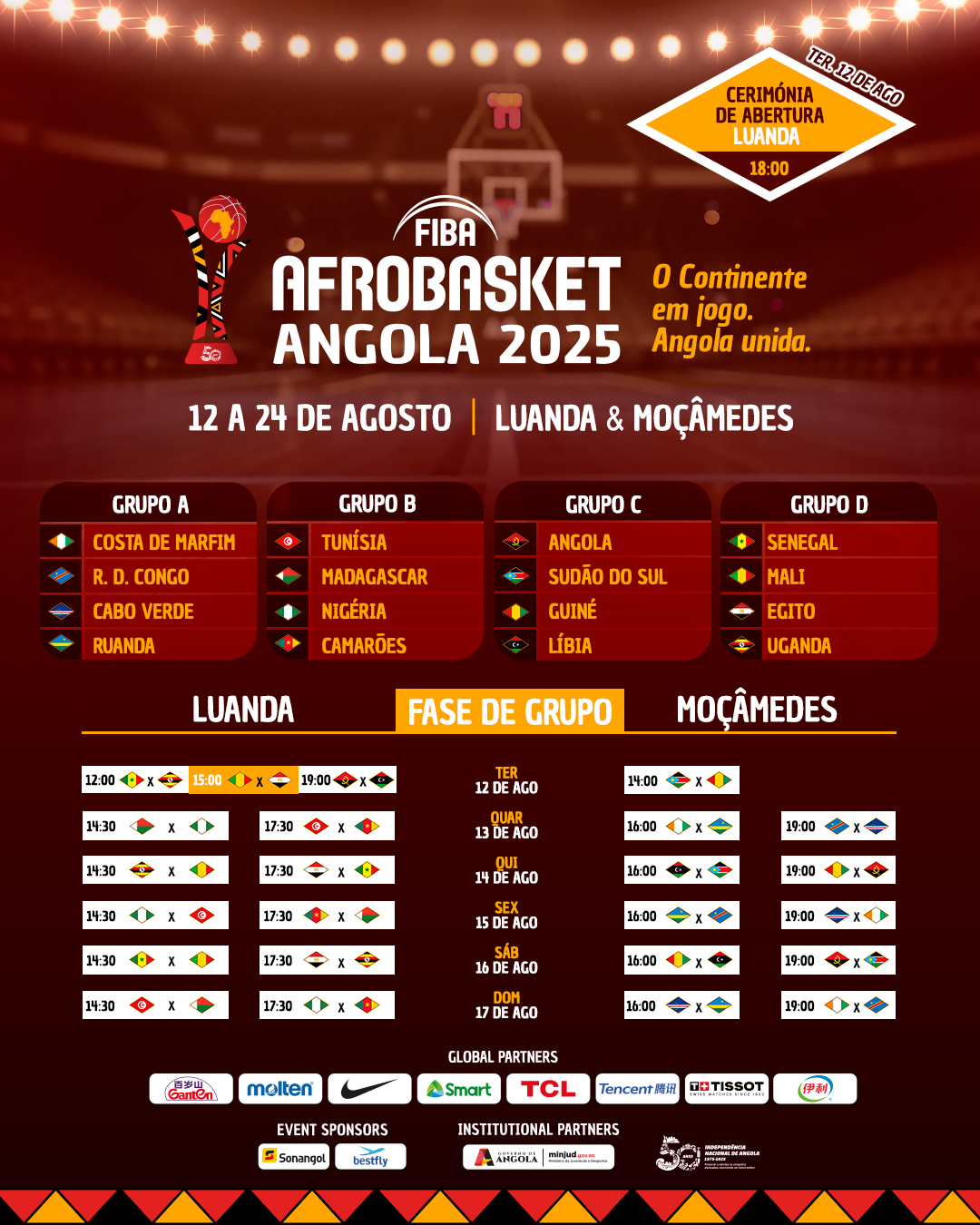
Group A – Côte d’Ivoire in Control, Tavares Steals the Spotlight
Côte d’Ivoire established itself as the clear leader of Group A, finishing with two wins from two games and collecting 4 points.
The Ivorians combined defensive solidity with fast-paced offensive transitions, neutralizing the main threats posed by their rivals. Cape Verde and DR Congo finished level with one win each (3 points apiece), while Rwanda struggled and closed the group winless, with just 2 points to its name.
Despite Cape Verde’s inconsistency, Edy Tavares once again proved to be one of the most dominant figures of African basketball. The Real Madrid center averaged 13.5 rebounds per game, including a personal record of 19 boards in the opening game against DR Congo.
His commanding presence in the paint not only led the tournament’s rebounding charts but also reminded observers why he is considered among the continent’s finest players globally.
The group also delivered thrilling contests, with some games decided only in the final minutes, particularly the showdown between Cape Verde and DR Congo. Côte d’Ivoire’s consistency and Tavares’s individual brilliance underlined the group’s narrative: veteran dominance on one side, rebuilding challenges on the other, as Rwanda continues its long-term project in continental basketball.
Group B – Nigeria and Cameroon Rise, Tunisia in Crisis
Nigeria reaffirmed its status as one of the tournament’s leading contenders, completing the group stage unbeaten with two wins from two games. Their emphatic 87–66 victory over 2021 champions Tunisia was the statement of intent, with Josh Okogie exploding for 33 points in one of the tournament’s standout individual performances.
Cameroon also finished undefeated, confirming the growth of its new generation of players and strengthening its reputation as an emerging powerhouse.
Tunisia, once one of the most feared teams on the continent, endured a disastrous start with back-to-back defeats. Their offensive struggles, coupled with an overreliance on individual plays, highlighted deeper issues within the squad.
For the North Africans, the group stage exposed vulnerabilities that could limit their ambitions of reclaiming former glory. Madagascar also finished winless, further underlining the gap in experience compared to the continent’s elite.
The battle for supremacy between Nigeria and Cameroon showcased the versatility of both squads. Nigeria combined strong inside play with efficient three-point shooting, while Cameroon relied on physicality and athleticism to overpower opponents. As both teams march forward unbeaten, the warning has been sent to the rest of the field: they are prepared for the knockout rounds.
Group C – Angola Undefeated with Bruno Fernando Shining
Host nation Angola confirmed its status as a perennial African basketball powerhouse, completing the group stage with three wins in three games (6 points).
The Palancas Negras averaged 78 points per game offensively, although defensive lapses—conceding an average of 74—remain a concern. Guinea followed in second place with two victories (5 points), while South Sudan collected just one win (4 points). Libya, still struggling to establish consistency, finished winless with 3 points.
The spotlight was firmly on Bruno Fernando, who turned in a dominant performance against Equatorial Guinea, posting 14 points and 14 rebounds.
With an average of 11 rebounds per game, Fernando currently ranks third in the tournament’s rebounding leaderboard, trailing only Edy Tavares and Uganda’s Jonathan. His presence inside the paint has been vital for Angola’s perfect record and has energized the home crowd in Luanda.
The atmosphere in the arenas has been nothing short of electric, with between 10,000 and 12,000 fans packing the stands for every Angola game.
The unwavering support reflects basketball’s unique role in Angolan sporting culture. Analysts argue that Angola is not just living up to expectations as host but is also mounting a serious bid to return to the summit of African basketball, where it once reigned supreme.
Group D – Egypt and Senegal Confirm Their Weight
Egypt dominated Group D with three wins from three outings (6 points), boasting one of the best defensive units in the competition. The Pharaohs conceded an average of only 63 points per game, proving their discipline and tactical balance. Senegal finished second with two victories (5 points), while Mali (1–2, 4 points) and Uganda (0–3, 3 points) ended the campaign at the bottom of the table.
Egypt’s collective strength has reinforced its status as one of the tournament favorites.
The squad, featuring several players with European league experience, displayed cohesion and resilience, particularly on the defensive end. Their ability to dictate tempo and suffocate opponents in half-court situations has been a defining characteristic.
Senegal, meanwhile, demonstrated intensity and physical dominance, combining speed with power in transition. Even with one defeat, the Lions remain among the most dangerous sides heading into the elimination phase. Together, Egypt and Senegal’s campaigns reaffirm the strong influence of North and West African basketball traditions on the continental stage.
Group E – Still Awaiting Full Confirmation
Official standings for Group E are yet to be fully confirmed by FIBA, leaving the outcome finely poised. Early indications suggest a tightly contested battle, with traditional heavyweights expected to occupy the top two spots. The suspense surrounding the group adds extra anticipation as fans wait to see how the bracket for the knockout rounds will unfold.
Although the data remains incomplete, one clear theme has emerged: competitiveness is at an all-time high. No team in this group has been able to coast through its games, and every possession has carried weight.
The results will be crucial in shaping the dynamics of the next stage.
For Angola and the other top contenders, the final Group E standings could alter matchups dramatically, raising the stakes further. With the elimination rounds looming, the uncertainty only heightens the drama of the competition.
Individual brilliance has lit up the group stage. Edy Tavares (Cape Verde) continues to dominate the glass, averaging 13.5 rebounds per game, including his record-setting 19-board performance.
Bruno Fernando (Angola) ranks third overall with 11 per game, while Josh Okogie (Nigeria) has delivered the best single-game scoring performance so far with 33 points.
For the first time in nearly two decades, Libya managed to secure a spot among the top two of its group—a testament to the growing balance of competition across the continent. Attendance figures have also impressed:
Moçâmedes reached its maximum of 3,100 spectators per game, while Luanda’s arenas have been consistently sold out whenever Angola takes the floor.
The list of unbeaten teams so far, Côte d’Ivoire, Nigeria, Cameroon, Angola and Egypt, illustrates the mixture of tradition and renewal shaping this year’s edition. With each side combining experience, tactical nous and rising stars, the elimination stage promises even greater intensity.


