


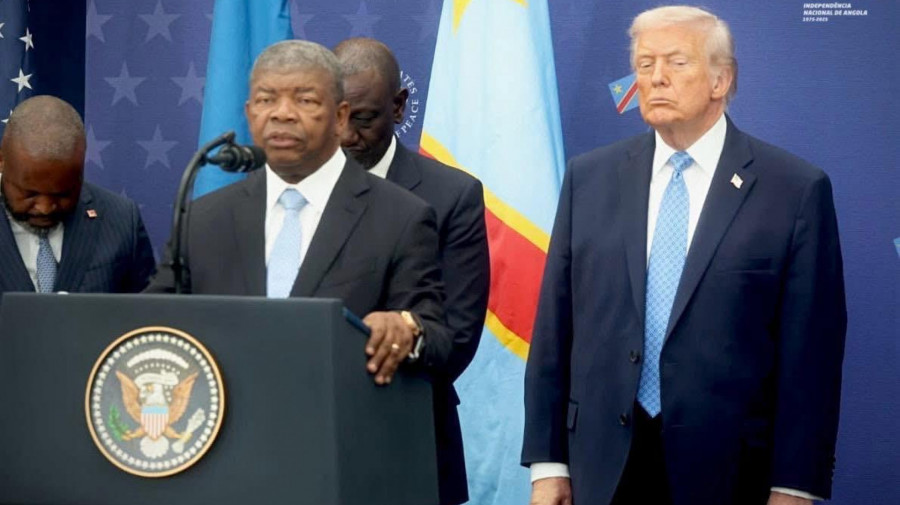
Lagos — At the White House signing ceremony marking a new attempt at peace between the Democratic Republic of Congo and Rwanda, Angola’s President João Lourenço delivered a message that cut through the diplomatic formalities: real development is impossible without peace.

AfricaHeadline Reports Team
editorial@africaheadline.com
Standing alongside the Congolese and Rwandan delegations, Lourenço referenced the massive Inga Dam project in the DRC, one of Africa’s most ambitious energy initiatives, to underline a broader point. Projects of that scale, he said, “can only move forward when stability prevails.”
It was a subtle but unmistakable reminder that the region’s future will be shaped far more by economic integration than by military tensions.
Lourenço’s intervention also reaffirmed Angola’s role as the central mediator of the Luanda Process, the diplomatic framework that has guided negotiations between Kinshasa and Kigali amid persistent violence in eastern Congo. For months, Angola has been the quiet but steady broker attempting to hold a fragile peace together.
But despite the symbolism of the moment, the distrust between the two sides remains palpable. Congolese officials continue to accuse the M23 rebel group of violating the June ceasefire, while Rwanda maintains that Kinshasa has not fulfilled key commitments. Analysts caution that this agreement, like many before it, will face immediate tests on the ground.
Still, there are signs that economic incentives may help push the peace effort forward. Just last week, Qatar announced a staggering US$21 billion investment package for the DRC, one of the largest in the country’s recent history. Business networks linked to the former U.S. administration are also weighing new mining and infrastructure deals, pointing to renewed global interest in Congo’s mineral wealth and strategic importance.
For Angola, the developments in Washington reinforce its growing diplomatic influence and its continued push for regional stability as the foundation for economic transformation across Africa.
As the parties move into the implementation phase, all eyes will be on whether the commitments agreed in Washington can survive the realities on the ground.
And for President João Lourenço, the message remains clear:
peace is not only a political necessity, it is an economic imperative.


