


EDITORIAL | AFRICAHEADLINE
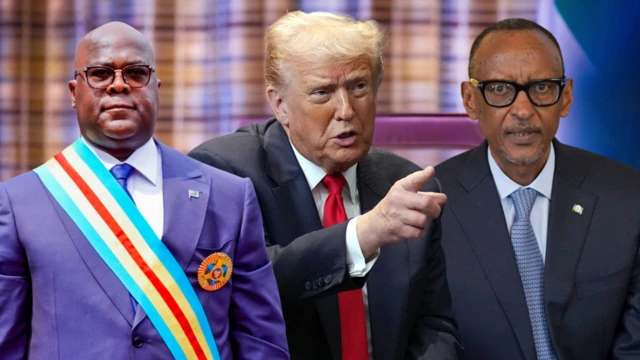
The signing of the peace agreement between the Democratic Republic of Congo (DRC) and Rwanda, formalized in Washington, marks an important step toward regional stability. But this moment calls for more than diplomatic ceremony. It demands sober reflection on the roots of the conflict, the responsibilities involved and the path ahead for a region devastated by decades of violence.

AfricaHeadline Reports Team
editorial@africaheadline.com
The conflict in eastern Congo has been extensively documented by United Nations reports, humanitarian organizations and independent researchers. These sources describe a persistent pattern of external interference, including support for armed groups that severely undermined civilian security.
The war destroyed villages, separated families and forcibly displaced millions, creating one of Africa’s most complex and enduring humanitarian crises.
Survivors’ testimonies capture the depth of this human suffering:
“I lost my entire family. The war left us with nothing.”
— Survivor from Rutshuru
“We fled again and again. The villages disappeared overnight.”
— Displaced resident from Nyiragongo
Human Rights Watch identifies the conflict as “a cycle of violence sustained by external intervention,” while Amnesty International stresses that civilians have “borne a disproportionate share of a war they did not choose.”
International reports consistently point to Rwanda’s role in destabilizing eastern DRC, particularly through its involvement with armed groups operating in the region. While Kigali cites internal security concerns, the reality is that Congolese communities endured the most severe consequences of this involvement.
For too long, the international response was slow and insufficient. The signing of the peace agreement reflects a shift in global and regional understanding: the stability of the Great Lakes cannot remain hostage to external military agendas.
President Félix Tshisekedi faced, from the outset of his mandate, the enormous task of restoring stability and safeguarding Congo’s territorial integrity. His commitment to diplomacy was crucial in breaking a cycle of violence that seemed unending.
African leaders’ presence at the Washington signing — Angola, Kenya, Uganda, Burundi and Togo — demonstrates a shared continental consensus that political rather than military solutions are needed.
Angola, through the Luanda Process, played a decisive mediating role. As Angolan President João Lourenço emphasized:
“Peace must rest on the security of populations and on respect for the sovereignty of states.”
Kenyan President William Ruto echoed that view:
“Africa cannot allow internal conflicts to persist indefinitely without political resolution.”
These statements illustrate Africa’s growing diplomatic maturity and its commitment to resolving regional crises.
The signing in Washington is a significant step forward, but it does not resolve the many challenges that remain. Rebuilding affected areas, facilitating the return of displaced populations, disarming combatants and restoring trust among communities will require consistent implementation and coordinated action.
Peace — though essential — cannot erase decades of trauma.
Its scars remain in the families who lost everything, in the youth who grew up under violence and in the villages that no longer exist.
The agreement signed this week offers a historic opportunity to turn the page on a long and painful chapter. But it also serves as a reminder that stability is not achieved through signatures alone, but through the rigorous fulfillment of commitments.
The Great Lakes region now faces a defining test: proving that it has learned from past mistakes and is prepared to build a future grounded in peace, security and development.
History will judge the actors involved.
But the future will be shaped by the choices made from this moment onward.


