


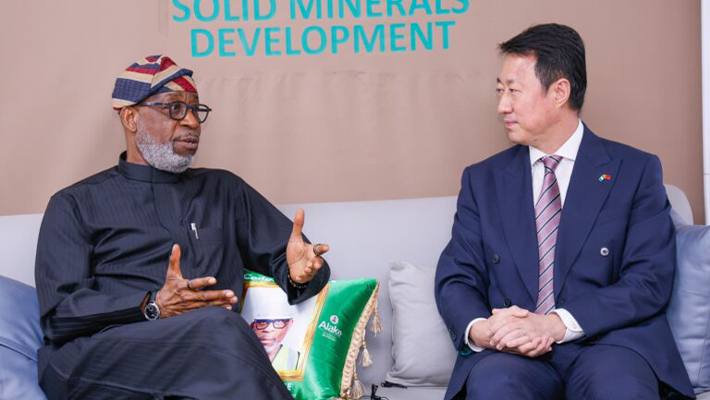
Lagos – Nigeria’s economy may be on the cusp of an industrial transformation as major Chinese automakers signal strong interest in setting up electric vehicle (EV) assembly and manufacturing plants across the country. The development, confirmed by multiple government sources, could mark a strategic shift away from the country’s decades-long dependence on oil and toward a more diversified, technology-driven future.

AfricaHeadline Reports Team
editorial@africaheadline.com
Exclusive documents reviewed by AfricaHeadline reveal that at least three major Chinese firms — including BYD Auto, Changan Automobile, and Geely — are in advanced talks with Nigerian authorities. Combined, their proposals could bring an estimated $2.5 billion in direct investment over the next five years.
Negotiations currently focus on tax incentives, land acquisition within Nigeria’s Special Economic Zones (notably in Ogun and Anambra states), and assurances on regulatory stability. Nigeria’s Minister of Industry, Trade, and Investment, confirmed that formal memoranda of understanding (MoUs) could be signed before the end of Q3 2025.
“China sees Nigeria not just as a market, but as a gateway to West Africa’s 400 million consumers,” said Professor Ayo Bello, an industrial policy analyst at the University of Lagos.
With Nigeria’s unemployment rate officially standing at 33.3%, the government is touting the EV initiative as a critical job creator. Initial projections from the National Automotive Design and Development Council (NADDC) suggest the industry could generate over 30,000 direct jobs and 120,000 indirect ones by 2030.
However, labour unions remain cautious. “We don’t want another wave of assembly plants where we do the screwing, and the foreign partners keep the patents, the profits, and the know-how,” said Emmanuel Obiakor, General Secretary of the Nigerian Industrial Workers Federation.
China’s move is also seen as a response to global supply chain disruptions and rising costs of sourcing rare earths and cobalt — both of which are more easily accessed through African routes. For Nigeria, a thriving EV sector could help slash vehicle import bills, which currently exceed $8 billion annually, and ease pressure on foreign reserves amid a weakening naira.
But the Central Bank of Nigeria (CBN) has raised red flags. A recent internal report warns that without strict local content laws and clear benchmarks for technology transfer, Nigeria may again become a low-skill outpost for foreign manufacturers.
“The risk is asymmetrical benefit — they get access to our market and raw materials, we get unsustainable jobs and environmental liabilities,” noted a senior CBN official who requested anonymity.
Nigeria’s EV bet also carries geopolitical implications. As global markets pivot toward clean energy, Abuja’s alignment with Chinese green-tech ambitions may boost the country’s international standing — particularly if it successfully positions itself as a regional EV hub. The African Continental Free Trade Area (AfCFTA) could offer additional advantages, turning Nigeria into a launchpad for exports across the continent.
Still, experts caution that infrastructure deficits — especially erratic electricity supply — and inconsistent policy implementation could derail the plan. The World Bank estimates that Nigeria needs over $100 billion in infrastructure investments over the next decade to support industrial expansion.
The stakes are high. If Nigeria successfully leverages the incoming Chinese investment to build a sustainable EV ecosystem — including battery manufacturing, local supply chains, and technical education — it could usher in a new industrial age. Failure to act decisively, however, may turn this opportunity into another cautionary tale of extractive economics dressed in green.
“This could be Nigeria’s most significant economic pivot since oil was discovered in Oloibiri. But the country must drive — not just ride — the electric wave,” said Ngozi Akanji, energy analyst at African GreenTech Watch.


