AfricaHeadline – In a Nutshell
Washington peace deal: What’s at stake for the DRC, and why it matters now
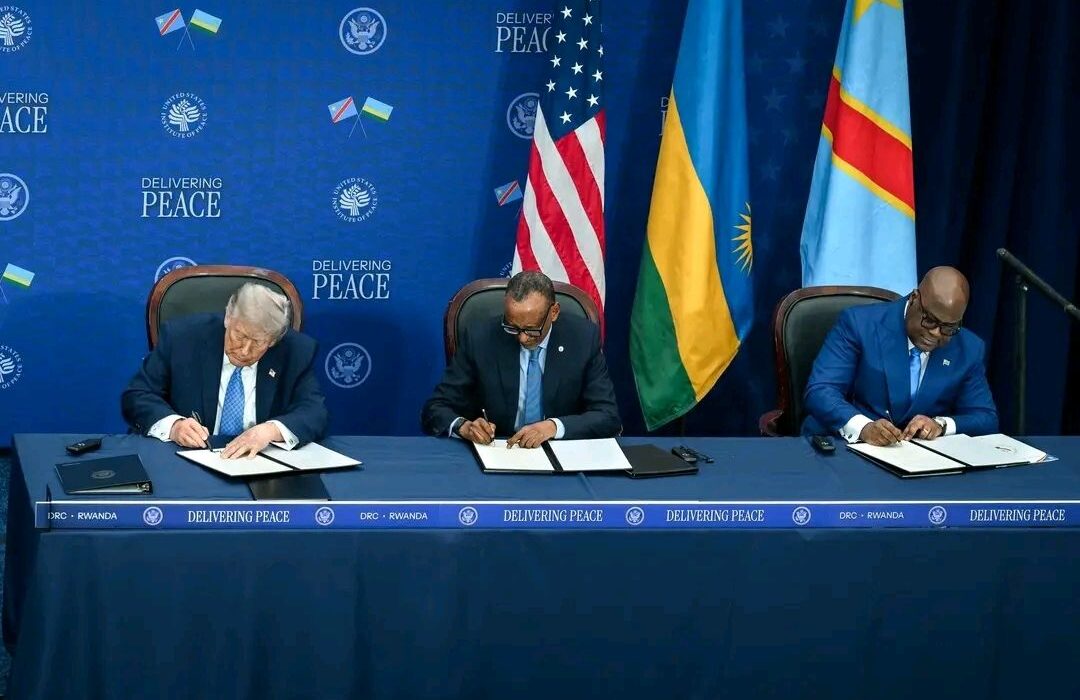
Lagos — The Democratic Republic of Congo and Rwanda signed a landmark peace agreement in Washington on Thursday, marking the most significant diplomatic effort in decades to end the prolonged conflict in eastern Congo. The accord, facilitated by the United States, seeks to halt violence that has displaced millions and destabilized the Great Lakes region for more than 30 years.

AfricaHeadline Reports Team
editorial@africaheadline.com
According to analysts familiar with the negotiations, the deal represents a major political breakthrough, but its success will depend on verification mechanisms, regional cooperation and political will from both governments.
Rwanda issues long-awaited acknowledgment
For the first time in an official document, Rwanda recognized that its forces and affiliated armed groups have been operating inside Congolese territory.
Kigali has denied such involvement for years, despite mounting evidence from UN reports and regional observers.
Experts say the admission is “a diplomatic and legal turning point” that strengthens Kinshasa’s position and reframes the international narrative around the conflict.
Implementation is the real test
Under the agreement, Rwanda is expected to withdraw its forces, cease support to armed groups — including the M23 — and allow verification by independent monitors.
But analysts caution that similar commitments have failed in the past.
“This is a historic step,” one expert told AfricaHeadline. “But implementation is where every peace agreement in the region has collapsed.”
No constitutional breach by Tshisekedi
Questions emerged in Kinshasa regarding whether President Félix Tshisekedi violated the Constitution by signing without parliamentary approval.
Legal experts interviewed by AfricaHeadline say the president acted within his mandate: international agreements are signed by the executive first and later submitted to Parliament for ratification.
Information pressure mounts
As military tensions ease, the information battle intensifies.
Specialists warn that misinformation campaigns, including networks linked to Kigali, may attempt to undermine the deal domestically.
Authorities in Kinshasa face the challenge of communicating clearly, countering false narratives and maintaining public support.
Economic package could reshape the region
A parallel economic framework was announced alongside the peace deal, focusing on U.S. support for infrastructure, governance reforms and the long-delayed Grand Inga hydroelectric project.
If fully implemented, experts say the package could attract billions in investment.
But economic analysts also warn of opportunistic actors seeking to benefit from Congo’s mineral wealth.
Regional stakes are high
If successful, the Washington Agreement could reposition the DRC as a stabilizing force and emerging economic hub in Central Africa.
If not, it risks reigniting violence and deepening regional divides.
What comes next
Independent verification of Rwanda’s troop withdrawal
End of support to the M23
Ratification by the Congolese Parliament
Launch of U.S.-supported economic programs
Reduction in violence in North and South Kivu
Re-establishment of state authority in conflict zones
AfricaHeadline – Washington Desk
editorial@africaheadline.com