Washington has lost patience with Kagame
- AmericaCentral AfricaDemocratic Republic of the Congo (DRC)OpinionsRwandaWorld
- December 19, 2025

By AfricaHeadline Opinion
In international politics, tone matters, and sometimes a change in tone signals a strategic break. President Donald Trump’s remarks on Rwanda’s President Paul Kagame represent precisely that moment. By branding Kagame a war criminal, accusing him of serial bad faith, and declaring that the era of dialogue is over,

AfricaHeadline Reports Team
editorial@dw-demosnewstaion.online
Trump delivered a message Washington had long avoided sending: Kagame is no longer viewed as a partner, but as a liability.
More telling than the insult itself was the signal that followed. Trump openly encouraged pro-democracy Rwandan activists to engage with networks in the United States, an extraordinary step that hints at a willingness to support or organize a political alternative in exile. In diplomatic terms, this amounts to a rupture. In practical terms, it is a warning that Kigali’s political insulation in Washington is eroding.
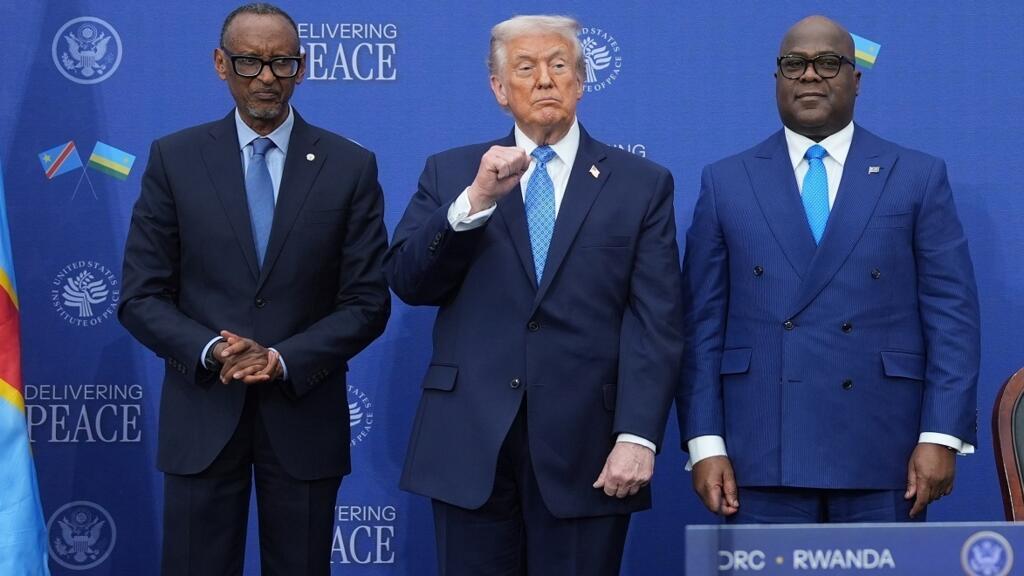
For years, Rwanda benefited from a carefully managed reputation as a disciplined and effective Western ally in Central Africa. That image is now collapsing under the weight of mounting evidence of Kigali’s involvement in eastern Democratic Republic of Congo through its support for the M23. What was once an open secret has become an open embarrassment.
It is no coincidence that the AFC/M23 announced a withdrawal from Uvira amid this pressure. Framed as a “confidence-building measure,” the move looks more like a tactical pause than a genuine step toward peace. History suggests caution: M23 withdrawals have often been temporary, designed to ease pressure rather than end violence.
Kigali’s response has followed a familiar script. Government-aligned media accuse Congolese forces of targeting Banyamulenge civilians, an argument long used to justify cross-border intervention. The instrumentalization of minority protection has become central to Rwanda’s regional playbook, masking a persistent violation of Congolese sovereignty.
Meanwhile, the humanitarian toll continues to rise. More than 500,000 people have been displaced in South Kivu in recent weeks, including over 100,000 children. Nationwide, five million are internally displaced, and 24 million face food insecurity. These numbers expose the cost of prolonged inaction by the international community.
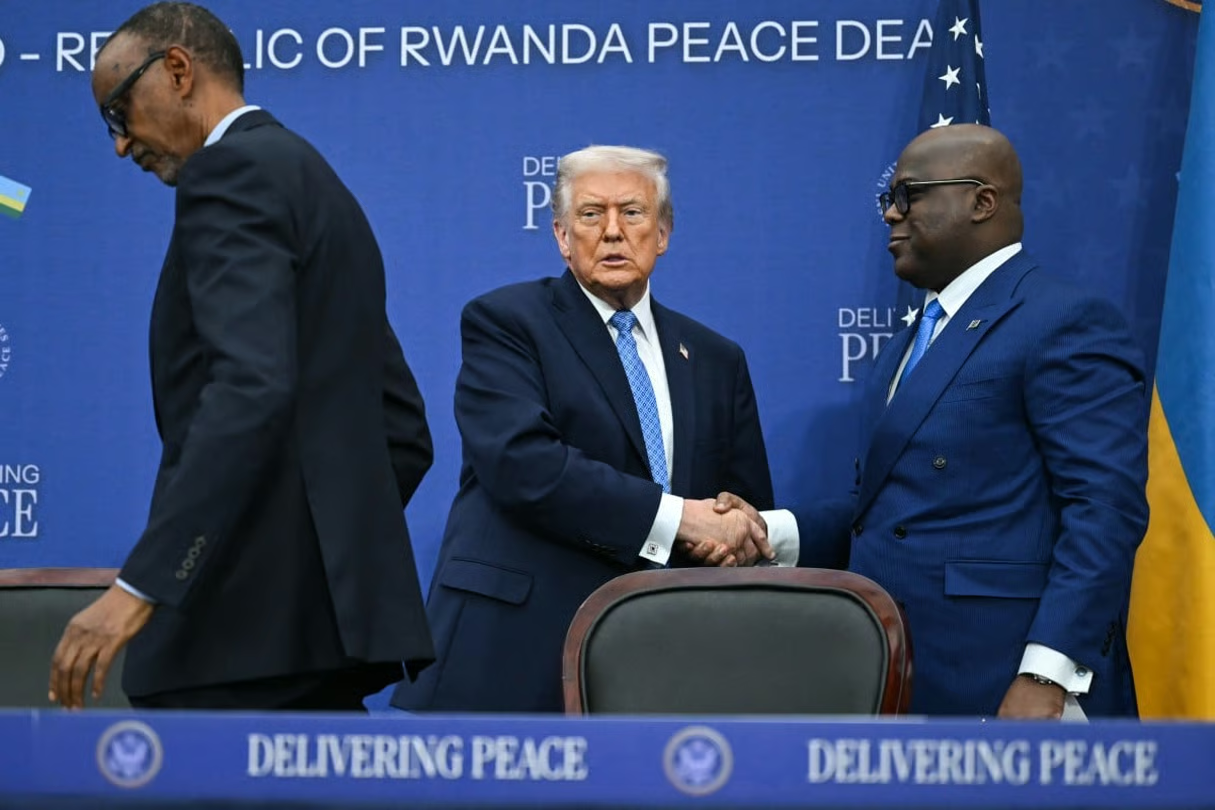
Congolese Foreign Minister Thérèse Wagner’s call for targeted sanctions, a minerals embargo, and Rwanda’s suspension from U.N. peacekeeping is not radical, it is proportional. Allowing Rwanda to wear the U.N. blue helmet while destabilizing a neighbor is a contradiction that undermines the credibility of international norms.
The choice now facing Washington and its allies is stark: either enforce the rules they claim to defend, or accept that sovereignty in Africa is optional. The tone has changed. What remains to be seen is whether policy will follow.