Sonangol plans nationwide EV charging network by 2028 as energy transition gains pace
- AngolaBusiness and NetworkingSouthern Africa
- September 4, 2025
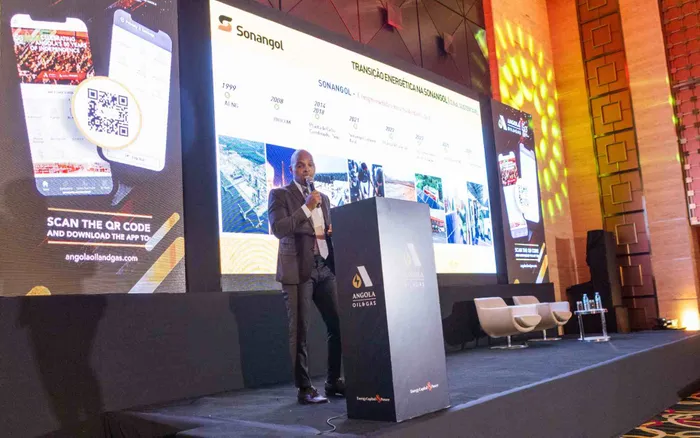

Luanda – Angola’s state oil company Sonangol is preparing to deploy more than 100 electric vehicle charging stations (EVCPs) by 2028, marking one of the country’s most ambitious moves toward transport decarbonization.

AfricaHeadline Reports Team
editorial@dw-demosnewstaion.online
The plan was unveiled at a pre-conference workshop ahead of the Angola Oil & Gas 2025 summit by Jelson Pereira, Head of Operational Management of Energy Assets at Sonangol Gas and Renewable Energies. The announcement underscores Sonangol’s push to diversify beyond hydrocarbons while positioning itself as a key player in Angola’s clean energy transition.
Between 2024 and 2025, Sonangol intends to install 70 EVCPs, with 30 located in Luanda, the capital city that accounts for the majority of the country’s vehicle fleet. The company has also launched a digital mobility app to provide customers with real-time information about charging infrastructure.
The project aligns with Sonangol’s broader multi-energy strategy, which maintains investment in oil and gas while channeling resources into renewables and alternative fuels. By investing in electric mobility, Sonangol is betting on growing demand for EVs in Angola and across southern Africa.
Beyond transport, solar power remains a core feature of the company’s energy transition roadmap. Sonangol plans to distribute solar technology across Angola’s mining sector, which has long relied on diesel generators and struggled with high power costs. Transitioning to solar, according to Pereira, will reduce operational costs while cutting emissions across one of Angola’s most strategic industries.
One flagship initiative is the Quilemba Solar Project, a joint development with TotalEnergies and Maurel & Prom. Scheduled to begin operations in 2026, the project will add 35 MW of capacity in its first phase and 45 MW in its second phase. The facility is expected to reduce reliance on thermal power plants while accelerating Angola’s renewable energy penetration.
Sonangol’s dual-track strategy—maintaining oil and gas output while scaling renewables—reflects a balancing act between near-term revenue and long-term sustainability. By expanding into electric mobility and solar, the company is signaling its intent to evolve from a traditional oil major into a diversified energy company.
With Angola seeking to stabilize its power grid, attract foreign investment and cut fuel imports, the success of Sonangol’s EV and solar initiatives will serve as a litmus test for the country’s ability to transition toward cleaner energy while sustaining growth in hydrocarbons.