AfricaHeadline publishes study of João Lourenço’s strategic thinking
- Magazine
- October 21, 2026
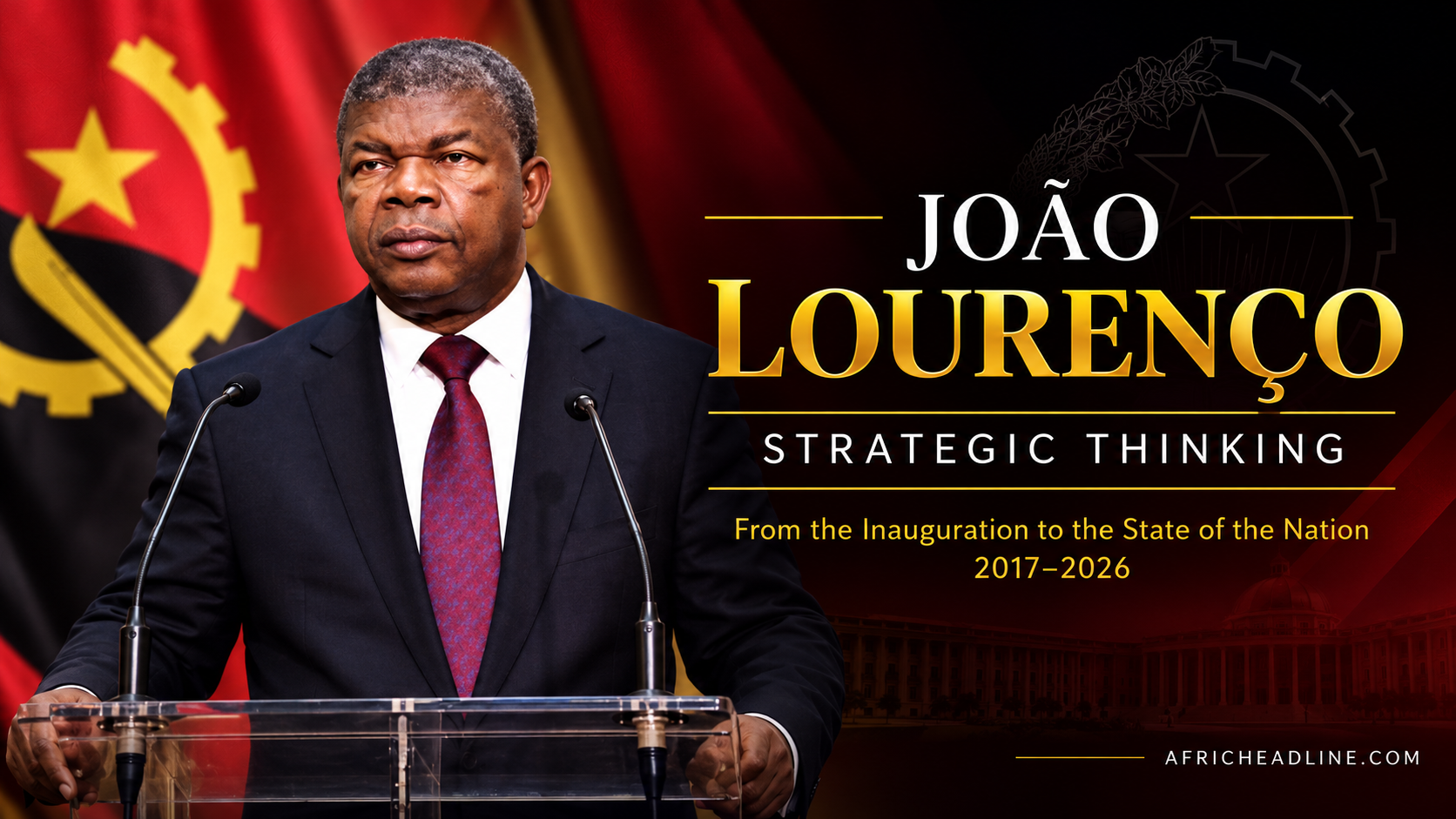

New book sets the 2017 inaugural address against the 2026 State of the Nation Address, offering a rare promise-versus-delivery audit of Angola’s presidency
LAGOS – AfricaHeadline Media Group has released The Strategic Thinking of João Lourenço, an analytical essay that reads side by side the President’s inaugural address of September 2017 and his State of the Nation Address to the National Assembly on 15 October 2026.
The premise is simple but uncommon in African political publishing. The book takes two speeches by the same head of state, nine years apart, and measures the distance between what was pledged and what is now reported. Across six parts and fourteen chapters, it tracks themes first set out as commitments, including the fight against corruption, economic diversification, state reform and youth employment, and examines how they return in 2026 as a record backed by data.
The figures it highlights point to a structural shift. Public debt fell from 115.9 to 51.2 per cent of GDP and inflation eased to 10.8 per cent. The non-oil economy averaged 5.2 per cent growth, overtaking oil as the main engine of expansion. Installed power capacity rose to 6,322 megawatts.
The book’s central argument is that Lourenço’s governance rests on a coherent doctrine rather than a list of policies. It describes this as “renewed continuity”. Reconciliation is treated as political infrastructure that lowers risk. Anti-corruption measures are framed as economic policy that underpins the investment climate. Peace diplomacy becomes a channel for attracting finance, with the Lobito Corridor as its clearest example.
The analysis does not avoid shortcomings. It lists the high level of informality in the economy, children still out of school and the unresolved deadlock over local elections. It notes that the President chose consensus over his party’s majority on the local government question, a choice the authors read as revealing of his method.
For investors and policymakers, the book offers a structured reference on where Angola stands at what the President calls “a point of no return”.
Disclosure: AfricaHeadline Media Group is the publisher of the book reviewed in this article.