Nigeria’s 90-day economic plan puts delivery under scrutiny
- EconomicNigeria
- October 23, 2026

The National Economic Council has backed measures to ease living costs, but left key questions unanswered on funding, timing and household support. A recent drop in petrol supply shows why execution and accountability will matter.
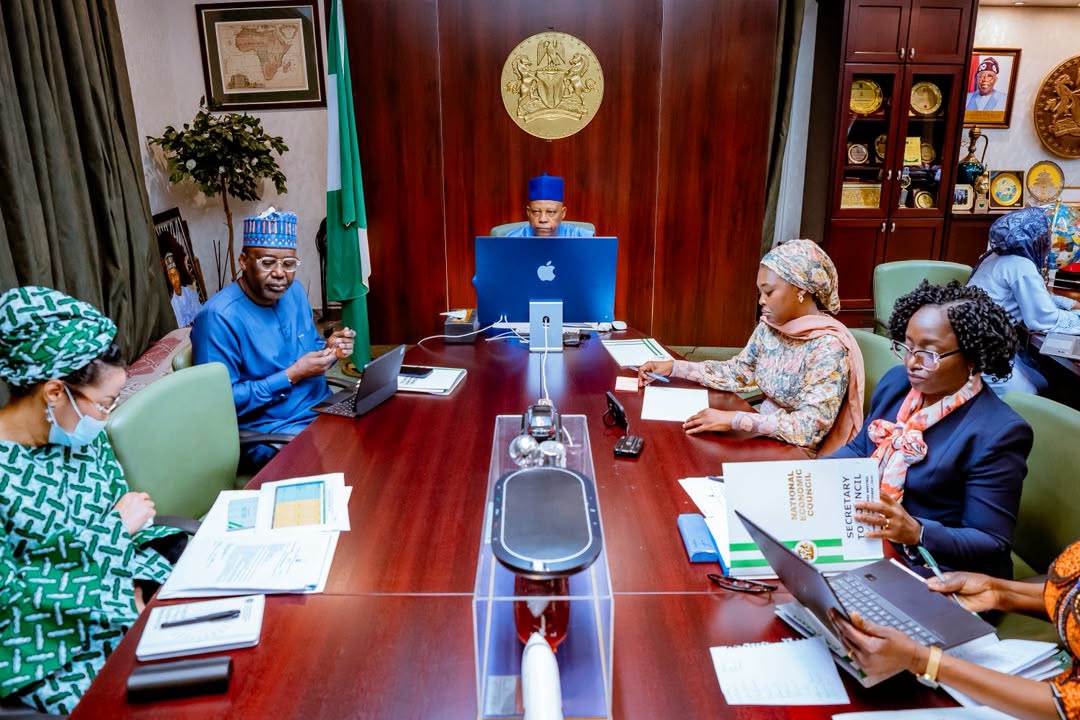
ABUJA — Nigeria has approved a 90-day economic plan with a familiar promise: to make macroeconomic reforms felt in households’ daily lives. The National Economic Council (NEC) has set five priorities, food affordability, tax harmonisation, completion of high-impact projects, removal of investment bottlenecks and regulated household support, and approved a national dashboard to track projects and the use of revenue from the removal of fuel subsidies.
But the announcement leaves basic questions unanswered. When does the 90-day period begin? How much money will be allocated? Who will qualify for household support, and how will the government measure success? Those gaps do not mean the plan will fail. They do make it difficult to tell whether it is an operational programme or, for now, a set of policy priorities.
The distinction matters in an economy where efforts to stabilise public finances and the foreign exchange market have coincided with intense pressure on living costs.
The government presents the plan as the next phase of reform: maintaining its overall direction while ensuring that households and businesses share in the gains. That will require co-ordination between Abuja and Nigeria’s 36 states, a political commitment that is harder to translate into consistent delivery.
A co-ordinating council, not a shortcut to implementation
The NEC is established by the constitution and brings together the vice-president, state governors and the governor of the Central Bank. Its constitutional role is to advise the president on economic affairs and co-ordinate economic planning across the federation. That gives its endorsement political weight, but does not by itself replace the legislation, budget allocations or administrative action needed to implement individual measures.
The federal structure could be an advantage: state governments are closer to local conditions affecting food production, transport and distribution. It also creates a risk of uneven implementation. Without clearly assigned responsibilities, comparable targets and regular reporting, co-ordination may depend on the willingness of individual state governments.
The proposed national dashboard is one of the announcement’s more tangible elements. Its value, however, will depend on what it makes public: funds released and spent, projects covered, deadlines, physical and financial progress, and audit findings. A dashboard without accessible data or verifiable criteria could give the appearance of transparency without allowing citizens and legislators to assess results.
Petrol supply is the immediate test
The latest data from Nigeria’s downstream petroleum regulator illustrate the gap between production capacity and domestic supply. Average daily petrol receipts fell 23 per cent in September to 38.7mn litres, while consumption rose 7 per cent to 44.4mn litres. Local deliveries declined and imports fell; at the same time, Dangote’s refinery exported more petrol and increased its stocks.
The figures do not, on their own, prove that subsidy reform or the government’s broader economic policies have failed. They do show that higher domestic production does not automatically translate into more fuel on the local market, or lower prices. For households, the relevant outcomes are the cost and availability of petrol, which also affect transport and food distribution. The plan will have to address that connection between national indicators and everyday expenses.
The NEC has also agreed to establish a joint federal-state financing framework to expand the use of compressed natural gas and electric vehicles. It said the programme should reduce fares for passengers, rather than be judged by the number of vehicles deployed. But without a budget, timetable and mechanism to ensure savings reach commuters, the initiative risks being measured by purchases instead of the cost of a journey.
Accountability is part of economic policy
The plan’s promise of household support will require clear rules. Without eligibility criteria, reliable beneficiary records and traceable payments, assistance can be poorly targeted or difficult to audit. And without disclosure of revenue from the removal of fuel subsidies, the proposed dashboard will not allow the public to establish whether those funds have been used as announced.
The plan’s credibility will therefore depend less on the 90-day label than on the commitments the government publishes next. A timetable naming federal and state officials, identifying funding and setting outcome measures would make progress easier to track. Regular disclosures and independent audits would help distinguish money spent from results achieved.
The same demand for clarity applies to tax harmonisation. A promise to reduce duplicate or arbitrary levies will matter only when governments specify which charges will be removed, by which authority and from what date.
Nigeria has secured the NEC’s political endorsement. The next test is institutional: turning a list of priorities into a programme that can be funded, delivered and independently assessed. Without those details, the 90 days may measure the distance between a promise of relief and households’ experience.