Kinshasa, AfricaHeadline
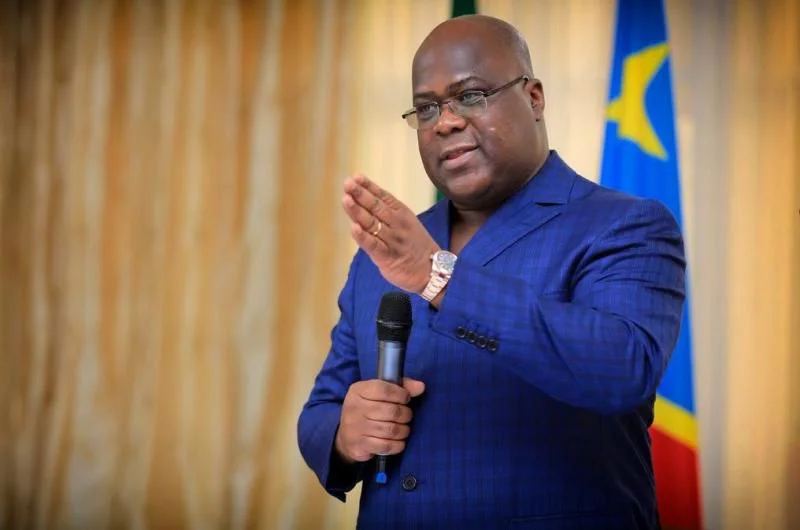
President Félix Tshisekedi has ordered the Congolese armed forces to carry out a tactical withdrawal from parts of Uvira in South Kivu after armed groups deployed kamikaze drones and other indiscriminate explosive devices.

AfricaHeadline Reports Team
editorial@africaheadline.com
Tshisekedi said the decision was taken out of responsibility, patriotic duty and love for the Congolese people, stressing that the protection of civilians outweighed the importance of holding any specific position on the frontline.
Military officials confirmed that the deployment of kamikaze drones, remotely guided explosive devices capable of precision impact, has changed battlefield dynamics in eastern DRC.
Used in densely populated areas, these weapons sharply increase the risk of civilian casualties and make it nearly impossible for the army to maintain static positions without exposing nearby communities to mass harm.
“We are dealing with weapons that do not distinguish between fighters and civilians. Remaining in place would have placed thousands of residents in immediate danger,” a senior FARDC officer told AfricaHeadline.
In a national address, Tshisekedi described the withdrawal as an act of “responsible patriotism” and insisted it did not reflect weakness but leadership guided by the preservation of human life.
The President emphasised three priorities: Preventing civilian massacres; Repositioning the army to safer and more defensible lines; Reinforcing the message that the state protects its people even in the midst of war.
Analysts say Tshisekedi is also responding to domestic criticism of the army’s performance by presenting himself as a leader who places civilian security above political or military optics.
Humanitarian agencies estimate that between 40,000 and 60,000 people have been displaced in recent days as fighting intensified and fear of further drone attacks spread through Uvira and surrounding areas.
Residents described scenes of panic as families left their homes overnight when explosions approached their neighbourhoods.
“We chose to flee because staying could have cost us our lives,” a local resident said. “The withdrawal prevented the area from becoming a battlefield full of civilian victims.”
According to regional experts, the move carries three strategic implications.
1. Civilian protection becomes a military priority
The FARDC is repositioning to reduce exposure to aerial attacks and to reorganise logistics and defensive coordination.
2. Recognition of a new technological phase in the conflict
The use of explosive drones, rare in the Great Lakes region until now, signals a shift towards more sophisticated and lethal warfare.
3. Political repositioning of Tshisekedi
By highlighting the withdrawal as a moral and patriotic duty, Tshisekedi strengthens his narrative as a leader who protects citizens rather than sacrificing them for tactical gains.
This framing seeks to maintain national cohesion at a moment when the army is under intense operational and political pressure.
The escalation of fighting comes amid rising tensions between the DRC and Rwanda. Kinshasa accuses Kigali of backing the M23 rebels, an allegation Rwanda denies.
Diplomats across the region warn that the combination of advanced weaponry and entrenched territorial disputes increases the risk of further regional involvement.
Observers note potential implications for SADC mobilisation, AU mediation and the role of the United States in security oversight in the Great Lakes region.
Eastern DRC has faced more than two decades of armed violence involving more than 120 militia groups. The M23 rebel movement re-emerged strongly in 2022, capturing key towns and putting sustained pressure on the Congolese army.
The introduction of kamikaze drones marks one of the most significant tactical advancements in the conflict, increasing unpredictability and raising concerns about civilian exposure to modern warfare.
The tactical withdrawal may temporarily change the balance of forces on the ground, but it positions Tshisekedi as a leader who places the lives of Congolese citizens above traditional battlefield calculations.
In a conflict where civilians are often the first to suffer and the last to be heard, the President’s decision signals an attempt to define a new standard of state responsibility.
“Tshisekedi said protecting Congolese lives remains his absolute line of command.”
A commitment that resonates at a time when violence is intensifying and technology is reshaping the nature of the war.
AfricaHeadline | Kinshasa Bureau
Produced by the AfricaHeadline Editorial Desk
© 2025 AfricaHeadline. All rights reserved.