Johannesburg — Across Africa, a structural shift is underway in how capital is allocated, driven not by headline-grabbing sovereign funds or multilateral lending, but by a more discreet set of instruments, credit guarantee funds. Long considered technical tools operating in the background of financial systems, these mechanisms are increasingly determining which businesses gain access to financing and which remain excluded.

AfricaHeadline Reports Team
editorial@africaheadline.com
At their core, credit guarantee schemes address one of the continent’s most persistent economic constraints, risk perception. By absorbing between 50 and 80 per cent of potential losses on loans, they alter the incentives of commercial banks, encouraging lending to sectors traditionally viewed as too volatile or insufficiently collateralised. The result is a gradual but significant expansion of credit to small and medium-sized enterprises, which account for the majority of employment across African economies yet remain chronically underfinanced.
The architecture supporting this transformation is becoming more defined. Continental institutions such as the African Guarantee Fund, the Fonds de Solidarité Africain and the FAGACE have established themselves as central pillars, mobilising billions of dollars in financing by leveraging their balance sheets to de-risk lending across multiple jurisdictions. Their regional scope allows them to mitigate sovereign risk and provide a layer of confidence that domestic financial systems alone often struggle to generate.
Alongside these pan-African platforms, a new generation of national and specialised guarantee institutions is gaining momentum. In Nigeria, the InfraCredit Nigeria has pioneered local currency guarantees for infrastructure projects, attracting pension funds and institutional investors into an asset class previously dominated by foreign currency borrowing. In Morocco, Tamwilcom has expanded its mandate to support innovation and green finance, reflecting a broader shift towards sustainability-linked lending across the continent. These institutions are not merely financial intermediaries; they are increasingly instruments of economic policy, shaping the direction of investment flows.
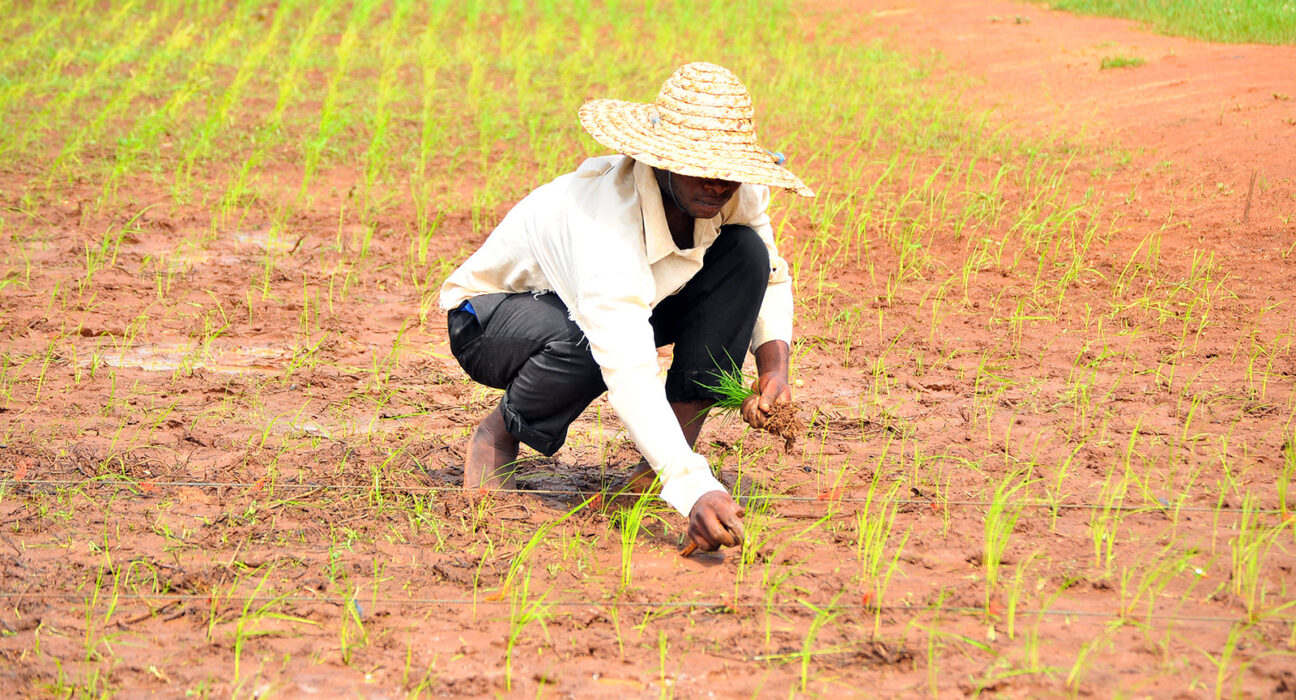
In Angola, the Fundo de Garantia de Crédito is emerging as a critical component of the government’s effort to rebalance an economy historically dependent on oil revenues. By sharing credit risk with commercial banks, the fund is enabling a gradual expansion of financing to domestic enterprises, particularly in agriculture, manufacturing and fisheries, sectors identified as priorities for diversification. This shift is taking place against a backdrop of improving macroeconomic stability, with inflation showing signs of moderation and policy frameworks becoming more predictable, conditions that are essential for the effective functioning of guarantee mechanisms.
The economic logic underpinning these funds is compelling. Each dollar of guarantees can mobilise several multiples in lending, effectively transforming limited public or institutional capital into a broader pool of private sector financing. In a region where the estimated financing gap for small businesses exceeds $400bn, this multiplier effect positions guarantee schemes as one of the most efficient tools available to policymakers seeking to stimulate growth without overburdening public balance sheets.
Yet the model is not without its limitations, many funds remain undercapitalised relative to the scale of demand, while fragmentation across jurisdictions continues to constrain cross-border expansion. Questions of governance, transparency and risk management also persist, particularly in smaller or newer institutions where operational frameworks are still evolving. Without stronger capital bases and more harmonised regulatory environments, the full potential of these mechanisms may remain unrealised.
Looking ahead, the trajectory of credit guarantee funds in Africa is likely to be shaped by their integration into capital markets, the adoption of digital risk assessment tools and alignment with environmental, social and governance financing standards. As the African Continental Free Trade Area advances and investor interest in the continent deepens, these instruments could evolve into key platforms for mobilising long-term private capital.
What is becoming increasingly clear is that Africa’s challenge has never been solely a shortage of capital, but a shortage of mechanisms capable of distributing risk in a way that unlocks that capital.
Credit guarantee funds do not eliminate uncertainty, but they recalibrate it. In doing so, they are quietly redefining the boundaries of financial inclusion and economic opportunity across the continent.
By AfricaHeadline Editorial Desk