Welcome to Africa Headline   Click to listen highlighted text! Welcome to Africa Headline
May 13, 2026
Chicago 12, Melborne City, USA
Angola Economic Southern Africa

Beyond oil: Angola’s slow reinvention of its economy

Save as PDF 

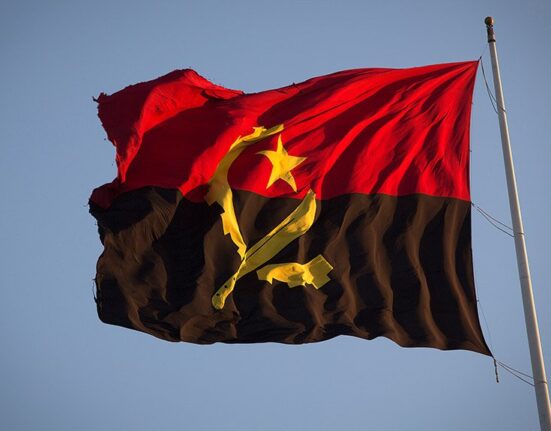
Lagos – For decades, Angola’s economy was defined by a single commodity. Oil financed reconstruction, sustained foreign reserves, supported fiscal expenditure and transformed the country into one of Africa’s largest energy exporters. Yet the latest national accounts data published by the Instituto Nacional de Estatística suggest that the foundations of the Angolan economy may now be undergoing their deepest structural transformation since the end of the civil war.


AfricaHeadline Reports Team
editorial@africaheadline.com 


The preliminary 2025 figures reveal a profound shift in the composition of Gross Domestic Product. The petroleum sector, which historically dominated nearly every macroeconomic indicator in the country, no longer exercises the same overwhelming influence over productive activity. Agriculture, commerce and services are expanding their relative weight inside the economy, gradually reshaping Angola’s growth model.

For international investors and development institutions, the significance of this transition extends beyond statistical interpretation. Angola may be entering a new phase in which economic resilience becomes increasingly linked to domestic production, regional integration and internal consumption rather than solely to the volatility of global crude markets.

The gradual decline of oil dominance

The most symbolic figure in the new dataset is the collapse in oil’s relative contribution to national output.

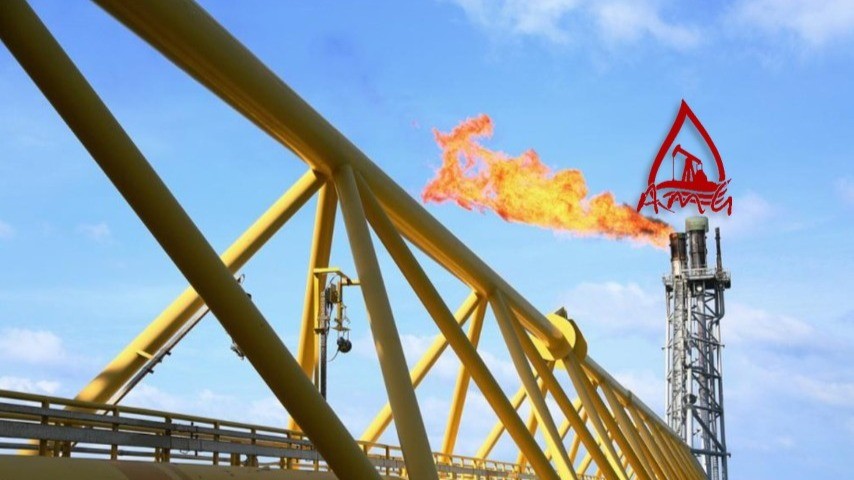
In 2002, crude oil extraction and refining represented 39.16% of Angola’s gross value added. During the peak years of the commodity supercycle, the sector surpassed 43% of GDP. By 2025, however, the petroleum sector’s contribution falls sharply to 13.95%.

This does not imply that oil has lost strategic relevance. Angola remains one of sub-Saharan Africa’s major hydrocarbon exporters, and petroleum continues to dominate export earnings, fiscal revenues and foreign exchange inflows. The country’s sovereign liquidity position still depends heavily on crude production and international energy prices.

What the data reveal instead is something structurally more important: the non-oil economy is finally expanding at sufficient scale to dilute oil’s historical concentration within GDP.

This distinction matters greatly from a financial stability perspective.

Between 2014 and 2020, Angola suffered severe macroeconomic pressure following the collapse in global oil prices. The country experienced currency depreciation, inflationary acceleration, rising public debt ratios and weakened external balances. The new national accounts suggest that part of Angola’s current economic strategy, centred on diversification and domestic production, is beginning to materialise more visibly in the real economy.

For sovereign risk analysts, this evolution may gradually improve Angola’s medium-term resilience profile.
 

A broader productive base has the potential to significantly reduce Angola’s exposure to commodity price shocks, lower fiscal concentration risks, minimise external account vulnerabilities and gradually decrease the country’s historical dependence on petroleum revenue cycles, thereby strengthening long-term macroeconomic resilience and economic stability.

In frontier-market terms, Angola increasingly resembles a transitioning resource economy rather than a purely oil-dependent state.

Agriculture emerges as a strategic economic force

The most dramatic transformation inside the new national accounts concerns agriculture.

In 2002, agriculture represented only 9.39% of GDP. By 2025, agropecuária and related rural activities account for 25.43% of the economy, positioning the sector as one of the largest contributors to national production.

The composition of the sector itself is particularly revealing, with agropecuária and silviculture accounting for 23.06% of GDP, while fisheries and aquaculture contribute 2.37%, highlighting the increasing economic relevance of Angola’s rural productive base. The implications of this transformation extend far beyond agriculture alone, reflecting broader changes linked to food security, domestic supply chains, employment generation, regional development and the gradual strengthening of the country’s non-oil productive economy.

First, the numbers indicate the progressive monetisation of Angola’s rural economy. Historically, significant agricultural production remained informal, fragmented and weakly integrated into formal value chains. Rising agricultural participation in GDP suggests deeper commercial integration, expanding internal food distribution and stronger domestic market connectivity.

Second, the agricultural expansion directly intersects with Angola’s food security strategy.

For years, the country remained heavily dependent on imported food products despite possessing vast arable land, extensive river systems and favourable climatic conditions. The expansion of domestic agricultural production may gradually reduce import dependency, ease pressure on foreign exchange reserves and strengthen internal supply-chain resilience.

Third, agriculture carries a substantially different employment profile compared with oil.

The petroleum industry is highly capital intensive and generates relatively limited direct employment. Agriculture, by contrast, creates labour absorption across rural provinces, stimulates local commerce and supports secondary logistics and processing activities.

If sustained over the next decade, Angola’s agricultural expansion could reposition the country as one of Southern Africa’s major agro-industrial powers.

Services quietly become the dominant economy

While agriculture symbolises Angola’s diversification narrative, the services sector remains the country’s largest economic engine.

By 2025, the services sector represents 46.50% of Angola’s GDP, compared with 37.87% in 2002, reinforcing its position as the country’s largest economic engine. Within this structure, the largest contributors include commerce with 19.27%, public administration with 11.54% and other service-related activities with 6.93%, reflecting the growing importance of urban consumption, institutional activity and domestic market expansion in the Angolan economy.

This evolution mirrors structural trends observed across rapidly urbanising African economies such as Kenya, Rwanda and Ghana, where rising urban populations have accelerated retail activity, logistics services, telecommunications and financial intermediation.

The near 20% contribution of commerce is particularly important.

It reflects the gradual expansion of Angola’s internal consumer market and the increasing circulation of goods within domestic trade networks. For investors, this represents a critical signal that Angola’s economy is becoming progressively more consumption-driven rather than exclusively extractive.

The expansion of the services sector also aligns with broader infrastructure and digitalisation initiatives currently reshaping Angola’s economic landscape, including the development of strategic logistics corridors, the expansion of telecommunications networks, the modernisation of digital public infrastructure, the implementation of financial inclusion strategies and the advancement of integrated transport connectivity projects across the country.

Projects linked to the Lobito Corridor may further reinforce Angola’s position as a regional logistics platform connecting Atlantic trade routes to mineral-rich Central African markets.

Manufacturing remains Angola’s structural weakness

Despite the encouraging diversification signals, the new data also expose the country’s principal vulnerability: Angola still lacks a sufficiently robust industrial base.

Manufacturing, excluding petroleum refining, represents only 6.84% of GDP in 2025.

Meanwhile, construction activity declines sharply from more than 14% of GDP in 2016 to only 3.75% in 2025.

These figures suggest that Angola’s diversification process remains incomplete.

Agriculture and commerce can stimulate growth, but sustainable structural transformation ultimately depends on industrialisation and value addition. Without a stronger manufacturing sector, Angola risks remaining dependent on imported processed goods, industrial equipment and consumer products.

Several structural constraints continue to limit Angola’s industrial competitiveness, including high logistics costs, constrained industrial financing, persistent energy bottlenecks, limited productive integration, foreign exchange volatility and weak regional manufacturing connectivity. However, these challenges are not unique to Angola, as many African economies continue to face similar obstacles in their efforts to deepen industrialisation, strengthen value chains and reduce dependence on imported manufactured goods.

Even Africa’s largest economies, including Nigeria and South Africa, continue to face pressure to deepen industrial value chains and reduce import dependence.

However, Angola possesses one strategic advantage: timing.

As global supply chains become increasingly fragmented and regional economic blocs strengthen under the framework of the African Continental Free Trade Area, Angola has a strategic opportunity to position itself simultaneously as a major agro-industrial production hub and as a critical logistics gateway connecting Southern and Central African markets.

The financial markets perspective

International financial markets are beginning to reassess Angola through a different lens.

Over the past decade, investor perception of Angola was largely shaped by oil production levels, sovereign debt restructuring, IMF stabilisation programmes, exchange-rate management and persistent inflationary pressures. Today, however, a new narrative is gradually emerging, with investors increasingly viewing Angola as a frontier diversification story driven by growing domestic demand, expanding infrastructure networks, rising agricultural potential, improving macroeconomic governance and a strategically important geopolitical position within Africa. Nevertheless, the country’s long-term economic success will continue to depend on its ability to maintain fiscal discipline, monetary stability, investor confidence and institutional predictability.

Diversification alone does not automatically guarantee development. The central challenge for Angola remains transforming economic expansion into sustained productivity growth capable of generating employment, industrial competitiveness and higher living standards.

Angola’s possible economic turning point

The preliminary 2025 national accounts may eventually be remembered as a historic turning point in Angola’s modern economic trajectory, marking the first time since the oil boom of the early 2000s that petroleum no longer overwhelmingly dominates productive activity, while agriculture emerges as a central pillar of the economy, services consolidate their structural leadership and economic diversification becomes statistically visible within the country’s productive framework.

Whether this transition becomes permanent will depend on Angola’s ability to sustain reforms, expand infrastructure, improve institutional efficiency and accelerate industrial development.

The challenge facing Angola is no longer merely how to grow.

It is how to transform growth into a durable economic architecture capable of withstanding external shocks, creating productive employment and positioning the country as one of Africa’s emerging diversified economies.

The latest figures suggest that this transformation, once viewed largely as political aspiration, may finally be taking shape.

By AfricaHeadline Editorial Desk
Strategic Insight. African Perspective.

© 2026 AfricaHeadline Media Network. All Rights Reserved.

This material is protected under international copyright and intellectual property laws. No part of this publication may be reproduced, distributed, transmitted or republished in any form or by any means without prior written authorization from AfricaHeadline Media Network.

Translate »
Click to listen highlighted text!