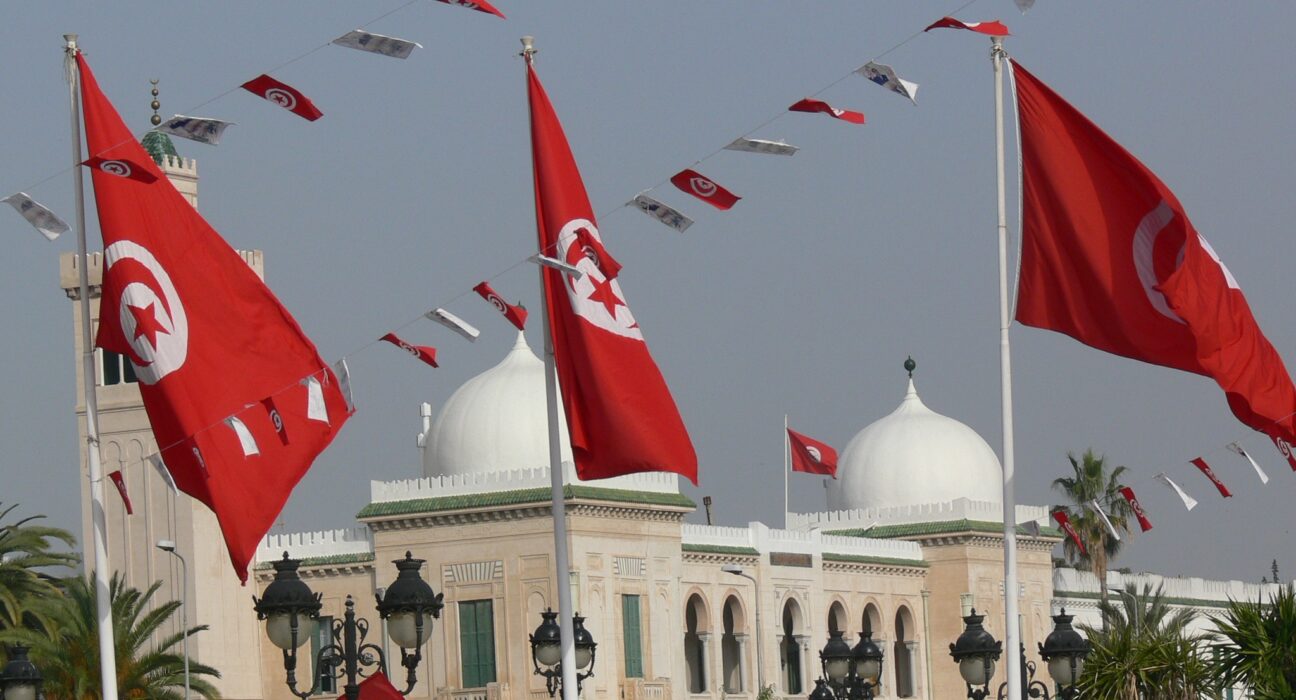
Johannesburg — Tunisia’s economy is projected to grow modestly in 2025, but persistent fiscal stress, weak investment and financing constraints continue to expose the structural fragility of one of North Africa’s most diversified economies.

AfricaHeadline Reports Team
editorial@africaheadline.com
According to IMF and World Bank estimates, Tunisia’s real GDP growth is expected to range between 2.1 per cent and 2.6 per cent in 2025, after growth of roughly 1.4 per cent in 2024. Nominal GDP is expected to remain near $55bn, substantially below regional peers such as Egypt and Algeria, but supported by a more diversified productive base.
Unlike hydrocarbon-driven economies in North Africa, Tunisia’s growth model remains centred on services, manufacturing, tourism and agriculture.
Services account for nearly 63 per cent of GDP, while industry contributes approximately 26 per cent and agriculture between 10 and 12 per cent, depending on climatic conditions. The Tunisian economy remains deeply integrated into European industrial and commercial supply chains, with the European Union absorbing more than 70 per cent of national exports.
The country’s industrial sector continues to be one of the most competitive in the Mediterranean region outside Southern Europe.
Tunisia maintains strong export positioning in automotive components, electrical systems, textiles, pharmaceuticals and mechanical manufacturing. European manufacturers increasingly view Tunisia as a strategic nearshoring platform due to its lower labour costs, geographic proximity and relatively qualified workforce.
Tourism has also regained macroeconomic importance.
The recovery in European travel demand helped stabilise foreign currency inflows during 2025, reinforcing tourism’s role as one of Tunisia’s principal sources of external revenue. Analysts estimate that tourism receipts now account for a substantial share of current account financing.
Agriculture, meanwhile, remains one of the country’s most underestimated macroeconomic variables.
Improved rainfall conditions in 2025 contributed to stronger agricultural output after several years of drought, easing pressure on food imports and partially stabilising domestic inflation. Water scarcity, however, continues to represent one of Tunisia’s most severe long-term economic risks.
Yet beneath the moderate recovery lies a highly constrained macroeconomic structure.
Public debt remains above 80 per cent of GDP, while fiscal deficits continue to pressure state financing capacity. Tunisia’s financing needs remain elevated amid limited access to international capital markets and prolonged uncertainty surrounding negotiations with the International Monetary Fund.
Reuters reported that Tunisian authorities may seek approximately $3.7bn in direct central bank financing to support treasury operations, highlighting the severity of liquidity pressures facing the state.
Economists warn that excessive dependence on domestic financing mechanisms risks weakening banking sector liquidity and crowding out private sector credit, precisely at a moment when Tunisia requires stronger investment formation.
Investment remains one of the economy’s weakest structural components.
Private investment continues to lag behind comparable emerging markets due to regulatory complexity, administrative delays, financing costs and political uncertainty. Foreign direct investment remains concentrated in manufacturing, tourism and selected energy projects, with limited diversification into higher-productivity sectors.
Labour market conditions also remain fragile.
Youth unemployment continues to exceed 35 per cent in some urban areas, particularly among university graduates, exposing the disconnect between Tunisia’s relatively advanced educational system and the economy’s limited capacity to generate high-value employment opportunities.
Inflation remains another source of pressure.
Although price growth has moderated from previous peaks, IMF projections suggest inflation may remain above 6 per cent in the near term, continuing to erode household purchasing power and complicate monetary policy management.
The Tunisian dinar has also faced persistent pressure in recent years, reflecting external imbalances, financing constraints and slower export competitiveness compared with regional peers such as Morocco.
Nevertheless, Tunisia retains several structural advantages that continue to attract long-term investor interest.
The country combines industrial capability, strategic Mediterranean positioning, relatively advanced human capital and deep commercial integration with Europe. Compared with many economies of similar size across Africa and the Middle East, Tunisia maintains a comparatively sophisticated manufacturing ecosystem.
For investors, Tunisia increasingly represents a paradox.
The country possesses one of North Africa’s most diversified productive structures, yet simultaneously faces chronic fiscal stress, subdued growth momentum and constrained external financing conditions.
The central challenge over the next decade will not simply be accelerating growth.
It will be whether Tunisia can transform industrial integration, tourism recovery and geographic advantage into sustained productivity gains, fiscal credibility and stronger export competitiveness.
The numbers suggest Tunisia is no longer confronting merely a cyclical slowdown.
It is navigating a broader transition between an ageing state-centred economic model and a more competitive, externally integrated and financially constrained economy.
__
By AfricaHeadline Editorial Desk
Strategic Insight. African Perspective.
© 2026 AfricaHeadline Media Network. All Rights Reserved.
**This material is protected under international copyright and intellectual property laws. No part of this publication may be reproduced, distributed, transmitted or republished in any form or by any means without prior written authorization from AfricaHeadline Media Network.**