Angola’s exchange-rate strategy is steadier than critics suggest
- AngolaEconomicSouthern Africa
- May 1, 2026

By Prof. Allison Araujo, PhD in Forensic Financial Analysis
Johannesburg – In a global environment marked by persistent volatility, inflationary pressures and shifting financial flows, Angola’s exchange-rate trajectory deserves a more technical and less hasty reading. The recent stability of the Kwanza is not an artificial construct, as is sometimes suggested, but rather the outcome of a deliberate macroeconomic management strategy led by Manuel Tiago Dias, grounded in monetary prudence and institutional coordination.

AfricaHeadline Reports Team
editorial@dw-demosnewstaion.online
Since 2022, the exchange rate has shown relative stability within a range that reflects not only targeted interventions but, more importantly, a gradual improvement in macroeconomic fundamentals. Fiscal consolidation, stronger international reserves and tighter monetary discipline have helped reduce exchange-rate volatility, creating a more predictable environment for investors and economic operators. In a country where exchange-rate pass-through to inflation is high, this stability plays a critical role in protecting households’ real incomes.
The view that Angola is, in practice, operating a rigidly fixed exchange-rate regime overlooks a more complex reality. The current model aligns more closely with what economic literature defines as a managed float, a tool widely used by emerging economies to absorb external shocks without fully abandoning market mechanisms. This is a pragmatic choice, particularly relevant for economies with high import dependency and exposure to commodity cycles.
From a forensic standpoint, the consistency across key indicators, a decelerating inflation trend, exchange-rate stability and improved liquidity control, points to coherence in economic policy rather than contradiction. In this type of analysis, what matters is not the theoretical purity of the regime, but its practical effectiveness. And on that front, results are beginning to emerge.
Challenges remain. Demand for foreign currency still reflects an import-dependent economic structure, and the existence of parallel markets signals frictions in distribution mechanisms. However, these features are typical of economies in transition and do not, in themselves, constitute evidence of systemic failure. The appropriate response lies not in abrupt liberalisation, but in sustained reforms aimed at boosting domestic production, diversifying exports and deepening the financial system.
Some critical interpretations tend to overemphasise the exchange rate as the sole barometer of economic health. This approach, beyond being reductive, overlooks the institutional progress achieved in recent years and the structural constraints that continue to shape Angola’s economy. A rigorous assessment requires context, empirical evidence and, above all, recognition of the complexity inherent in policymaking in emerging markets.
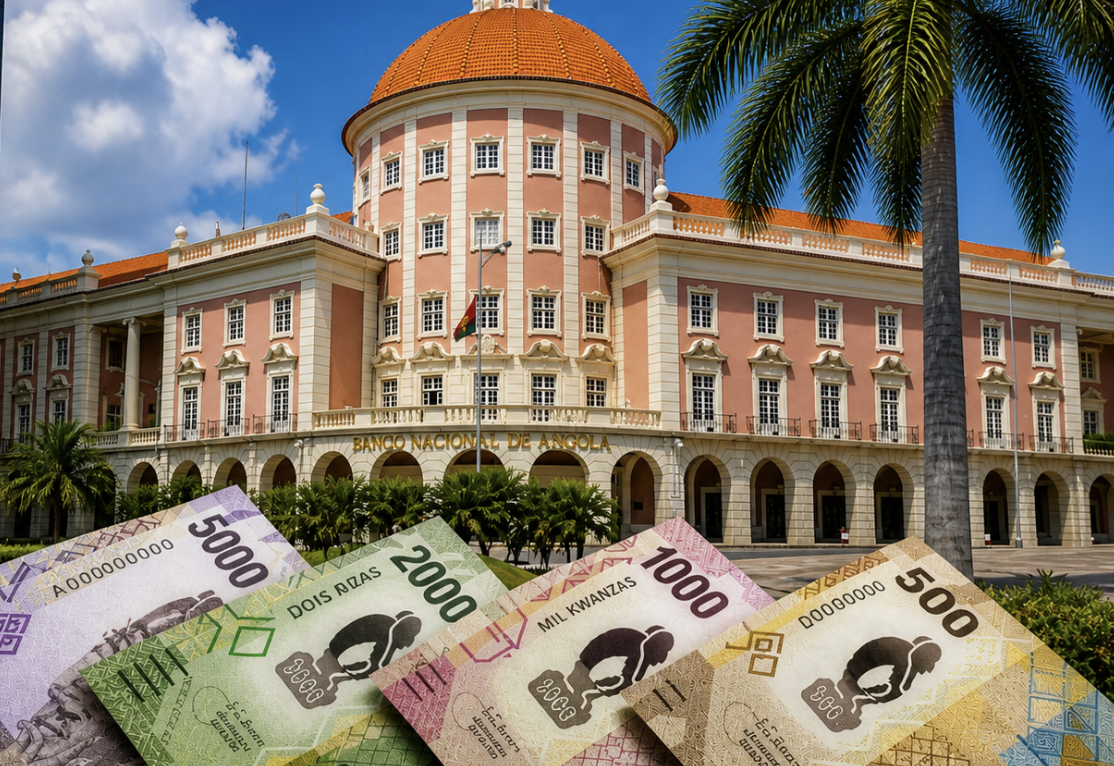
Angola’s exchange-rate strategy, far from being an exercise in artificial control, should be understood as a stabilisation instrument in a challenging environment. The priorities of the economic authorities are clear: ensure predictability, contain inflationary pressures and create conditions for productive investment. In this regard, the actions of the National Bank of Angola reflect alignment with a medium-term vision focused on macroeconomic consolidation.
The real test of this strategy lies not only in short-term stability, but in its capacity to support broader structural transformation. As Angola advances in diversifying its economy, reducing import dependency and strengthening the non-oil sector, exchange-rate policy can evolve more organically towards greater flexibility.
Until then, stability should not be viewed as a distortion, but as a strategic asset. In emerging economies, preserving that asset is often the necessary condition for building the future.
By AfricaHeadline Analysis Desk
Lagos • Johannesburg • London • Washington
© 2026 AfricaHeadline. All rights reserved.