AfricaHeadline | Analysis
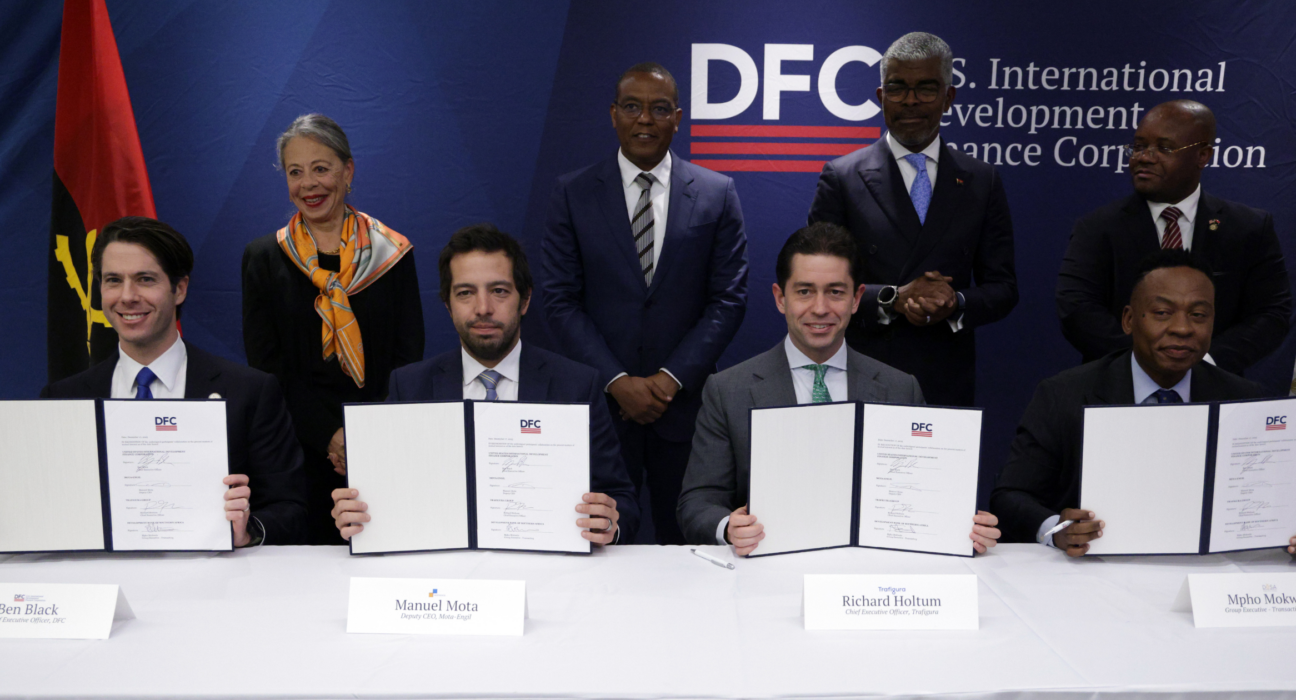
WASHINGTON D.C. — The U.S. International Development Finance Corporation (DFC) has formalised a long-awaited loan agreement to finance the rehabilitation and operation of the Lobito Atlantic Railway (LAR), marking one of Washington’s most strategically significant infrastructure commitments in Africa in recent years.

AfricaHeadline Reports Team
editorial@africaheadline.com
The signing, attended by DFC chief executive Ben Black, U.S. Under Secretary of State Jacob Helberg, Angola’s transport minister Ricardo Viegas D’Abreu, DBSA’s Mpho Mokwele, Trafigura CEO Richard Holtum, and Mota-Engil deputy CEO Manuel Mota, signals a decisive escalation of U.S. engagement in Africa’s critical-minerals corridor at a time of intensifying geopolitical competition.
A strategic hinge for U.S. critical mineral security
The loan package will support the overhaul of the Lobito port’s mineral terminal and the 1,300-kilometre Angolan rail spine linking Lobito to Luau, on the border with the Democratic Republic of Congo — home to some of the world’s richest copper and cobalt deposits.
DFC and DBSA financing is expected to increase the corridor’s cargo capacity ten-fold to 4.6 million tonnes per year, while reducing the cost of transporting critical minerals by up to 30%. Such gains are viewed in Washington as fundamental to diversifying supply chains away from China, which currently dominates global cobalt refining and exerts considerable influence across Africa’s mining landscape.
Ben Black framed the deal as aligned with the Trump administration’s directive to re-anchor U.S. foreign policy in commercial partnerships with strong security implications.
“This agreement further characterises President Trump’s commitment to forging strong alliances in Africa,” Black said. “We are reinforcing strategic infrastructure that underpins sustainable economic growth and long-term stability across the region.”
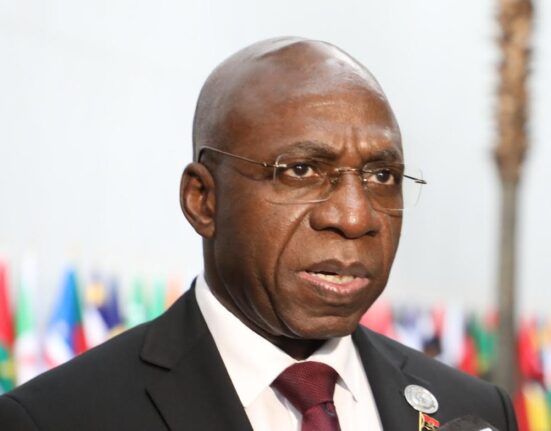
For Angola, the agreement marks one of the most consequential foreign-financed infrastructure commitments since the end of its civil war. Transport minister Ricardo Viegas D’Abreu emphasised its symbolic and structural importance:
“This financing stands out for its unprecedented scale and strategic significance. It sets a benchmark for other sectors seeking American capital. LAR’s strengthened operational capacity will consolidate Angola as a major trade and logistics hub.”
The Lobito Corridor, spanning Angola, DRC and Zambia, is widely seen as the most competitive westward export route for copper and cobalt from Central Africa, drastically shortening delivery times to Atlantic markets and reducing dependency on congested Indian Ocean ports.
Private-sector partners echoed this strategic outlook. Trafigura’s Richard Holtum noted that the deal would “support the movement of critical metals to global markets,” while Manuel Mota of Mota-Engil underlined that the corridor “reinforces confidence in Angola’s institutional capacity to attract interest for world-class infrastructure initiatives.”
Geoeconomic stakes rise as U.S. counters China’s dominance
Central Africa’s mineral belt has become a focal point of U.S.–China rivalry. Washington views the Lobito Corridor as a viable alternative to Beijing-backed routes funnelling ore eastwards through Tanzania and Mozambique.
A secure westbound corridor could reshape commodity flows and dilute China’s leverage over mineral supply chains essential for clean-energy technologies, electric vehicles, aerospace, and defence systems.
DFC’s Africa portfolio, now exceeding $10bn, the corporation’s second-largest regional exposure, increasingly prioritises critical minerals, digital infrastructure and logistics connectivity, reflecting a structural shift in U.S. development finance: less aid, more strategic investment.
A test case for new U.S.–Africa industrial partnerships
For African governments, the Lobito Corridor is more than a minerals route: it is a vehicle for industrialisation, job creation and cross-border integration. Whether these expectations materialise will depend on operational efficiency, regulatory harmonisation between Angola, DRC and Zambia, and predictable security conditions in eastern Congo.
But the LAR financing marks a clear pivot. It establishes a precedent for African economies engaging Washington not only through diplomacy, but as co-architects of supply-chain realignments driven by global energy and defence transitions.
Institutional note
The DFC, created in 2019 with bipartisan support during Trump’s first term, serves as the U.S. government’s primary development investment arm, mandated to mobilise private capital abroad in support of national security, commercial interests, and global economic competitiveness. Its focus spans critical minerals, infrastructure, energy, and advanced technology.
Africa Geoeconomics & Strategic Affairs
AfricaHeadline Media Group
editorial@africaheadline.com