Yaoundé – Cameroon heads towards its presidential election on 12 October 2025, facing a stark contradiction: a rapidly growing, youthful population governed by an ageing political elite, many of whom are well into their eighties and nineties.

AfricaHeadline Reports Team
editorial@africaheadline.com
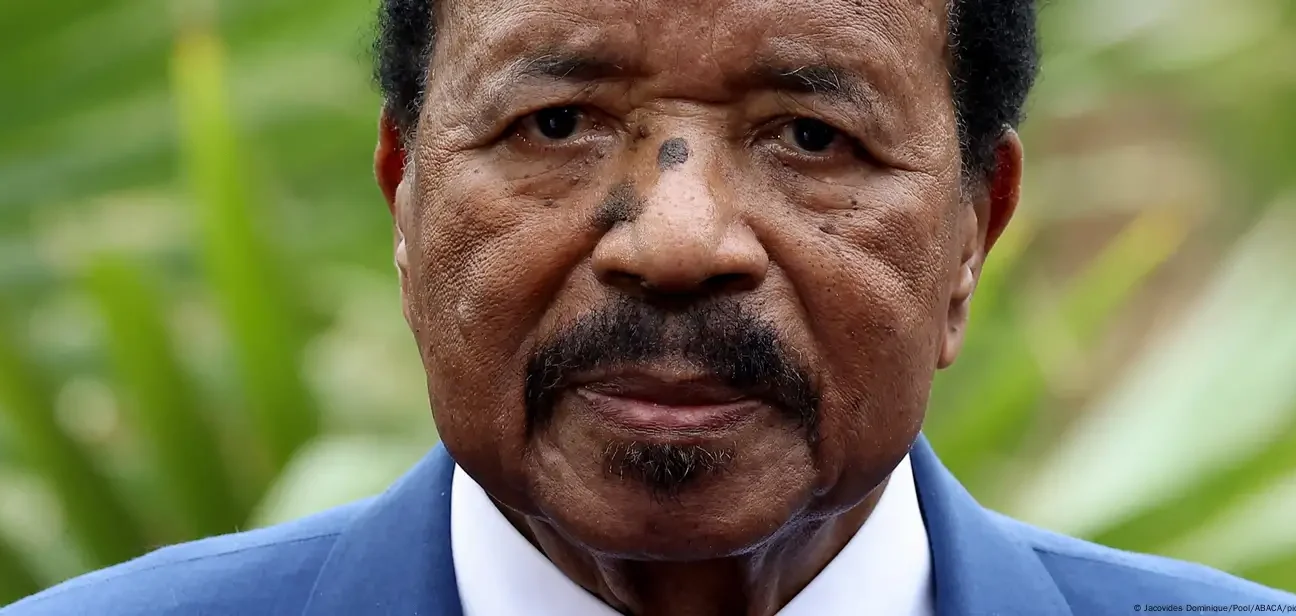
President Paul Biya, now 92, has announced he will run again, extending a rule that began in 1982. Biya is currently the world’s oldest serving head of state, and his decades in office have become emblematic of a system resistant to change in a country where the median age is just 18.9 years.
The Senate, National Assembly, Constitutional Court and military leadership are dominated by octogenarians and nonagenarians. Analysts warn of “institutional paralysis”, with the lack of renewal blocking much-needed reforms.
In contrast, more than 60% of Cameroonians are under 25. While official youth unemployment stands at 6.2%, experts stress that most young people are trapped in the informal sector, working in precarious jobs with low pay and little or no social protection.
“It’s a painful paradox: a young country without representation, while the political elite grows older in power,” a researcher at the University of Douala told the BBC.
Biya’s candidacy was swiftly followed by the electoral commission ELECAM rejecting the bid of his main challenger, Maurice Kamto, a decision later upheld by the Constitutional Council. The move has fuelled doubts over the credibility of the electoral process, with opposition parties warning of “pre-determined elections.”
In the 2018 polls, international observers reported irregularities and intimidation of opposition figures – a scenario many fear could be repeated in 2025. Civil society groups warn that mistrust may spark protests in Yaoundé and Douala, particularly among frustrated urban youth.
Cameroon’s case reflects a wider trend across Africa.
Teodoro Obiang, in Equatorial Guinea, has ruled since 1979 and is now 83.
Yoweri Museveni, in Uganda, aged 80, changed the constitution to extend his rule.
Denis Sassou Nguesso, in the Republic of Congo, returned in 1997 and remains in office at 81.
These long-standing regimes raise pressing questions about political transition, democratic legitimacy and generational representation on a continent where young people form the majority.
Cameroon continues to grapple with conflict in its Anglophone regions, where separatist groups have sought independence since 2016. The persistence of a highly centralised regime with little political opening is seen as worsening the crisis.
In the far north, the presence of Boko Haram cells adds further pressure on the security forces, while political stagnation at home undermines the state’s capacity to respond.
International observers warn that a lack of political renewal in Yaoundé could destabilise Central Africa’s fragile balance, heightening refugee flows and fuelling insecurity across borders.
Continuity scenario: Biya secures another victory with a weakened opposition, preserving the status quo.
Contest scenario: the exclusion of opposition candidates sparks unrest and potential urban violence.
Pressure for reform: even if Biya wins, rising domestic and international pressure could force institutional changes and greater youth inclusion.
For many young Cameroonians, the 2025 election is a test of representation.
The lingering question is clear: how long can a young nation be governed by leaders who embody the past rather than the future?