AfricaHeadline | AH-Africa Edition
Washington, D.C.
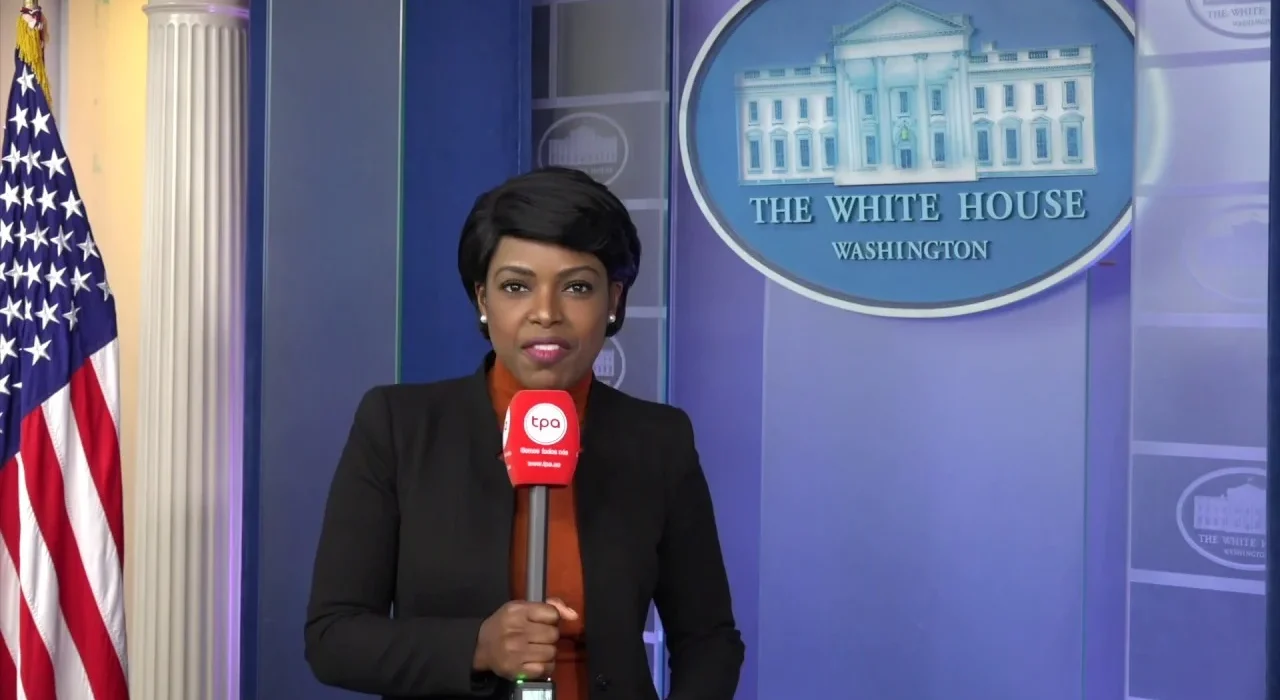
A tense exchange inside the White House briefing room has become one of the most consequential diplomatic moments in Africa’s recent history. Journalist Hariana Veras, known for her unflinching questioning and deep investigative work, directly challenged Rwandan President Paul Kagame and U.S. President Donald Trump about Rwanda’s military presence inside the Democratic Republic of Congo (DRC).

AfricaHeadline Reports Team
editorial@africaheadline.com
Her question pushed into the open an issue long treated as taboo in international diplomacy. Kigali has repeatedly denied deploying troops in eastern Congo, despite years of UN documentation and intelligence reports pointing to organized military operations, links to the M23 rebellion, and control over illegal mineral routes.
Moments after the exchange, the White House unveiled a new U.S.-brokered peace agreement. According to U.S. officials, the deal is legally binding, closely monitored, and requires Rwanda to withdraw its forces “very quickly.”
A turning point in a conflict the world has looked away from
For nearly three decades, eastern Congo has been the epicenter of one of the world’s deadliest conflicts. Regional actors, armed groups, and foreign interests have all exploited the vacuum of state control. Rwanda’s alleged involvement has been at the center of this dynamic, yet international pressure remained limited.
The Hariana Veras confrontation changed the tone instantly. Analysts say it marked the moment when the global community stopped pretending not to know.
A senior U.S. official told AfricaHeadline-U.S. Edition:
“This is no longer a conflict that Washington observes from a distance. We are now enforcing commitments.”
The Washington Agreement:
Clear, binding and without ambiguity
According to legal experts involved in the drafting, the new agreement functions as an international treaty. It obligates Rwanda to remove all troops from Congolese territory and establishes a verification mechanism led by the United States.
Violations could trigger strong punitive measures including: Economic sanctions; Suspension of U.S. military or development aid; Diplomatic isolation; Potential escalation to international legal bodies
For the DRC, long accustomed to foreign interference ignored by global institutions, this agreement signals a new precedent. Sovereignty is now central to the international agenda.
Tshisekedi secures a diplomatic victory
For Congolese President Félix Tshisekedi, the deal represents his most significant diplomatic win since taking office. It affirms Congo’s territorial integrity and positions the United States as guarantor of compliance.
But Washington delivered a message alongside its support. Congo must: Reform its defense and security institutions; Strengthen internal political unity; Build state capacity to prevent new external interference
The durability of peace will depend not only on Rwanda’s actions but also on internal cohesion in Kinshasa.
Minerals and economic power: The hidden core of the agreement
Beyond the political and military dimensions, the agreement also addresses the economic engine behind the conflict. Eastern Congo contains some of the world’s most strategic minerals, including cobalt, coltan, gold and tin.
The Washington framework confirms: Full Congolese sovereignty over mineral exploitation; Entry of U.S. and regional companies into formal, transparent mining partnerships; Dismantling of smuggling routes tied to armed groups and foreign networks
This could reshape the global supply chain for critical minerals, but also opens the door to complex legal and investment disputes if governance systems remain weak.
Rwanda faces a new level of international pressure
Rwanda continues to deny having troops inside the DRC, yet it signed a document that requires the withdrawal of troops it claims are not there. This marks a diplomatic shift driven by U.S. leverage over Kigali.
A regional analyst summarized it clearly:
“When Washington decides the era of denial is over, the era is over.”
The challenge ahead lies in enforcement. Past withdrawals have been partial or replaced by proxy groups. This time, the monitoring mechanism will test whether real change is possible.
A Defining moment for Africa’s security landscape
The developments in Washington signal more than a bilateral dispute. They represent a broader shift in how African conflicts are viewed by global powers.
Key implications include: Stronger international defense of African sovereignty; Accountability for foreign interference; Greater focus on economic transparency in conflict zones; Potential for long-term industrial development in the DRC
A diplomat from the African Union told AfricaHeadline:
“This is the first time in many years that the balance of power truly shifts on the ground.”
Frequently Asked Questions (FAQ)
Why was Hariana Veras’s question so significant?
It forced global leaders to acknowledge a reality long denied and created public pressure for direct action.
What does the agreement require from Rwanda?
A complete withdrawal of all troops from Congolese territory and cooperation with U.S.-led monitoring.
What happens if Rwanda violates the deal?
Sanctions, suspended aid, and potential escalation to international courts or Security Council action.
Does the agreement strengthen the DRC?
Yes. It reinforces sovereignty, secures international backing, and opens economic opportunities under new safeguards.
What risks remain?
Monitoring challenges, potential use of proxy groups, internal instability in Congo, and legal conflicts over mining investments.
Is the conflict resolved?
Not yet. The agreement is a breakthrough, but its success depends on implementation and sustained political commitment.
AfricaHeadline Editorial Team, Washington, D.C. — United States Bureau