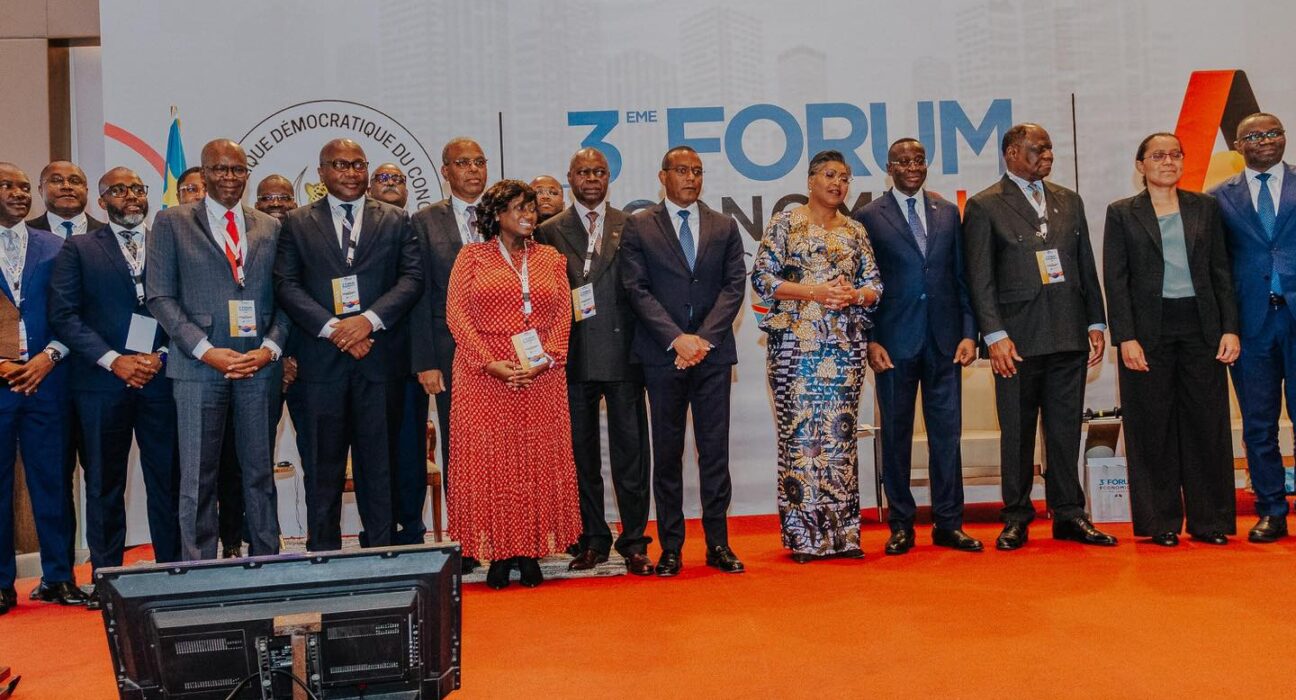
Kinshasa, April 2026 The 3rd Edition of the DRC–Angola Economic Forum, organised by AIPEX, Angola’s Agency for Private Investment and Export Promotion, has emerged as a turning point in bilateral economic relations, placing sub-regional integration and cross-border trade at the centre of a results-driven agenda.

AfricaHeadline Reports Team
editorial@africaheadline.com
Held under the theme “Sub-Regional Integration and Development of Cross-Border Trade,” the forum brought together senior policymakers, investors and business leaders at a critical moment for the continent, as Africa accelerates the implementation of the African Continental Free Trade Area (AfCFTA) and competition intensifies among regional economic corridors.
Despite a combined GDP exceeding $200bn, Angola and the Democratic Republic of Congo maintain formal trade flows of less than $200m, highlighting the structural gap between economic potential and actual integration.
By leading the organisation of the forum, AIPEX positioned itself as a key architect of a new economic cooperation model between Angola and the Democratic Republic of Congo, playing an active role in mobilising investment, promoting exports and facilitating engagement between public and private sector stakeholders.
The agency’s approach focused on turning dialogue into delivery, identifying bankable projects, strengthening regional value chains and establishing mechanisms to reduce trade barriers and unlock cross-border opportunities.
Sources close to the process indicate that priorities include formalising trade flows, currently dominated by informal channels, and building a more predictable, competitive and integrated business environment.
The Angola–DRC axis is emerging at a time when Africa’s economic geography is being reshaped by high-impact trade corridors such as the Maputo Corridor, the Abidjan–Lagos Corridor and the Northern Corridor in East Africa, which already move billions of dollars annually and benefit from integrated logistics infrastructure.
By contrast, the Angola–DRC corridor remains at an early stage of development, constrained by infrastructure gaps, limited customs digitalisation and fragmented regulatory frameworks. However, analysts argue that this phase offers an opportunity to adopt modern, integrated trade models from the outset.
Discussions in Kinshasa highlighted a number of persistent constraints limiting bilateral trade, notably insufficient transport and border infrastructure, which continues to slow the movement of goods and increase logistics costs, alongside low levels of customs and trade digitalisation that reduce efficiency and transparency in cross-border operations. These challenges are further compounded by regulatory fragmentation between the two countries, creating inconsistencies and uncertainty for businesses, while a heavy reliance on informal cross-border trade continues to undermine formal economic activity, limit fiscal revenues and constrain the full realisation of the corridor’s economic potential.
The Angola–DRC dynamic reflects a broader shift across Africa, where regional competitiveness increasingly depends on the ability of neighbouring economies to integrate effectively.
Both countries hold significant structural advantages, including natural resources, energy potential and strategic geographic positioning, which could underpin the development of a competitive economic corridor linking Southern and Central Africa.
In this context, AIPEX is emerging as a central instrument of Angola’s economic diplomacy, advancing investment attraction and export diversification strategies aligned with regional integration goals.
The announcement that the next edition of the forum will be hosted in Angola underscores the urgency of moving from diagnosis to implementation.
For analysts, the success of the initiative will depend on institutional capacity to deliver, including coordinated policy execution, structured financing and sustained public-private collaboration.
The strategic takeaway from Kinshasa is clear. Africa is reorganising around competitive economic corridors. The Angola–DRC axis, driven by AIPEX, has the potential to become a new engine of regional growth, provided ambition is matched by execution.
AfricaHeadline | Economy & Strategic Intelligence
AfricaHeadline | Copyright © 2026