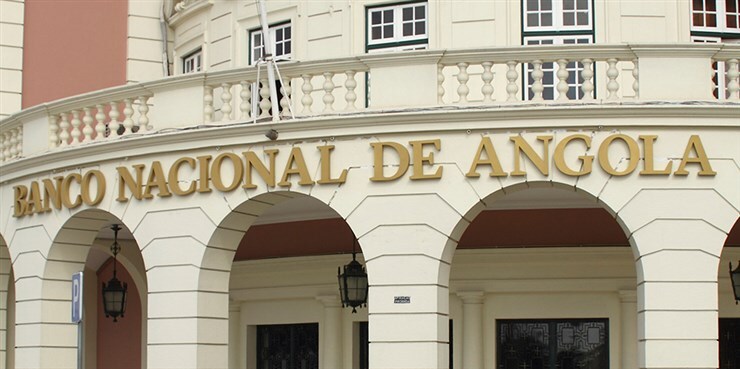
Lagos – The proposed establishment of a Bank of Industry (BOI) in Angola may ultimately prove to be one of the country’s most strategically significant economic reforms since the end of the civil war. At a moment when African economies are increasingly repositioning themselves around industrial competitiveness, regional value chains and productive sovereignty, Angola continues to face a fundamental structural challenge: the absence of a dedicated financial architecture capable of supporting long-term industrial transformation at scale.

AfricaHeadline Reports Team
editorial@africaheadline.com
Bank of Industry Angola: the financial institution that could redefine Angola’s industrial future
Despite substantial macroeconomic reforms over recent years, Angola’s economic structure remains heavily exposed to oil price cycles, external liquidity pressures and import dependency. According to data from the World Bank and the International Monetary Fund, oil continues to account for the overwhelming majority of export revenues and a substantial share of fiscal income, leaving the broader economy vulnerable to external commodity shocks.
While non-oil sectors have shown periods of recovery, industrial productivity and manufacturing output remain comparatively weak relative to the country’s economic potential.
This imbalance reflects a deeper structural problem. Angola possesses natural resources, logistical corridors, hydropower capacity, agricultural land and demographic scale, yet continues to lack sufficient long-term productive financing mechanisms capable of transforming these advantages into sustained industrial capacity.
Commercial banks largely remain concentrated in short-cycle operations, trade finance and highly collateralized lending models, while industrial sectors require patient capital, extended repayment horizons and risk-sharing structures that conventional banking systems are rarely designed to provide.
The creation of a BOI could therefore represent a strategic institutional response to one of the central weaknesses of Angola’s economic model: the disconnect between macroeconomic stabilization and productive transformation. Rather than functioning merely as another public lender, the institution could emerge as a specialized industrial development bank focused on financing manufacturing ecosystems, agro-industrial chains, industrial logistics, technological modernization and export-oriented productive sectors.
The economic implications would extend far beyond industrial output alone. Angola continues to allocate billions of dollars annually toward the importation of food products, industrial materials, pharmaceuticals and consumer goods that could potentially be produced domestically under the right financing and infrastructure conditions.
This persistent import dependence exerts structural pressure on foreign exchange reserves, weakens monetary stability and amplifies vulnerability to global supply-chain disruptions. A properly capitalized BOI could support import substitution strategies capable of reducing external dependency while simultaneously expanding domestic productive capacity and strengthening the non-oil tax base.
The experience of the Bank of Industry offers a relevant continental benchmark. Over the past decade, Nigeria’s BOI has evolved into one of Africa’s largest development finance institutions, mobilizing billions of dollars in blended financing structures while supporting thousands of industrial and small-business projects across multiple sectors. Similarly, institutions such as Brazil’s BNDES and South Korea’s state-backed industrial financing mechanisms played decisive roles during their respective industrialization phases by aligning national economic strategy with long-term productive financing capacity.
For Angola, the strategic rationale becomes even more urgent within the context of the African Continental Free Trade Area. As regional economic integration accelerates, African economies are likely to compete increasingly on the basis of industrial productivity, manufacturing efficiency and regional supply-chain positioning rather than purely on raw commodity exports.
Countries capable of developing stronger industrial ecosystems will likely secure disproportionate advantages within the emerging continental trade architecture. Without a dedicated industrial financing institution, Angola risks remaining a predominantly extractive economy within a rapidly industrializing African market environment.
Politically, the establishment of a BOI would signal a transition toward a more coordinated developmental framework in which industrial policy, regional development, export promotion and productive employment generation become institutionally interconnected.
The bank could function as a strategic platform linking entities such as AIPEX, the Fundo de Garantia de Crédito, FADA and provincial development initiatives into a more integrated productive ecosystem. If effectively governed, such coordination could help reduce regional economic asymmetries while accelerating industrial activity beyond Luanda into provinces with strong agricultural and manufacturing potential, including Huambo, Benguela, Huíla and Malanje.
Yet the political economy risks associated with state-backed development banks remain substantial. International experience demonstrates that industrial banks succeed not because of public ownership itself, but because of institutional discipline, operational independence and governance credibility.
Without transparent lending criteria, independent oversight mechanisms, portfolio exposure controls and rigorous project evaluation frameworks, a BOI could become vulnerable to politically motivated capital allocation, rising non-performing loan exposure and institutional inefficiency. The credibility of the institution among international investors and multilateral partners would therefore depend fundamentally on governance quality rather than financing volume alone.
The technological dimension of industrial transformation further reinforces the strategic relevance of such an institution. Modern manufacturing competitiveness increasingly depends on automation systems, industrial data management, artificial intelligence integration, digital supply-chain coordination and technological adaptation. Angola’s industrial transition cannot rely solely on expanding production volumes; it must also improve industrial sophistication, quality standards and productivity efficiency.
A BOI could therefore become a critical financing vehicle for industrial digitalization, smart manufacturing infrastructure, industrial laboratories, innovation hubs and technology-transfer partnerships capable of strengthening Angola’s productive competitiveness within both regional and international markets.
Environmental sustainability is also likely to become central to the long-term viability of Angola’s industrialization model. Unlike earlier industrial economies, Angola possesses the opportunity to integrate green industrial principles at a comparatively early stage of development. With substantial hydroelectric potential, growing solar capacity and significant agricultural resources, the country could position itself as a regional platform for sustainable industrial production.
A modern BOI could support this transition through dedicated financing facilities targeting renewable-energy integration, sustainable agro-processing, industrial recycling systems, low-carbon logistics and energy-efficient productive infrastructure.
Legally and institutionally, the establishment of a BOI would require a highly structured regulatory framework capable of balancing developmental flexibility with financial discipline. The institution would need a clearly defined statutory mandate, transparent reporting obligations, internationally aligned auditing standards and strong anti-corruption safeguards.
Parliamentary oversight, independent compliance mechanisms and merit-based financing criteria would be essential to preserving institutional credibility and ensuring that industrial financing remains economically rational rather than politically discretionary.
Ultimately, Angola’s next phase of economic transformation will depend less on the extraction of natural resources and increasingly on the country’s ability to convert capital into productive industrial capacity. The strategic challenge is no longer simply how to stabilize the economy, but how to industrialize it competitively within a rapidly changing global and African economic environment shaped by supply-chain fragmentation, industrial sovereignty and intensifying competition for productive investment.
If properly governed, adequately capitalized and institutionally protected from political interference, a Bank of Industry Angola could emerge not merely as a financial institution, but as one of the central pillars underpinning the country’s long-term industrial modernization, economic resilience and regional competitiveness.
__
By AfricaHeadline Editorial Desk
© 2026 AfricaHeadline Media Network. All Rights Reserved.