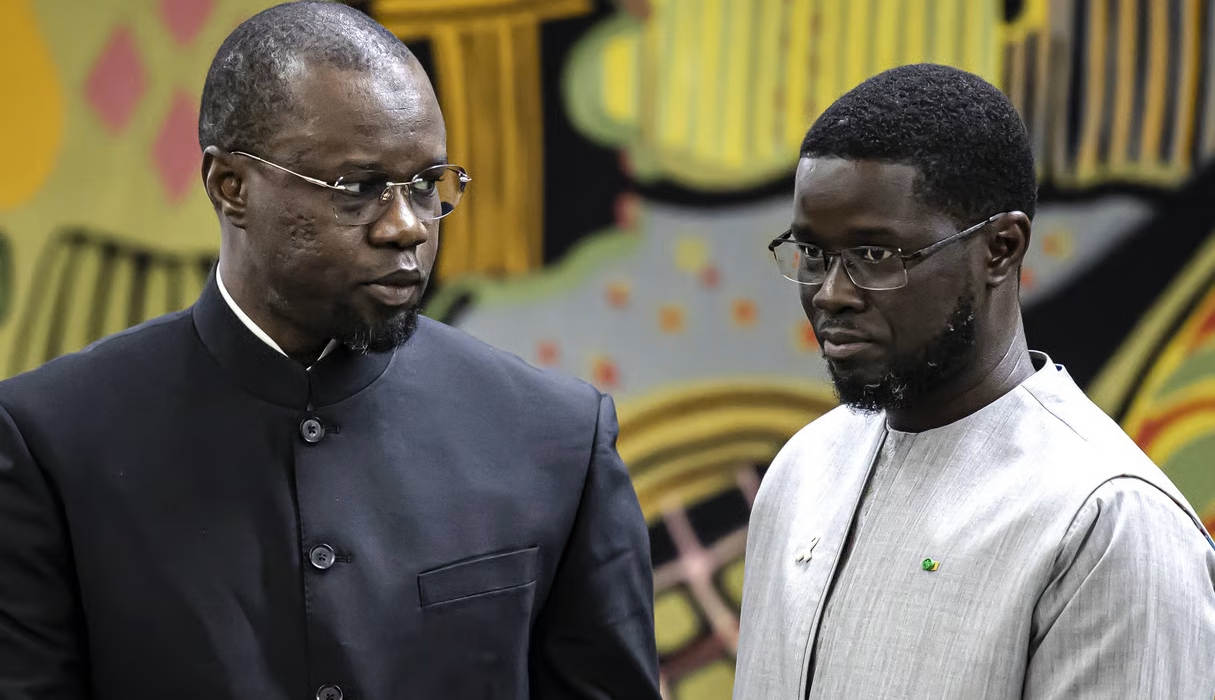
DAKAR, Senegal — Senegalese President Bassirou Diomaye Faye dismissed Prime Minister Ousmane Sonko and dissolved the government late Friday, exposing widening divisions at the heart of the ruling reformist coalition that swept to power on promises of political change, economic sovereignty and institutional reform.

AfricaHeadline Reports Team
editorial@africaheadline.com
The announcement, delivered through state television, marked the most serious political rupture since Faye and Sonko led the opposition PASTEF movement to a historic electoral victory in 2024.
The dismissal follows months of growing tensions between the two leaders over the direction of economic policy, governance strategy and control of the ruling political movement, according to analysts and local media reports.
While Faye has increasingly adopted a pragmatic approach focused on maintaining institutional stability and restoring confidence among international financial partners, Sonko remained aligned with a more confrontational nationalist agenda centred on economic sovereignty and resistance to external influence.
The disagreement intensified as Senegal faced mounting fiscal pressure following the discovery of previously undisclosed public liabilities and growing concerns over debt sustainability. Negotiations with the International Monetary Fund became increasingly sensitive amid discussions over subsidy reforms, public spending cuts and debt restructuring measures.
Political analysts say the crisis also reflects an internal power struggle within the ruling PASTEF movement.
Although Faye holds the presidency, Sonko has remained the coalition’s most influential political figure and retains strong support among young voters who viewed him as the ideological architect of Senegal’s political transition.
“The government increasingly appeared to operate with two centres of authority,” said one Dakar-based political analyst. “Faye controlled the institutions of the state, but Sonko continued to dominate the political base.”
The alliance between the two leaders had been viewed across Africa as a symbol of generational political change and democratic renewal.
Their victory in the 2024 presidential election followed years of political unrest, anti-establishment mobilisation and protests driven largely by youth frustration over unemployment, corruption and economic inequality.
However, governing pressures, economic constraints and differing strategic visions gradually widened fractures inside the administration.
The dismissal of Sonko is expected to trigger uncertainty within the ruling coalition despite PASTEF’s dominant parliamentary majority. Analysts warn that prolonged political instability could complicate negotiations with international lenders, weaken investor confidence and increase tensions among supporters of the ruling movement.
Senegal remains one of West Africa’s most stable democracies, though the latest developments have raised concerns over the future cohesion of the country’s reform agenda and the durability of the alliance that brought the current leadership to power.
__
By AfricaHeadline Editorial Desk
Strategic Insight. African Perspective.
© 2026 AfricaHeadline Media Network. All Rights Reserved.
**This material is protected under international copyright and intellectual property laws. No part of this publication may be reproduced, distributed, transmitted or republished in any form or by any means without prior written authorization from AfricaHeadline Media Network.**