Nigeria’s economic illusion? Tinubu’s ambitious 7% growth target clashes with a fragile 3.13% reality
- EconomicNigeriaWest Africa
- August 17, 2025

Economy | Africaheadline Analysis
Abuja, AfricaHeadline Investigative Desk, August, 2025
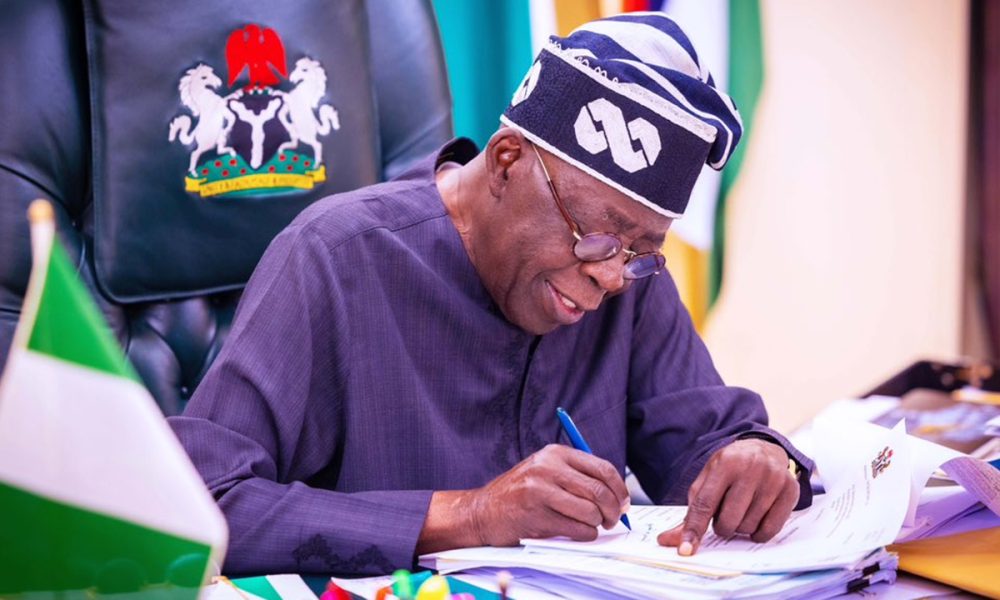
Nigeria’s President Bola Ahmed Tinubu has doubled down on his promise of delivering 7% annual economic growth by 2027, calling it a pathway to lift Africa’s most populous nation out of chronic poverty and financial instability. But the latest figures tell a sobering story.

AfricaHeadline Reports Team
editorial@dw-demosnewstaion.online
In the first quarter of 2025, Nigeria’s economy grew by just 3.13%, far below Tinubu’s projection. The marginal improvement was largely driven by a technical rebasing of the country’s gross domestic product, which inflated the nominal value of the economy to ₦372.8 trillion (approximately US$244 billion). While the rebasing offered cosmetic relief, lowering the debt-to-GDP ratio from 52% to 40%, it failed to address Nigeria’s deep-rooted structural vulnerabilities.
The National Bureau of Statistics (NBS) reported that the services sector accounted for 57.5% of the GDP, growing by 4.33%. The industrial sector expanded by 3.42%, while agriculture, despite a nominal growth rate of 10.04%, failed to produce meaningful impact. In a country still heavily reliant on oil revenues, the petroleum sector posted a muted growth of only 1.87%.
Yet the most alarming figure lies in the inflation rate, which surged to 34.8% in July, one of the highest in the world. Food prices, transport costs, and electricity tariffs have spiked dramatically, pushing millions of Nigerians further into poverty. The Central Bank of Nigeria predicts that inflation may ease later this year, but for ordinary citizens, the hardship remains immediate and severe.
Since assuming office, Tinubu has embraced a bold economic reform agenda: scrapping fuel subsidies, liberalizing the naira, and reining in public spending. In theory, these reforms were aimed at restoring fiscal discipline and boosting investor confidence. In practice, they have brought widespread pain.
“There is a gap between reform design and reform reality,” says Dr. Halima Yusuf, a policy economist based in Kaduna. “Without social buffers or a roadmap for inclusive growth, the reforms have hit the poor hardest. Nigeria is paying the price of haste.”
In his most recent cabinet address, Tinubu admitted that low public savings and poor revenue transparency, especially by state-owned oil companies, are hindering the country’s development. He has called for a full audit of revenue retention policies and greater accountability across federal agencies.
Once Africa’s largest economy, Nigeria is now at risk of slipping to fourth place, behind Egypt, South Africa, and Algeria. The International Monetary Fund (IMF) projects Nigeria’s 2025 GDP growth at 3.4%, while the World Bank forecasts 3.6%, both well below the government’s own targets.
Even with the rebased GDP figures, Nigeria’s real economic clout has eroded. Foreign direct investment has declined, youth unemployment remains dangerously high, and insecurity in the north continues to undermine productivity and investor sentiment.
Tinubu’s administration faces a critical juncture. The political will to enact reform is evident, but so is the failure to protect the most vulnerable from its consequences. Nigeria’s economic recovery is now as much a social and political challenge as it is a financial one.
If the government is to turn ambition into reality, it must invest in social protection, expand public infrastructure, stabilize security in conflict-prone areas, and rebuild the broken trust between state and society. Otherwise, the 7% target risks becoming yet another unfulfilled promise in the country’s long economic saga.
AfricaHeadline Investigative Economics Unit, August 2025