The tragedy and the weight of João Lourenço’s role in the Washington peace agreement for the DRC
- AmericaAngolaCentral AfricaDemocratic Republic of the Congo (DRC)East AfricaKenyaPoliticsRwandaSouthern Africa
- December 3, 2025
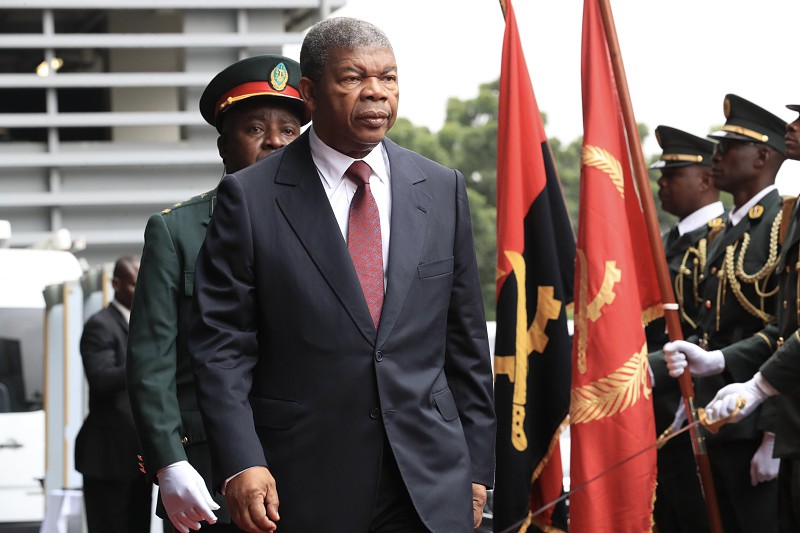

Washington – The tragedy, and the magnitude, of João Lourenço’s role in the Washington Peace Agreement for the Democratic Republic of Congo cannot be contained in a polite diplomatic tribute. Today, he is the African Union’s “Champion for Peace,” the mediator of the Luanda Process, and the face of a diplomacy attempting to hold together Africa’s dignity and geopolitical realism in a region where external interests still call far too many shots.

AfricaHeadline Reports Team
editorial@dw-demosnewstaion.online
The “Poisoned greeting” of 2017
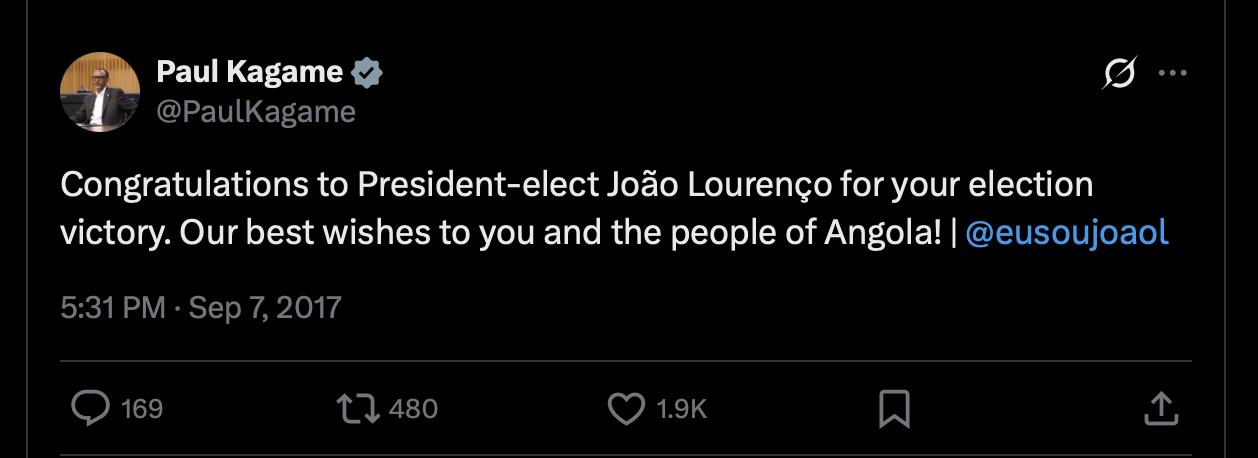
When João Lourenço took office in 2017, Paul Kagame’s immediate congratulatory message appeared, on the surface, to be a gesture of courtesy between statesmen. In reality, that political handshake was also a calculated move by Kigali in a long-running game that had the DRC at its center: control of borders, mineral-smuggling corridors, networks of influence in Kivu, in regional diplomacy and across Western capitals.
Angola’s Intelligence edge, and the Man behind It
Kagame knew, and feared, that Angola holds a strategic advantage few on the continent are willing to acknowledge: a political and security intelligence apparatus with a long memory of Africa’s Cold War, shaped by decades of decoding regional power plays, proxy militias and the shadow networks that define the Great Lakes. At the center of this apparatus stands General Fernando Garcia Miala, the key strategist and principal intelligence adviser to President João Lourenço.
With his mastery of regional dossiers, his understanding of covert networks and his long experience unraveling the hidden architecture of conflict in the DRC, Miala became the quiet compass behind Lourenço’s diplomacy, ensuring Angola would never be blindsided by Kigali’s maneuvers. Senior officials in Luanda credit him with anticipating, months before the region woke up to the danger, the coordinated revival of the M23 rebellion with foreign backing.
Angola’s broader intelligence footprint reinforced this advantage. Its embassy in Kigali, then headed by Eduardo Filomeno Octávio, and its strong diplomatic presence in Kinshasa served for years as a silent radar and direct channel to Luanda, mapping what regional diplomats now describe as a “macabre plan” to reshape power in eastern Congo, especially as the M23 re-emerged as a foreign-backed military proxy.
The Congo–Angola bloodline factor
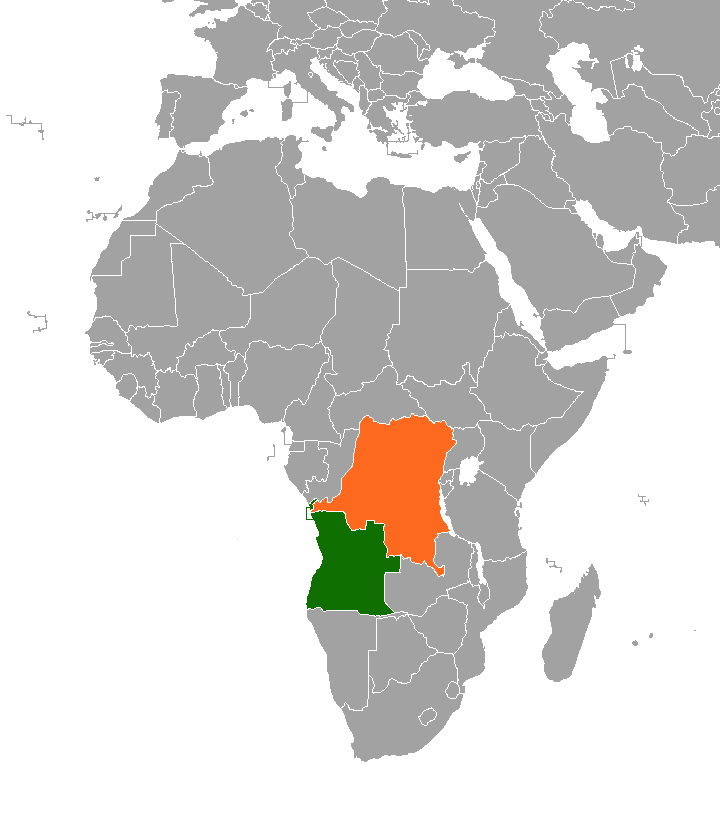
There is a critical dimension Kagame miscalculated, the profound historical, cultural and bloodline ties binding Angola and Congo long before either state existed in their modern form.
Across Zaïre, Lunda, Kasai, Cabinda and the Copperbelt, families intermarry, languages flow across borders, and ancestral trade routes carve patterns that predate colonial maps by centuries. In this space, Angola and Congo are not mere neighbors; they are intertwined civilizations. A shock administered in one reverberates violently in the other.
For Luanda and Kinshasa, therefore, a destabilized Congo is not a distant humanitarian concern, it is a seismic threat to Angola’s national security, social cohesion and regional balance of power.
It is this intimate geography of blood and history that explains why Angola moved early, decisively and discreetly. The response was not driven by protocol, nor by diplomatic courtesy. It was driven by something far deeper:
survival.
Luanda as laboratory of peace, and of frustration
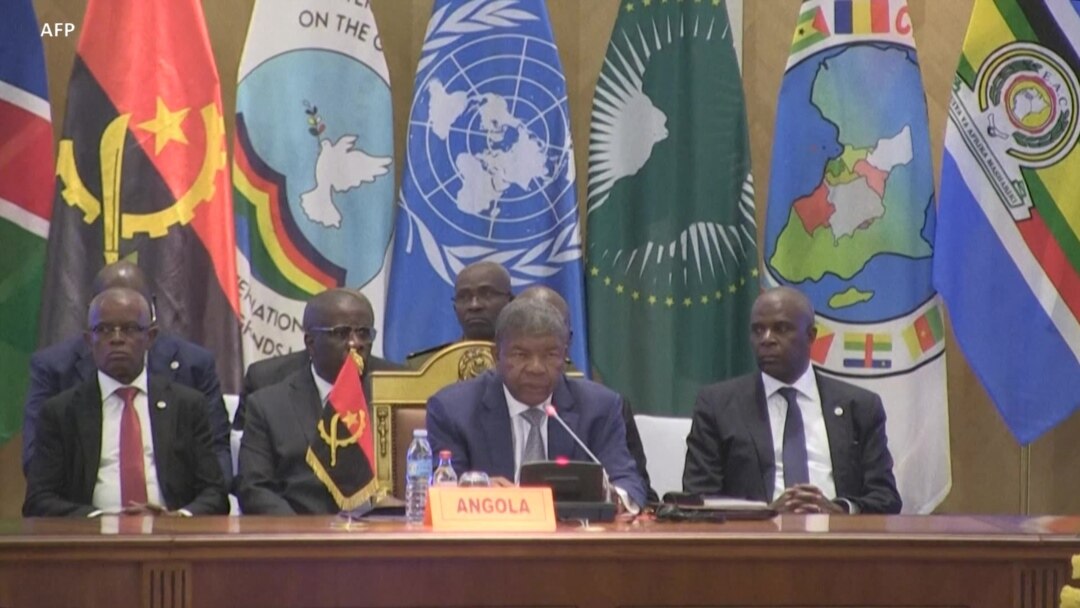
It was no accident that the African Union chose João Lourenço as Facilitator and later elevated him to “Champion for Peace and Reconciliation,” giving him a formal mandate to mediate the crisis between Rwanda and the DRC through the Luanda Process.
Between 2022 and 2024, Luanda hosted summits, discreet meetings, and technical negotiations where Lourenço repeatedly tried to impose three simple, but revolutionary, premises for a region accustomed to perpetual conflict:
There is no purely military solution. The AU and Lourenço insisted that peace requires a blend of security, political dialogue, and development, not additional foreign troops or new armed groups.
Absolute respect for the territorial integrity of the DRC. Official communiqués explicitly condemned the M23 and its external supporters, demanding the withdrawal of all uninvited forces from Congolese soil.
Coherence between regional peace frameworks. Luanda and Nairobi could not be rival initiatives but complementary pillars under the AU, SADC and EAC architecture.
Yet the reality on the ground often contradicted the agreements signed in Luanda within hours. The M23 advanced, ceasefires collapsed, and both Kigali and Kinshasa weaponized public communication to blame each other. Eventually, Angola formally stepped back from direct mediation, acknowledging the need to recalibrate its priorities, while still defending an African solution to an African crisis.
This is where the tragic dimension of Lourenço’s role emerges: being right too early, in an environment where armed actors and some external sponsors were not yet ready to give up the profits generated by Congo’s misery.
Kagame, the M23, and the uneasy dance with regional powers
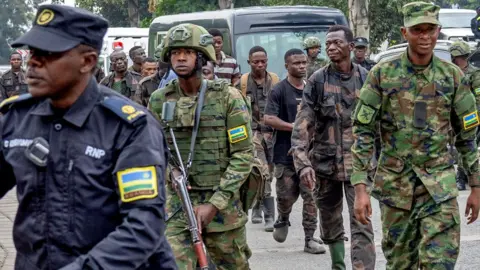
Political rhetoric may cast Kagame as a “villain” or a “man without scruples.” Cold analysis reveals something more complex: a leader balancing regime survival with an assertive strategy of projecting power beyond Rwanda’s borders, particularly into the DRC, where resources such as coltan, gold and cobalt feed both formal and informal economies.
UN reports and Security Council resolutions directly cite Rwanda’s support for the M23 and call for its immediate cessation, demanding a full Rwandan withdrawal from Congolese territory. This is not the language of Kigali’s political enemies, it is now embedded in the vocabulary of the world’s highest security authority.
At the same time, tensions between Rwanda and South Africa, from cases involving exiled dissidents to mutual public accusations, show that Kigali’s confrontational posture extends far beyond Kinshasa. Cyril Ramaphosa, in contrast, has opted for strategic restraint, avoiding a military confrontation that could ignite all of Southern Africa.
Lourenço, reading this fraught landscape, sought to position Angola as a bridge: firm in condemning violations of Congolese sovereignty, pragmatic enough to keep open channels with Kigali, Pretoria, Dar es Salaam, Nairobi and Washington.
From Luanda to Washington: When peace finds a new stage
The Peace Agreement between Rwanda and the DRC, signed in Washington on June 27, 2025, marks a new phase. Negotiated under U.S. mediation, with Donald Trump, Marco Rubio, Massad Boulos and the Emir of Qatar among its protagonists, the accord calls for the withdrawal of Rwandan troops from eastern Congo, the end of support to militias such as the FDLR, and the creation of a regional economic cooperation framework within 90 days.
Three features stand out:
The M23 is excluded from the treaty, negotiating separately with Kinshasa, a structural weakness, since consolidating peace without addressing the main armed group on the ground borders on wishful thinking.
President Tshisekedi insists on the inviolability of the DRC’s borders, rejecting political integration of M23 fighters, reminding observers that similar experiments in the past ended in disaster.
Kagame frames the agreement as evidence of his “good faith,” while simultaneously accusing Kinshasa of shifting positions, a narrative crafted to pre-assign blame if the arrangement collapses.
So where does João Lourenço stand now that the spotlight has shifted from Luanda to Washington?
The answer is uncomfortable but unavoidable: without Angola’s groundwork and the Luanda Process, it is unlikely that the diplomatic momentum necessary for a Washington Agreement would exist. The core principles, international recognition of the gravity of the conflict, explicit condemnation of the M23, coordination of regional peace tracks, and reaffirmation of the need for dialogue, were shaped in documents and summits where Lourenço played a central role.
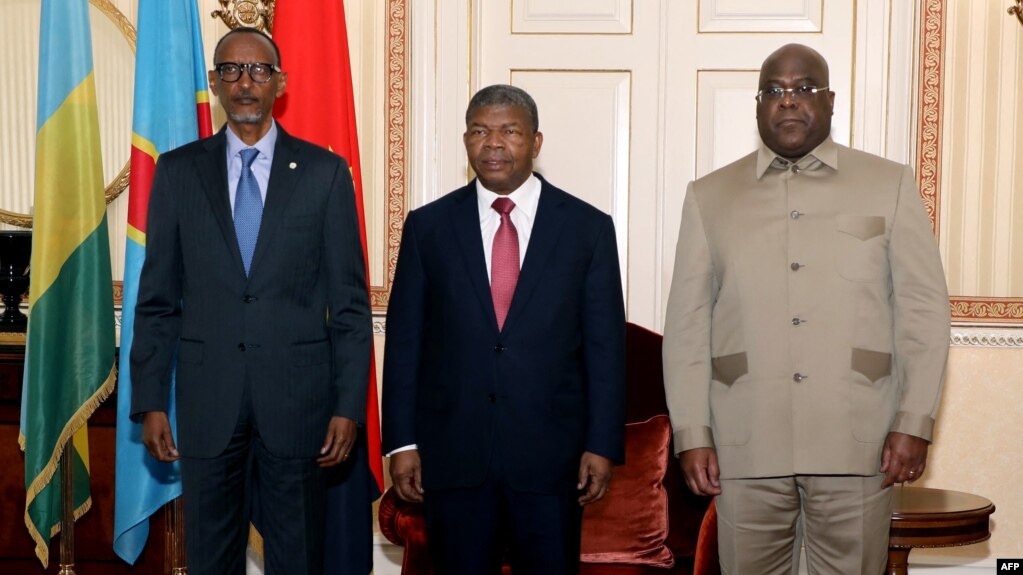
Washington stepped in largely because, despite UN resolutions, African summits and costly military stalemates, the key actors continued responding to incentives set by great powers and global markets. The stage changed, but the script was drafted in Luanda.
The African tragedy: When those who sow peace do not harvest its fruits
From a pan-African perspective, the true tragedy lies here: an African president, formally invested as the AU’s Champion for Peace, leads an exhaustive mediation process, only to see the most visible outcome sealed on another continent, with external actors occupying center stage.
This does not diminish the Washington Agreement, nor absolve Africans of responsibility. But it exposes three structural vulnerabilities:
Dependence on external guarantees. As long as Africa’s security architecture lacks enforcement tools, meaningful sanctions, and real political leverage, leaders will continue knocking on Washington’s door.
Deep internal fractures. Regional elites’ rivalries, the instrumentalization of armed groups, and the war economy surrounding Congo’s resources make conflict management more profitable than conflict resolution.
A deficit of African narrative. The world knows the “Washington deal,” but few know the Luanda Roadmap or what was discussed when Lourenço brought Kagame and Tshisekedi to the same table, or how the AU and SADC have repeatedly warned, in communiqués largely ignored abroad, that “there is no military solution.”
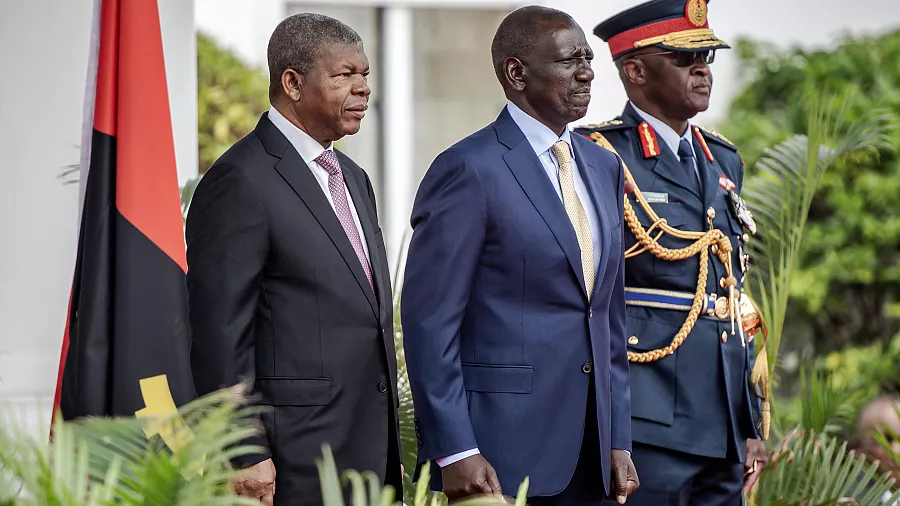
For Angola, this is both a partial defeat and a silent victory: a defeat because the symbol of peace will be associated with Washington; a victory because the record, AU resolutions, SADC statements, diplomatic communiqués, preserves Lourenço’s central role. History tends to recover what headlines forget.
What comes next?
If the question is “Where does Africa’s real problem lie?”, the answer sits at the intersection of:
Leaders who, like Kagame, subordinate regional sovereignty to the logic of regime survival;
Congolese elites who for decades accepted the fragmentation of the state;
And an international order that continues to view Congo less as a nation of 100 million people and more as a warehouse of strategic minerals.
João Lourenço cannot fix this equation alone. But he points to a path:
Defending the DRC’s territorial integrity and the primacy of African diplomacy, even when negotiations take place in Washington, Doha or Brussels.
Using his AU presidency and Peace Champion mandate to elevate the Rwanda–DRC crisis into a broader debate on resource governance, accountability for the financing of armed groups, and UN Security Council reform, where Africa remains drastically underrepresented.
Investing in an African narrative, where platforms such as AfricaHeadline, CNN, BBC NEWS Africa and others can produce serious dossiers with data, maps, timelines and analysis, so African citizens understand that peace is not a magic gesture in Trump’s office, but a long process shaped in Luanda, Addis Ababa, Dar es Salaam and Pretoria.
João Lourenço is neither a “miracle worker” nor a decorative spectator to a peace crafted outside Africa. He is one of the architects of an imperfect process, marked by reversals and contradictions, that has nevertheless created conditions for Rwanda and the DRC to sign, for the first time in decades, an agreement with dates, obligations and oversight.
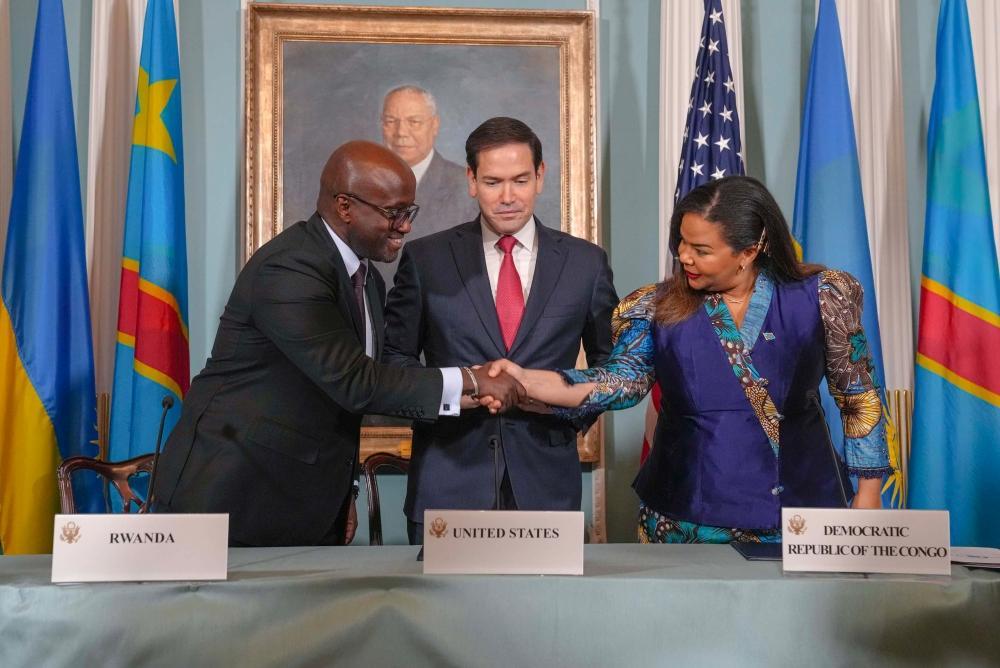
The tragedy is that Africa has not yet secured the power to ensure that its own champions of peace fully harvest the fruits of what they sow. But the fact that a “Washington Agreement” exists only after a long “Luanda Process” proves one thing: whether outsiders like it or not, no one can speak of peace in the Great Lakes region without passing through João Lourenço, and Angolan diplomacy.
AfricaHeadline Investigative Desk
Africa’s Voice. Africa’s Story. Africa’s Future.
editorial@dw-demosnewstaion.online