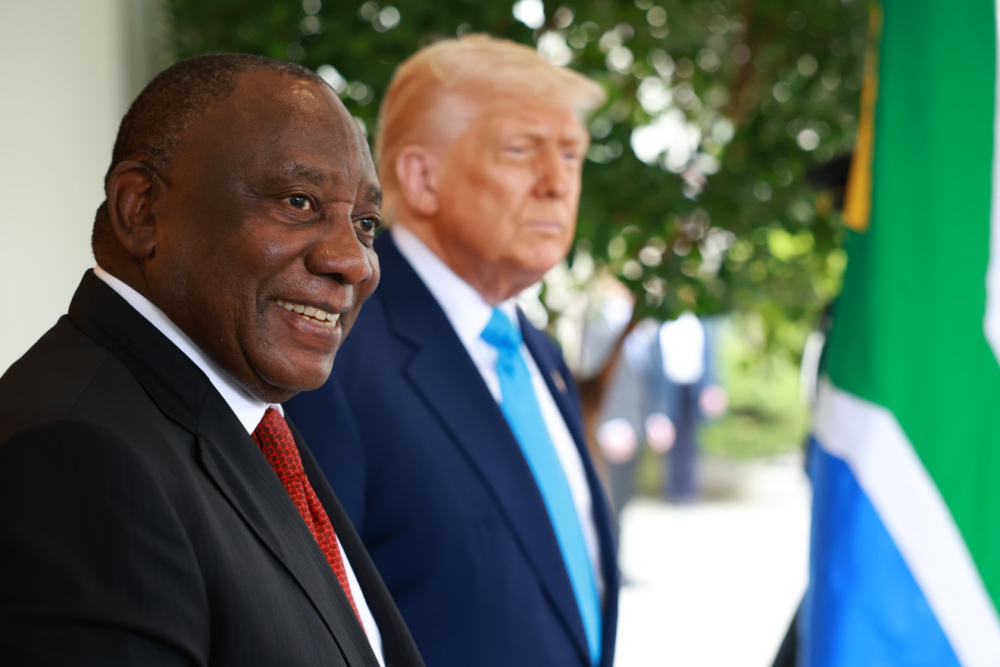
Pretoria, South Africa – In a direct response to newly imposed 30% tariffs by the United States, South Africa has launched a sweeping economic relief package aimed at protecting local industries and preserving national sovereignty over economic policy. The measures, announced Monday, come after months of failed negotiations and rising tensions between Pretoria and Washington.

AfricaHeadline Reports Team
editorial@africaheadline.com
The government’s response includes financial support lines, regulatory exemptions and an outright rejection of claims that its domestic affirmative action policies triggered the fallout.
The South African government will provide targeted support to industries most affected by the US tariffs, particularly steel, aluminum, wine and automotive parts. The aid package includes low-interest credit lines, emergency liquidity support through the Industrial Development Corporation (IDC) and the National Empowerment Fund (NEF), and temporary exemptions from competition laws allowing collaboration between local firms in distressed sectors.
“This intervention is vital,” said a senior official at the Department of Trade, Industry and Competition, speaking to Africa Headline on condition of anonymity. “We are protecting over 50,000 jobs and nearly 900 million dollars in export value.”
The White House claims the tariffs are a response to “unfair trade practices,” but analysts point to a deeper political undercurrent. In a recent campaign rally, former President Donald Trump directly attacked South Africa’s Black Economic Empowerment (BEE) policies, accusing them of promoting reverse discrimination and disadvantaging American businesses.
Pretoria responded forcefully. “Our empowerment policies are not up for negotiation,” said Minister in the Presidency, Kgosientsho Ramokgopa. “We will not abandon the constitutional imperative of economic redress just to appease foreign powers.”
Sources close to the negotiations revealed that Pretoria had proposed a wide-ranging economic cooperation framework earlier this year, pledging to purchase up to 2 billion dollars annually in US liquefied natural gas and invest 3.3 billion dollars in American industrial sectors including aviation and green technologies.
The proposal, which Pretoria considered a strong signal of goodwill, was left unanswered by Washington. “We were met with complete silence,” a diplomat involved in the process told Africa Headline. “It became clear that the sticking point wasn’t trade, but our domestic policies.”
The tariffs may jeopardize South Africa’s continued access to the African Growth and Opportunity Act (AGOA), a key US trade policy expiring in 2025. Several US lawmakers have called for the exclusion of South Africa from AGOA, citing its political alignment with BRICS and its refusal to align with US foreign policy on Russia and China.
Economic experts warn of long-term ramifications. “This isn’t just about today’s tariffs. It’s about reshaping trade norms and punishing policy independence,” said Dr. Thabo Luthuli, a trade economist at Wits University.
President Cyril Ramaphosa convened emergency meetings with business leaders, labor unions and civil society to strategize a unified response. His government is framing the situation as a test of national resilience and economic sovereignty.
“We will not allow external pressure to derail our transformation agenda,” Ramaphosa said in a televised address. But opposition parties are not convinced. The Democratic Alliance has accused the government of mishandling the US relationship and warned that easing competition laws could create market monopolies.
South Africa’s regional partners in the Southern African Development Community (SADC) are watching closely. Countries such as Namibia, Mozambique, Botswana and Angola, all AGOA beneficiaries, may face similar pressure if they adopt similar empowerment policies.
“This is a warning shot to the continent,” said Sipho Dlamini, a geopolitical analyst. “If Africa doesn’t stand together, we will be picked off one by one.”
Pretoria is considering lodging a formal complaint at the World Trade Organization (WTO), though insiders admit that the WTO’s dispute resolution mechanism remains crippled by US obstructionism. As a result, South Africa is also exploring alternative multilateral responses via BRICS and the African Continental Free Trade Area (AfCFTA).
More than a trade dispute, the standoff between South Africa and the US has become a symbolic clash over policy independence, racial justice and the legacy of colonial inequality.
“This is not just about economic pain,” said investigative journalist Thandeka Ncube. “It’s about whether a post-apartheid African state has the right to define its own development model, even if Washington doesn’t approve.”