By AfricaHeadline – Special Feature
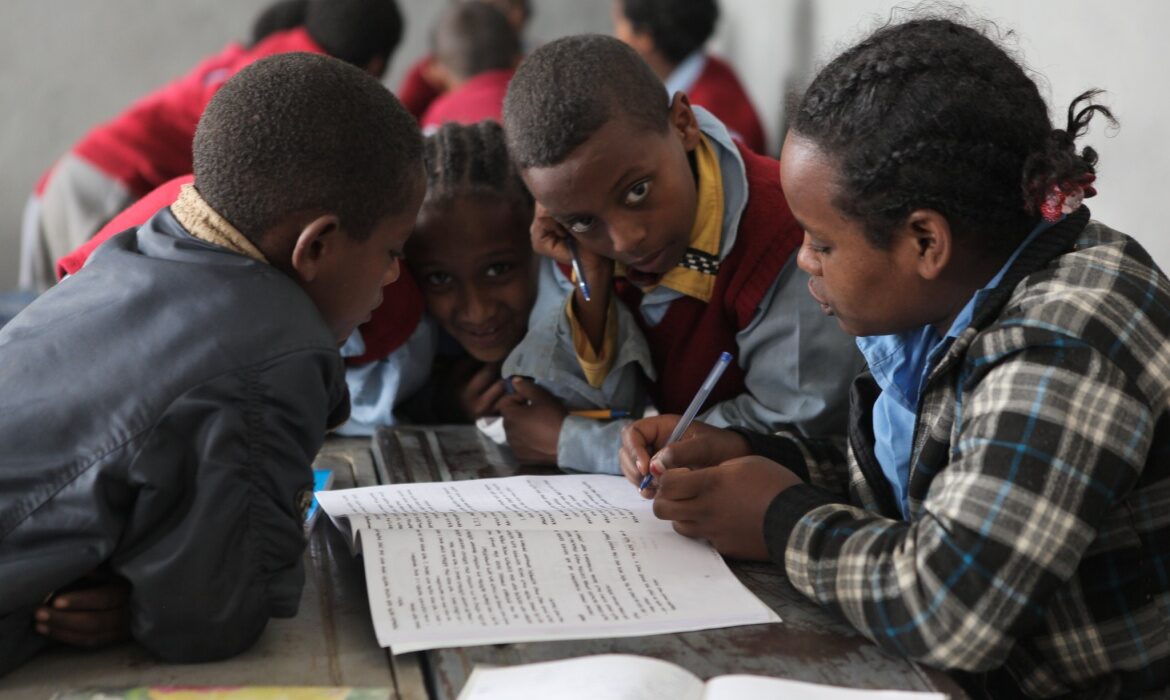
Africa’s most decisive battle in the 21st century will not be fought over oil, diamonds, or fertile land. It will be fought over the classroom. No continent has ever achieved lasting development without educating its people, and Africa will be no exception.

AfricaHeadline Reports Team
editorial@africaheadline.com
Nelson Mandela’s words remain prophetic: “Education is the most powerful weapon which you can use to change the world.” Without a bold educational revolution, Africa risks turning its youthful population into a crisis of unemployment and instability. With it, the continent could unlock one of the greatest growth stories of this century.
In a rural community in northern Nigeria, 13-year-old Aisha wakes up before dawn to fetch water instead of going to school. She is one of the 20 million Nigerian children currently out of school, according to UNICEF. Despite Nigeria’s oil wealth, the lack of access to basic education has left millions like Aisha without the tools to escape poverty.
Contrast this with Eric, a 25-year-old software developer in Kigali, Rwanda. Thanks to the government’s investment in digital literacy and technical education after the 1994 genocide, Eric learned coding in secondary school and today works for a fintech startup attracting international capital. Rwanda’s literacy rate now stands above 77%, and Kigali is emerging as a tech hub in East Africa.
These two lives tell the same story in different ways: education, or the lack of it, determines the destiny of nations.
In the 1960s, South Korea was poorer than Ghana and Nigeria, with a GDP per capita under $200. Today, it exceeds $35,000, powered not by natural resources but by universal education, research, and innovation. Singapore, once a swampy island without resources, is now a global financial and technological powerhouse for the same reason: it educated its people.
Meanwhile, the Democratic Republic of Congo, despite vast diamond and cobalt reserves, remains among the world’s poorest countries because education never became the national priority.
Education Gap, Africa vs the World
98 million African children and youth out of school (UNESCO, 2024).
9% average university enrollment in Africa vs 40% in Latin America and 75% in South Korea.
20 million out-of-school children in Nigeria alone (UNICEF).
Countries with high literacy like Mauritius and Seychelles rank top in Africa’s Human Development Index.
Countries with lowest literacy, Niger, Chad, South Sudan, sit at the bottom of global HDI rankings.
The pattern is undeniable: nations that prioritize education prosper. Those that neglect it remain fragile.
Kwame Nkrumah, Ghana’s independence leader, once declared: “Political independence has no meaning unless it is linked with economic independence.” Today, it is clear: economic independence means little without educational sovereignty.
Without African engineers, foreign companies will continue to dominate mining. Without African doctors, health systems will remain aid-dependent. Without African teachers, children will grow up learning a history written by others.
The future of Africa’s energy transition, food security, and digital revolution will be decided not in boardrooms or parliaments, but in classrooms and universities.
-
Universalize basic education – No child should be left behind.
-
Expand vocational and technical training – Africa needs millions of skilled workers for industry and agriculture.
-
Invest in science and research – Universities must become hubs of African-led innovation.
-
Educate for citizenship – Informed citizens are less vulnerable to corruption and extremism.
-
Promote gender equality in education – Educated women mean healthier families, stronger economies, and more stable societies.
The global evidence is overwhelming. South Korea, Singapore, and Finland show that education transforms poor nations into global powers. Niger, Chad, and South Sudan show that without education, even resource-rich nations cannot progress.
Africa will never achieve sustainable development without a vision centered on education and training. Oil reserves will run dry, diamonds will be depleted, but knowledge is renewable and eternal.
Without education, Africa will be exploited.
With education, Africa will be sovereign.