Lula rejects Brazil’s “Stray dog complex” (complexo de vira-lata) and reasserts the nation as a sovereign power
- AmericaPoliticsWorld
- September 24, 2025

By AfricaHeadline – Brasília/New York Bureau
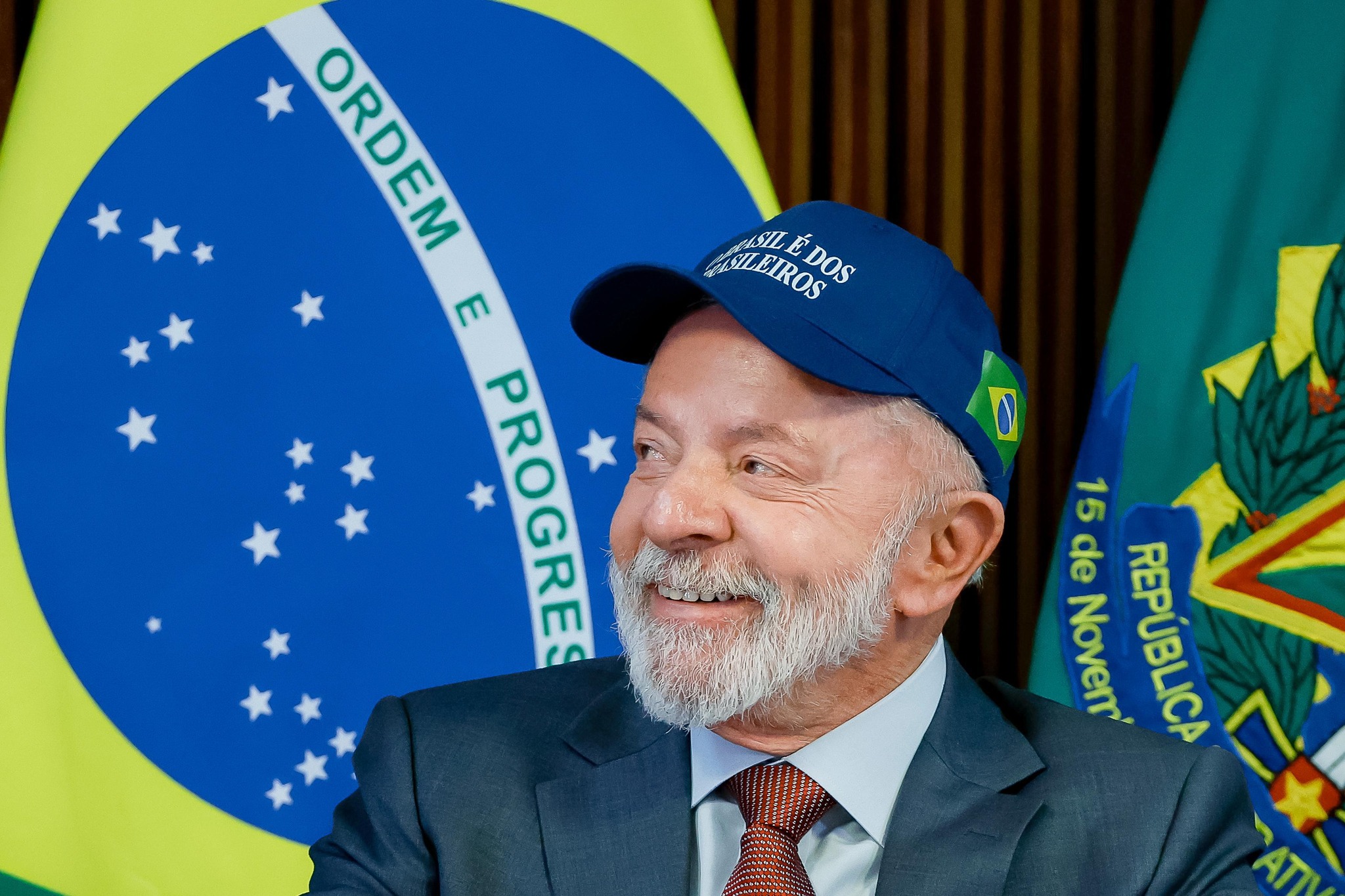
Brasília / New York — On the floor of the United Nations General Assembly, Luiz Inácio Lula da Silva made clear what Brazil represents in 2025: a nation that will not bow to external pressure. His message echoed like a manifesto of sovereignty. By denouncing as “unacceptable” the sanctions and restrictions imposed by Washington in response to the trial of former president Jair Bolsonaro, Lula projected an image of firm leadership, a living portrait of the “stray dog complex” that does not exist in him.

AfricaHeadline Reports Team
editorial@dw-demosnewstaion.online
In solemn tones, Lula stressed that Brazilian democracy is not for sale and cannot be subject to intimidation. His explicit defense of the judiciary and national institutions was received as an act of patriotism and confidence in the nation’s future. For him, accepting foreign interference would mean surrendering national dignity. Refusing it, instead, reaffirms Brazil’s role as an indispensable voice of the Global South.
By invoking sovereignty, Lula tied his message to a central thread of his political life: foreign policy must mirror the dignity of the Brazilian people. His words were not gratuitous confrontation but protection. He deliberately chose the UN stage, the arena where nations stand as equals, to make this point.
International analysts say the moment strengthens Brazil’s presence in a fragmented global order. In a world where major powers vie for dominance, Lula’s stance reinforces the idea that emerging countries can no longer be treated as spectators. He presented himself not just as the guardian of Brazil but as a defender of all those seeking fairness in an unequal international system.
The UN scene also revealed Lula’s paradoxical style: even as he openly criticized U.S. punitive measures, he left the door open to dialogue. Hours later, Donald Trump praised the “excellent chemistry” he felt with the Brazilian president, announcing a meeting between the two next week. This blend of firmness and openness reflects the essence of Lula’s leadership, confidence without isolation, pride without intransigence.
This balancing act is not new. From his earliest terms in office, Lula cultivated an image as a global mediator, able to converse with leaders across the ideological spectrum. Now, even while challenging Washington, he is willing to sit down with Trump, demonstrating an ability to turn tension into opportunity.
For international observers, this mix of resistance and pragmatism could reposition Brazil as a mediator in an era of polarization. It is a delicate exercise: standing firm without burning bridges. Yet it is precisely this ability that distinguishes a submissive nation from a sovereign one.
At home, reactions were immediate. Allies celebrated a president who raised his voice against foreign powers and placed national independence above all. Critics, however, warned of potential diplomatic strain and commercial consequences. Still, the symbolism of his speech transcended immediate calculations: Lula turned the UN podium into a stage to declare that Brazil will not be treated as a periphery state.
The narrative also resonated in the international press. American and European outlets highlighted the defiant tone but acknowledged that Lula had placed Brazil back at the center of global attention. The contrast with hesitant leaders from other emerging nations reinforced the perception that he speaks for a broader collective, the Global South.
In the economic arena, experts note that Brazil will have to measure its next moves carefully. Defending sovereignty strengthens political capital, but it could also trigger trade frictions. The challenge will be to turn patriotic assertiveness into tangible results: new agreements, deeper partnerships, and global protagonism without jeopardizing strategic markets.
The expression “stray dog complex,” coined by playwright Nelson Rodrigues, has long haunted part of Brazil’s identity. Lula, however, reverses the paradigm. For him, Brazil is a protagonist, not a supporting actor. That vision, infused with pride, nationalism, and diplomatic pragmatism, cements the image of a country standing as an equal among the world’s great powers.
The legacy Lula seeks to build is not confined to the present moment. By reaffirming national independence at the UN, he positions himself within a historic lineage of Brazilian leaders, from Getúlio Vargas to João Goulart, now updated to reflect a Brazil integrated into the global economy.
Critics may question the effectiveness of his posture, but there is no denying its symbolic force. In his speech, there was no trace of the stray dog. Instead, there was the image of a nation lifting its head high and demanding respect.