Africa does not need pity. It needs better governance, and confidence in itself, says Mo Ibrahim
- FeaturedOpinionsSAUTI
- July 12, 2026
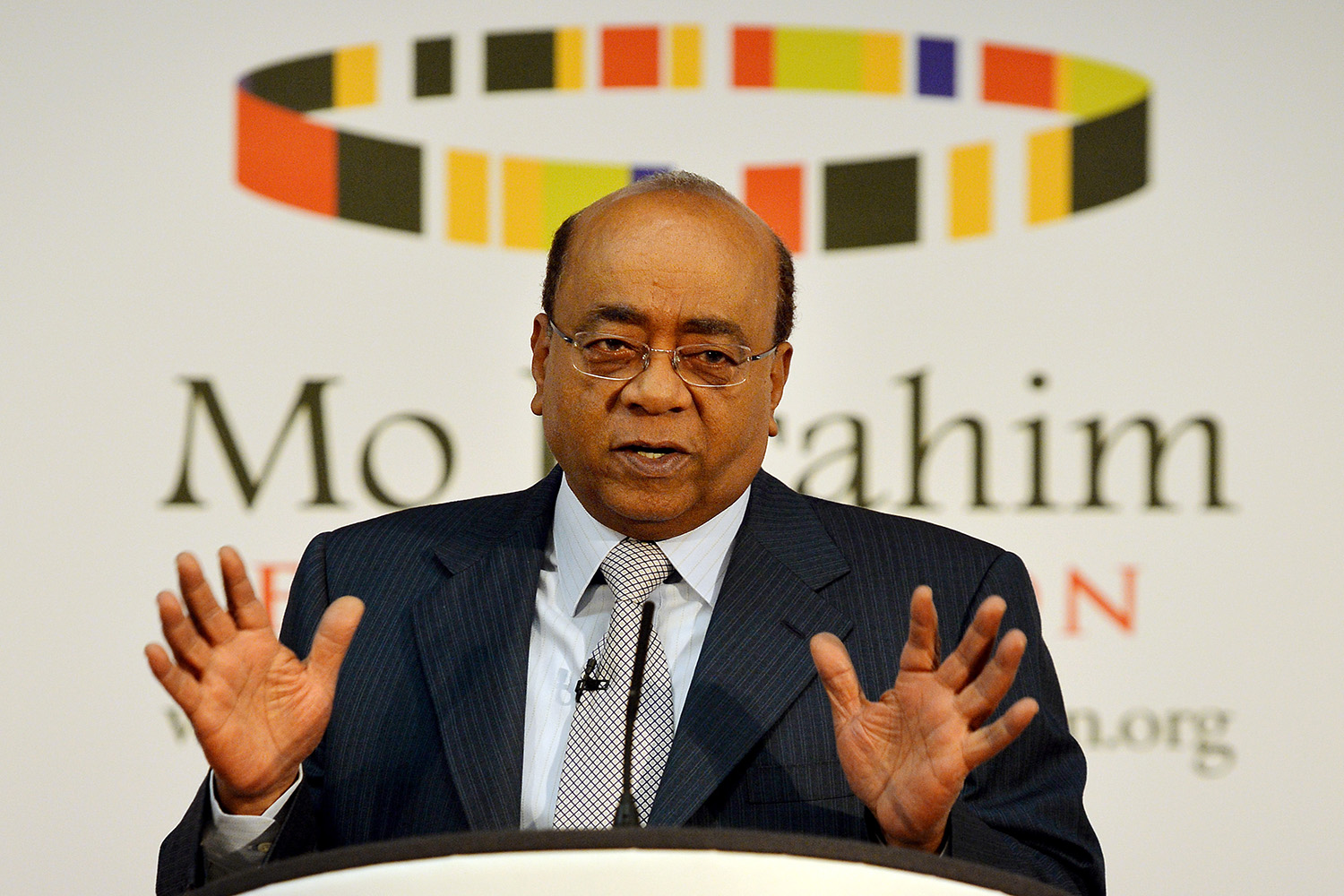

The Sudanese-British entrepreneur argues that Africa’s greatest obstacle to development is no longer a lack of resources, but the quality of its institutions, leadership and economic integration.
MAPUTO – For decades, the global narrative about Africa has been dominated by wars, coups, epidemics and humanitarian crises. For Mo Ibrahim, however, that picture is incomplete, and ultimately counterproductive.
The founder of the Mo Ibrahim Foundation argues that Africa suffers less from a shortage of potential than from a deficit of governance and an international narrative that consistently favours crisis over progress. Yet his criticism is not directed solely at the outside world. Africans themselves, he says, must take greater responsibility for projecting a more balanced image of the continent and for building institutions capable of transforming wealth into broad-based prosperity.
Ironically, Ibrahim observes, many of the governance weaknesses once portrayed as uniquely African are now increasingly visible across Western democracies. The rise of populism, political polarisation and declining trust in public institutions suggest that the West is confronting governance challenges it long regarded as Africa’s problem.
His conclusion is straightforward: the world has changed. Africa is no longer the exception; it is increasingly reflecting political and institutional trends that have become global.
The real deficit is institutional
Ibrahim rejects the notion that corruption is somehow an exclusively African phenomenon. In his view, corruption is inherently transnational.
No corrupt transaction takes place without both a giver and a receiver. International corporations, financial intermediaries and foreign jurisdictions are frequently participants in the same illicit arrangements that are later portrayed solely as African failures.
His criticism also extends to international institutions. Ibrahim recalls publicly challenging governance practices within the World Bank itself, arguing that transparency, efficiency and accountability should apply equally to developing countries and multilateral organisations.
For him, tackling corruption requires abandoning the double standards that continue to shape international discourse.
Fifty-four markets are still too small
Political fragmentation remains one of Africa’s most significant structural constraints. Despite the establishment of the African Continental Free Trade Area (AfCFTA), the movement of people, goods, services and capital continues to be constrained by visa restrictions, administrative barriers and fragmented national markets.
While the European Union created prosperity by gradually dismantling economic borders between countries with centuries of conflict, Africa remains divided into 54 economies that often compete with one another instead of cooperating.
The result is reduced economies of scale, higher trading costs and weaker bargaining power in negotiations with major global partners.
Even the African Union remains heavily dependent on external funding to finance much of its operations, a situation Ibrahim considers incompatible with the ambition of delivering “African solutions to African problems.”
Economic growth is not enough
Headline economic figures tell only part of Africa’s story. Between 2008 and 2018, Africa’s GDP expanded by roughly 40%, making it one of the world’s fastest-growing regions.
Yet that impressive growth has not translated into significantly better living standards for much of the population.
Rapid demographic expansion, combined with extreme income inequality, has diluted many of the gains. Across numerous economies, wealth has accumulated among a relatively small elite while millions of young Africans continue to struggle to access formal employment.
In Ibrahim’s assessment, economic growth without inclusion is not only inefficient, it is politically unsustainable.
The rich continent where wealth continues to leave
Few paradoxes better illustrate Africa’s development challenge than the coexistence of abundant natural resources and persistent poverty.
According to Ibrahim, approximately US$90 billion leaves Africa every year through illicit financial flows—more than the continent receives annually in foreign aid.
Much of these losses stem from trade mispricing, aggressive tax planning, profit shifting and overly generous fiscal incentives offered by governments competing for foreign investment.
The solution, he argues, is not simply to attract more external capital but to build domestic industrial value chains, process raw materials locally, strengthen the rule of law and create stable, predictable business environments.
Without institutional stability, neither African nor international investors will commit long-term capital.
Africa’s greatest asset is under thirty
Despite his criticism, Ibrahim remains fundamentally optimistic. That optimism is rooted neither in minerals nor in oil, but in demographics.
Africa possesses the world’s youngest population, a generation that is better educated, more digitally connected and more globally aware than any before it.
For Ibrahim, this human capital represents the continent’s greatest strategic asset. If matched by stronger institutions, quality education, productive employment and accountable governance, today’s young Africans could become the generation that finally transforms Africa’s enormous potential into sustainable prosperity.
From dependency to partnership
On international relations, Ibrahim advocates a profound shift in mindset. Africa, he argues, must move beyond an aid-dependent model towards one based on investment, trade, innovation and mutual benefit.
Within that framework, Europe remains Africa’s most natural partner, not only because of geographical proximity but also because of deep historical, economic and human ties.
Ultimately, however, responsibility lies with Africans themselves.
The continent’s vast mineral, agricultural, energy and human resources provide the foundation to finance much of its own development. The real challenge is converting those assets into productivity, industrialisation, employment and higher value-added economic activity.
Mo Ibrahim’s closing message reads less like political rhetoric than an economic blueprint: Africa does not need to be rescued. It needs credible institutions, integrated markets, responsible leadership and the confidence to invest in itself.
In the twenty-first century, Africa’s greatest risk may no longer be a lack of resources, but its ability, or failure, to transform extraordinary potential into lasting prosperity for more than 1.5 billion people.