Obiang’s post-oil test
- Economic OutlookEquatorial Guinea
- July 6, 2026

Can Equatorial Guinea turn stability, hydrocarbons and presidential control into sustainable development?
CAIRO – For years Equatorial Guinea has embodied a familiar African paradox in unusually concentrated form: a small state with outsized oil wealth, gleaming infrastructure in pockets, and a per-capita income that once suggested abundance, yet with too little of that wealth translated into broad-based prosperity, productive diversification or robust public institutions.
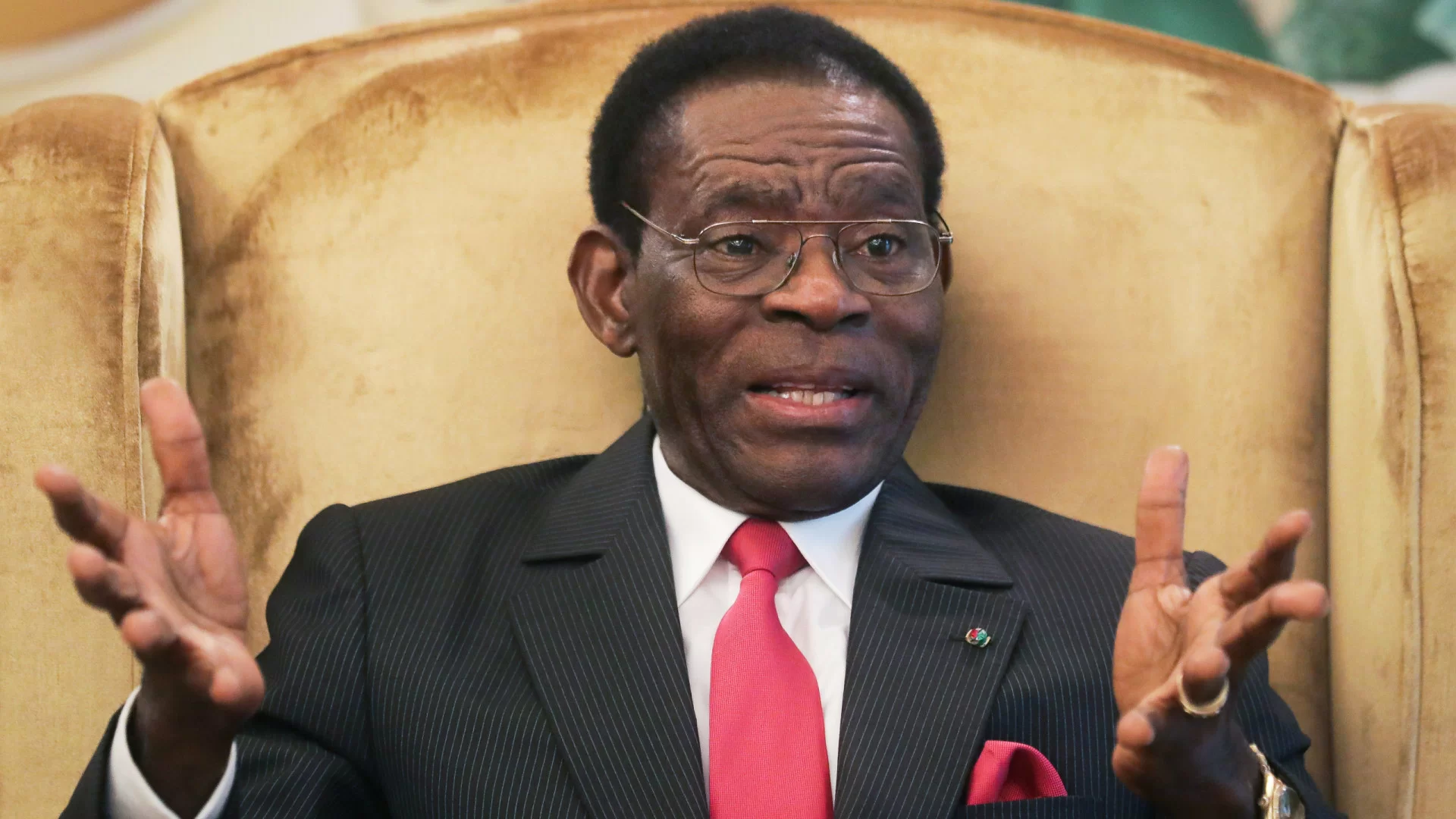
In 2026 President Teodoro Obiang Nguema Mbasogo is attempting to frame a different story. At 84, and after more than four decades in power, Mr Obiang appears keen to cast his final political chapter not merely as that of the ruler who preserved regime stability and state continuity, but as that of the statesman preparing Equatorial Guinea for a more sustainable, post-oil future.
The official calendar from the first half of 2026 helps explain that effort, a cabinet reshuffle, the 40th anniversary celebrations of the ruling Partido Democrático de Guinea Ecuatorial (PDGE), the launch of a National Malaria Elimination Strategy, Vision 2030, meetings with the World Bank, the Bank of Central African States (BEAC), China, Zimbabwe, the United Arab Emirates and the African Union, as well as renewed talk of regional integration and economic corridors, all point in the same direction.
Equatorial Guinea wants to signal, to its citizens, to creditors and to investors, that it is entering a new phase: one of tighter macroeconomic management, gradual diversification and a development model less hostage to the boom-and-bust cycle of hydrocarbons.
The ambition is real, so is the necessity, as Equatorial Guinea’s economy still bears the scars of a difficult inheritance, more than a decade of declining oil production, a narrow productive base, weak private-sector depth, chronic human-capital deficits and social indicators that sit uneasily alongside the country’s past image as one of Africa’s richest oil producers on paper.
Mr Obiang’s challenge is therefore larger than administrative housekeeping, it is whether Equatorial Guinea can finally exchange a rentier enclave model for something closer to a sustainable growth model, one that is more diversified, more employment-intensive and less dependent on crude.
The encouraging part, the numbers are no longer uniformly grim
This time, the official narrative has some macroeconomic evidence behind it. After years of contraction and stagnation, Equatorial Guinea recorded a 0.9% expansion in real GDP in 2024, according to the World Bank, following 5.1% growth in 2023, helped by base effects and some support from the extractive sector. More important than the headline figure, however, is the composition of growth.
The non-oil economy has begun to show signs of life again, with contributions from manufacturing and services.
The African Development Bank has estimated that the non-oil sector grew by 2.3% in 2025, a modest figure in absolute terms but a meaningful one in a country whose central economic problem has long been its inability to grow outside hydrocarbons.
Fiscal numbers have also improved, the International Monetary Fund notes that the non-oil primary deficit—a critical gauge of how dependent the state remains on petroleum receipts, narrowed from 22.3% of non-oil GDP in 2023 to 17.0% in 2024. Public debt fell from 39.1% of GDP to 36.4% in 2024, though the Fund expects it to edge back up to 39.2% in 2025, reflecting financing pressures and the need to preserve public investment and social spending. Even so, for a country long associated with fiscal vulnerability and commodity exposure, the 2024 adjustment was not trivial.
Inflation, meanwhile, remains comparatively subdued by regional standards, the World Bank estimates that consumer prices rose from 2.4% in 2023 to 3.4% in 2024, an unwelcome increase for poorer households, but still a far cry from the double-digit inflation seen elsewhere on the continent. That matters politically. It allows the government to argue that macroeconomic stability remains one of the regime’s core assets, and that the country’s transition can be managed without the sort of balance-of-payments panic that has plagued more fragile African states.
Even the IMF, rarely sentimental about oil-dependent economies, has acknowledged a “mild recovery” and a policy programme aimed, at least on paper, at reconciling debt sustainability, fiscal reform, financial stability and diversification. In market terms, the message is straightforward, Equatorial Guinea has not solved its structural problem, but it no longer looks like an economy in outright freefall.
The strategic pivot, managing decline in oil without dismantling the political order
The optimistic reading of 2026 rests on a blunt proposition: Equatorial Guinea has realised that its central problem is no longer how to administer oil wealth, but how to survive its erosion. The World Bank has been explicit in urging the country to adopt a new development model built on stronger institutions, better fiscal management, human capital, social protection, a more functional business climate and private-sector job creation. That diagnosis matters because it mirrors what the presidential agenda itself now seems to acknowledge: the country’s sustainability can no longer be measured by barrels exported, but by its ability to accumulate productive assets beyond oil.
That is the context in which June’s burst of political activity should be read. The collective resignation of the government, the reappointment of Prime Minister Manuel Osa Nsue Nsua, the nomination of new ministers and secretaries of state, the redesign of ministerial departments and the formal transfer of portfolios were not merely ceremonial exercises.
In highly presidential systems, cabinet reshuffles often serve several purposes at once: elite management, loyalty enforcement, patronage balancing and narrative control. In Equatorial Guinea’s case they also serve an economic one. They are a way of aligning the state apparatus with the demands of fiscal adjustment and post-oil transition.
Mr Obiang understands that his final major political battle is economic, oil gave the regime the means to consolidate authority, finance infrastructure and buy time. The post-oil era requires something different: a more disciplined state, tighter inter-ministerial coordination, better spending controls and a government capable of dealing credibly with multilaterals, investors and regional financial institutions. The 2026 reshuffle is therefore best understood not as political liberalisation, but as an attempt to recalibrate a command-style presidency for a harsher economic cycle.
Diversify or decay
Whether that recalibration yields real results will depend on the country’s ability to turn three latent assets into growth engines: its geography, its inherited infrastructure and its membership of the CEMAC bloc and the African Continental Free Trade Area.
Recent economic diplomacy suggests that Malabo is trying. In June Mr Obiang travelled to Zimbabwe and signed five bilateral agreements covering economic co-operation, training, health, diplomacy and education. China has renewed its strategic partnership with Equatorial Guinea.
The World Bank has assessed the country’s economic corridors as part of a broader push for regional integration. The BEAC remains central to macro-financial co-ordination. Taken individually, such meetings can look ceremonial. Taken together, they suggest a deliberate attempt to reposition Equatorial Guinea as a logistics, trade and services node in Central Africa.
The logic is sound enough. Equatorial Guinea is small in population but not irrelevant in economic geography. It sits in the Gulf of Guinea, has maritime access, possesses urban infrastructure that in some segments exceeds the regional average, and could—if it improves regulation and the business environment—become a useful platform for logistics, corporate services, tourism, light manufacturing and agro-processing. The alternative is bleak: to watch oil output continue its secular decline while the non-oil economy expands too slowly to generate jobs or tax revenue.
Here, however, the official optimism collides with harder social realities, the World Bank notes that, despite the return to growth, per-capita output remained under pressure, meaning the recovery has not yet translated into a visible rise in living standards for most citizens. More strikingly, it estimates that 57% of the population lived below the $6.85-a-day poverty line (2017 PPP) in 2024. That is an uncomfortable figure for a country once marketed as an oil-rich showcase. It captures the central weakness of Equatorial Guinea’s old model: it generated rents, but not enough inclusion.
Health, where sustainable development becomes tangible
If there is one area in which the government’s sustainable-development rhetoric has acquired some concrete policy substance, it is public health. The launch of the National Malaria Elimination Strategy, Vision 2030 is arguably the most socially consequential item on the 2026 agenda. Its goal is ambitious: to extend across the country the gains previously achieved on Bioko island, where malaria control has become one of the few genuinely notable examples of sustained, data-driven public policy in Equatorial Guinea.
The economic significance of this is often underestimated, in a country where malaria still affects school attendance, labour productivity, child mortality and household finances, reducing the disease burden is not merely a social good; it is a form of economic upgrading.
Fewer malaria cases mean less absenteeism, lower out-of-pocket health spending, better learning outcomes and greater resilience among poor households. The government and its partners have indicated an envelope of roughly $116m for the strategy’s next phase. If implemented competently, that is a human-capital investment with returns likely to exceed many prestige infrastructure projects.
Politically, the strategy serves another purpose, it allows Mr Obiang’s government to argue that it is not merely administering ministries and oil receipts, but delivering concrete public goods. In a system whose electoral legitimacy is regularly questioned abroad, performance legitimacy, however partial, matters.
Education, universities and technical sovereignty
Another pillar of the sustainable-development narrative is the push to build domestic skills. The planned Obiang Nguema Mbasogo University can easily be dismissed as another act of presidential monumentalism, and in part it is. But it also responds to a real economic need: Equatorial Guinea suffers from a chronic shortage of national technical capacity.
The World Bank has repeatedly argued that the country’s stock of human capital remains far below what its historical income levels should have produced. This is not just a social problem; it is a productive one. An economy that hopes to diversify into logistics, tourism, agro-industry, finance, public administration and digital services needs engineers, nurses, epidemiologists, teachers, accountants, regulators, customs specialists and managers. Without them, the country will remain dependent on imported expertise and external contractors, limiting both sovereignty and efficiency.
If the new university proves to be merely symbolic, it will add little, If, however, it is linked to technical training, labour-market needs, applied research and serious international partnerships, it could become part of a broader effort to rebuild a developmental state with actual domestic capacity.
The other side of modernisation, digital governance or digital control?
There is, however, a less comfortable dimension to the 2026 agenda, the reaffirmation of the law regulating social media, cybercrime and online conduct. In theory, any state that seeks to modernise public administration, expand digital services and protect electronic transactions needs a legal framework for cybercrime and data security. In practice, in Equatorial Guinea the line between digital governance and political control of the public sphere is especially thin.
The law can be presented as a tool for consumer protection, anti-fraud enforcement and cyber resilience. It can also be read as part of a broader securitisation of information. For a regime that prizes stability above almost everything else, social media are both an instrument of modernisation and a potential source of disorder. The result is a model of digital development in which the state wants the efficiency gains of connectivity without fully accepting the openness that usually comes with it.
That matters because sustainable development in the 21st century is not just about roads, budgets and hospitals. It is also about predictable institutions, credible information flows, innovation ecosystems, regulatory trust and a civic environment in which economic actors can operate with confidence. If digital modernisation is used primarily to tighten surveillance and discipline dissent, it may protect the regime in the short run while undermining creativity, accountability and trust in the longer term.
The Obiang paradox, stability as an asset, centralisation as a constraint
This is where the analysis becomes less comfortable for both admirers and critics of the regime. Mr Obiang can argue, with some justification, that Equatorial Guinea has preserved a rare asset in parts of Central Africa: continuity of command. The state has not collapsed. It has not suffered a civil war, a currency implosion or a sovereign financial panic. It retains working relationships with the IMF, the World Bank, the BEAC, the African Union and major bilateral partners. Salaries are paid, some public investment continues, diplomacy functions and national programmes can still be launched.
But that same stability comes at a cost. Equatorial Guinea’s model remains deeply personalised, centralised and dependent on presidential discretion. The risk is that sustainable development becomes conceived not as the gradual strengthening of institutions that outlast rulers, but as an extension of the ruler’s own longevity, that is a fragile proposition. Genuine sustainability requires institutions that work beyond the leader, rules that outlive patronage networks and an economy capable of generating wealth without constant recourse to the political redistribution of extractive rents.
A less cynical reading than in the past
Still, it would be too easy, and analytically lazy, to dismiss everything as theatre, the Equatorial Guinea of 2026 is not simply the same country it was at the height of the oil boom. There are signs of macroeconomic correction. There is a more explicit public-health agenda. There is greater official recognition of the need to diversify. There is more structured engagement with multilateral institutions. There is, too, a more pragmatic regional discourse focused on corridors, integration and African economic partnerships. The country still has resources, infrastructure and strategic room to attempt a second act.
The question is one of speed and execution, the optimistic scenario will hold only if the recovery in the non-oil economy ceases to be episodic and becomes structural, that requires progress on five fronts.
The first is employment. Without absorbing urban youth into productive work, any prosperity narrative will remain brittle. The second is state productivity: less monumentalism, more execution. The third is human capital, especially health, technical education and mid-level skills. The fourth is the business climate, including commercial justice, licensing, competition and tax predictability. The fifth is governance: not necessarily immediate liberal democracy, but at the very least more transparency, better statistics, greater discipline in public investment and a more credible regulatory environment.
A country in search of a second act
Mr Obiang’s commitment to sustainable development should therefore be read through two lenses at once, the first recognises something important: Equatorial Guinea is, finally, trying to design an economic second act for itself. The recovery in 2024, the improvement in the non-oil sector, the narrowing fiscal deficit, the public-health agenda, regional integration efforts and more active economic diplomacy all suggest that the regime understands the urgency of the post-oil era. There are figures that justify cautious optimism: real GDP growth of 0.9% in 2024, moderate inflation, a narrowing non-oil deficit, debt below 40% of GDP in 2024 and non-oil growth estimated at 2.3% in 2025.
The second lens states the obvious: the country has not yet turned that macroeconomic inflection into inclusive prosperity. Per-capita growth remains weak. Poverty remains high. Oil dependence has not disappeared. The productive base is still narrow. And the political model remains too concentrated to guarantee a smooth long-term transformation. The danger, in short, is that Equatorial Guinea enters the post-oil era with roads, plans and presidential rhetoric, but without an economy sufficiently open, diversified and human-capital-rich to sustain what comes next.
Mr Obiang plainly wants history to remember him not only as the ruler of the oil era, but as the architect of the transition beyond it. That verdict has yet to be written. But for the first time in many years, Equatorial Guinea at least poses a serious question: what if, however belatedly, it is trying to reinvent itself for real?