When the street tested the state, Ramaphosa answered with authority
- PoliticsSouthern Africa
- July 6, 2026
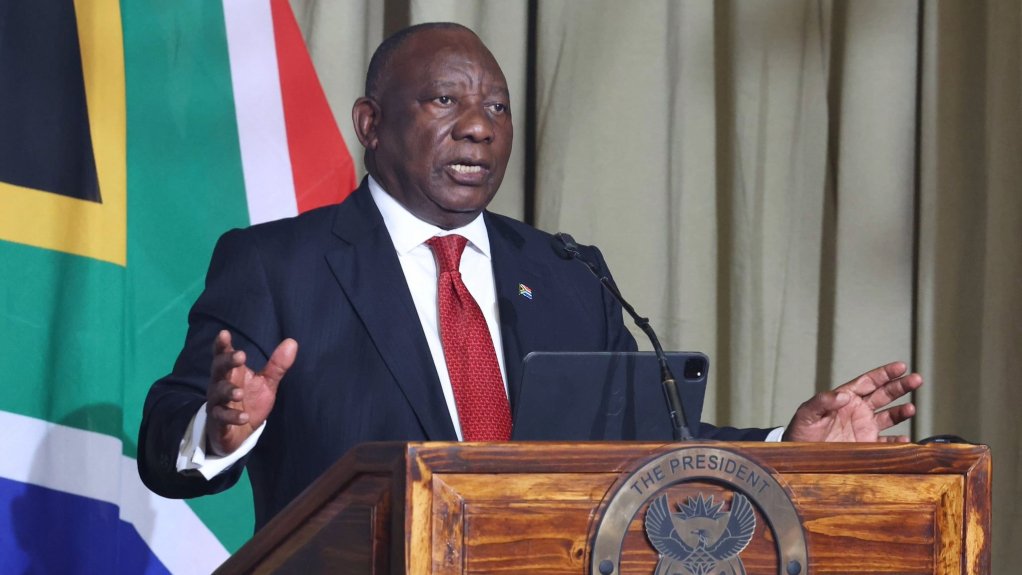

South Africa’s anti-immigration protests exposed the country’s frailties, but they also gave the President an opportunity to reaffirm state power, recover control of the narrative and prevent the privatisation of public order
LAGOS – At first glance, the wave of anti-immigration protests that shook South Africa in 2026 looked like another portrait of the country’s vulnerabilities: chronically high unemployment, decaying municipalities, insecurity, social anxiety and a migration system under strain. But to read it only as a symptom of decline would be a mistake.
The crisis was also a decisive test of the South African state’s authority, and, in that test, President Cyril Ramaphosa sought to turn a threat of diffuse disorder into a demonstration of political command, institutional capacity and the reassertion of legal sovereignty.
What began as a campaign by anti-immigrant groups demanding that undocumented foreigners leave the country by June 30 quickly acquired strategic weight. In several cities, demonstrations degenerated into looting, public violence, intimidation of traders and attacks in neighbourhoods with large migrant populations.
More than 900 people were arrested; several foreign nationals sought repatriation or shelter; African governments demanded explanations; and Pretoria found itself forced to respond under the simultaneous pressure of domestic anger and regional scrutiny. The danger was no longer merely that of a xenophobic convulsion. It was a deeper one: the possibility that the management of immigration, public order and even urban space would begin to be contested by street movements, intimidation networks and informal forms of coercion.
It was precisely at that point that the presidential response began to matter. By authorising the deployment of 3,405 soldiers to support the police, by hardening the public message against violence, and by insisting that immigration enforcement belongs to the state rather than to civic militias or intimidation campaigns, Ramaphosa sought to do more than restore calm. He sought to reaffirm a basic principle of sovereignty: in a constitutional democracy, migration policy may be contested, reformed or tightened; what it cannot be is captured by parallel actors who arrogate to themselves the right to police neighbourhoods, issue ultimatums or engineer de facto expulsions.
That distinction is central to understanding the gains made by the President and his government. South Africa still faces a crisis of governance in which immigration has become a political vessel for accumulated frustrations over unemployment, crime, the decay of public services and economic stagnation.
The official unemployment rate rose to 32.7% in the first quarter of 2026, one of the highest in the world, and the perception that the state has lost control over parts of economic and urban life has become a powerful accelerant for zero-sum narratives directed at foreigners. Yet Ramaphosa’s political achievement lay in not allowing that frustration to slide, unopposed, into a parallel form of sovereignty exercised from the street.
The crisis as a test of power, and the recovery of the political centre
The greatest threat posed by the anti-immigration wave did not lie only in the attacks on migrants or in the material damage caused by the protests. It lay in the possibility that the idea would take hold that the South African state no longer retained, in practice, the monopoly over force, enforcement and the mediation of public order. When anti-immigrant groups begin to set deadlines for foreigners to leave, pressure landlords, intimidate traders and present themselves as agents of social “clean-up”, the problem ceases to be merely migratory. It becomes a contest over who governs in practice.
This is where Ramaphosa collected his first political dividend: he recentralised authority. By mobilising the formal security apparatus, the President signalled that the state remained capable of occupying the centre of the crisis, using force within the law and preventing anti-immigration agitation from evolving into a durable precedent of privatised coercion. In periods of acute social anxiety, that kind of demonstration matters more than rhetoric. It shows that, despite years of institutional erosion, there is still a political centre capable of command.
That gain was both symbolic and operational. Symbolic, because it restored the presidency as an axis of stability at a moment when authority itself appeared vulnerable to extra-legal challengers. Operational, because the military and police reinforcement helped prevent the protests from hardening into a prolonged spiral of impunity.
The state did not eliminate the violence, nor did it eradicate xenophobia. But it did manage to stop anti-immigrant movements from presenting themselves as functional substitutes for government. In a moment of high social combustion, that alone amounted to a meaningful political achievement.
Ramaphosa as the indispensable arbiter of order
The handling of the crisis also allowed Ramaphosa to recover a subtler, but perhaps even more important, political asset: his position as the indispensable arbiter of national order.
The President could easily have been pushed into a defensive crouch, trapped between public demands for migration control and regional condemnation of xenophobic violence. Instead, he sought to occupy the precise centre of that tension: to project firmness without conceding to the language of vigilantism; to acknowledge the sensitivity of irregular migration without allowing the street to dictate state policy; and to respond with security force while still speaking the grammar of legality.
That balance was not perfect. But it was politically effective, it allowed the President to present himself as the only actor capable of arbitrating the contradictory demands of the crisis: security for an anxious public, institutional restraint for alarmed regional partners, and constitutional reaffirmation for a state threatened by fragmentation. Rather than appearing as the head of a government passively watching unrest unfold, Ramaphosa repositioned himself as the only point of convergence between legitimate coercion, diplomatic responsibility and political authority.
In a fragmented South Africa, that sort of centrality is not a detail. It is a resource of power. And the anti-immigration crisis, paradoxically, offered the President an opportunity to rebuild it.
The government’s gains: command, narrative and containment of external damage
The South African government also extracted concrete dividends from the way it handled the crisis. The first was a dividend of response capacity. The speed with which it mobilised troops, reinforced the police and multiplied arrests allowed Pretoria to project the image of a government which, despite structural weaknesses, still possesses instruments of command capable of containing internal shocks of national scale. That matters politically in a country where perceptions of state weakness have themselves become a driver of instability.
The second was a dividend of narrative control. Anti-immigrant groups sought to impose a simple interpretation of the crisis: the state had failed, foreigners were to blame for decline, and popular action was the only answer.
The government responded by trying to separate two questions that street movements were determined to fuse: the need for migration control and the legitimation of xenophobia as a political method. In doing so, Ramaphosa and his cabinet recovered part of the centre of the debate. Rather than accepting the street’s framing, they tried to redefine the crisis as a question of national governability, legality and institutional sovereignty.
The third dividend was one of diplomatic and reputational containment. Countries such as Ghana, Nigeria, Malawi, Mozambique and Zimbabwe were forced to assist citizens fleeing violence or to denounce the attacks.
The potential for regional damage was therefore considerable. Yet the South African government recognised relatively early that the xenophobic attacks threatened not only domestic order but also the country’s external image, the interests of its firms and its political influence across Africa.
Justice minister Mmamoloko Kubayi publicly acknowledged that the crisis was harming South Africa’s reputation and affecting its companies and artists abroad. That recognition had strategic value: it allowed Pretoria to show that it understood the problem not merely as an internal disturbance, but as a regional and commercial risk.
In practical terms, that helped contain a particularly damaging narrative: that South Africa was either passively watching, or tacitly tolerating, the persecution of foreigners. The government did not eliminate the reputational cost. But it did limit the speed of its deterioration. And that, in itself, was a gain of political management.
A crisis of governance that yielded dividends of authority
None of this means that South Africa has solved its underlying problems, the anti-immigration crisis remains a symptom of deep vulnerabilities: a dysfunctional labour market, a sluggish migration bureaucracy, weak municipalities, extreme inequality and a political culture in which social anger periodically finds a convenient scapegoat. The protest wave also left a real economic trail. A plausible range for the direct and indirect short-term damage lies between $90m and $270m, including property destruction, security costs, losses in the informal economy, logistical disruption and reputational damage.
But crises of this kind do not produce only costs, they also produce reconfigurations of power, and on that front Ramaphosa achieved something politically significant: he turned a defensive moment into a test of governability. Not because he eliminated xenophobia, nor because he cured the deeper causes of discontent, but because he prevented the crisis from being monopolised by anti-immigrant actors and pulled it back, however imperfectly, into the realm of state authority.
That, ultimately, is the President’s greatest gain. At a moment when the gravest threat was the combination of street violence, institutional erosion and loss of narrative control, Ramaphosa managed to reposition the state as the indispensable actor of order, legality and regional response. He showed that, despite accumulated frailties, South Africa’s political centre can still mobilise force, impose an institutional frame and claim for itself the right to arbitrate high-intensity crises.
The presidential dividend
That is why the 2026 anti-immigration crisis should be read not only as an episode of instability, but as a moment of political clarification, it exposed the depth of South Africa’s social anxiety, the erosion of trust in institutions and the persistence of a xenophobia that remains politically mobilisable. But it also exposed another reality: when the street tried to test the limits of the state, Ramaphosa refused passivity, recentred authority and used the crisis to reaffirm the presidency’s role as the final guarantor of constitutional order.
The gains were tangible. President Cyril Ramaphosa and his government succeeded in reaffirming the state’s monopoly over force and immigration enforcement, repositioning the presidency at the centre of national stability and blocking the legitimisation of parallel structures of social coercion.
They also recovered part of the public narrative from anti-immigrant movements, contained, at least in part, the diplomatic and reputational fallout of the crisis, and demonstrated that the South African state, even under acute pressure, remains capable of responding, arbitrating and reasserting legality.
In politics, especially in moments of stress, authority is not measured only by the absence of crisis. It is measured by the ability to absorb it, redefine it and survive it without surrendering the centre of power. That is what Ramaphosa sought to do. And that is where the principal gain of his management lies: not in having defeated the crisis, but in having prevented the crisis from being won by the street.