Equatorial Guinea courts industrial expansion as golden swan plans $100mn investment
- Business and NetworkingEquatorial Guinea
- July 4, 2026
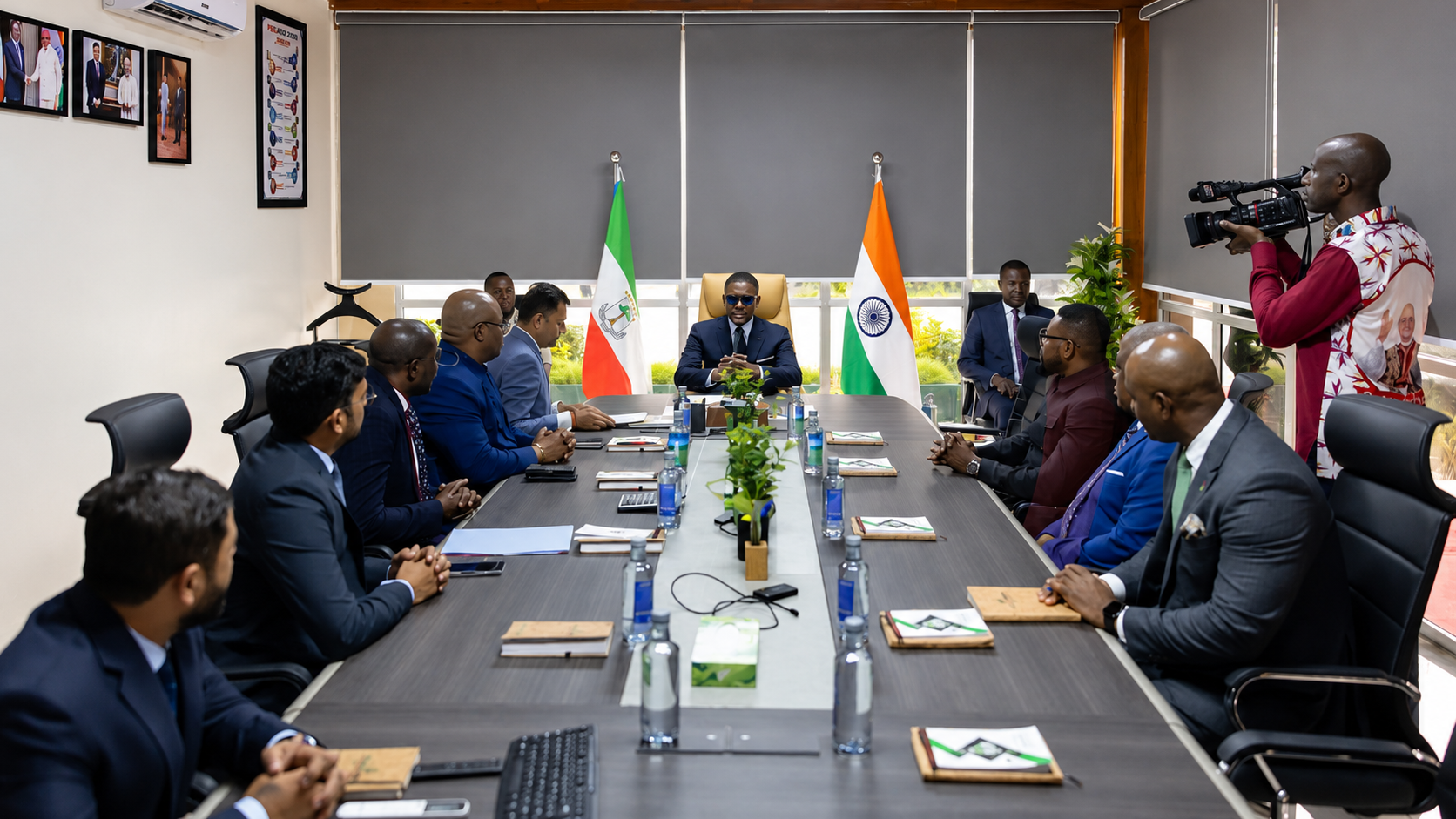

Malabo — Equatorial Guinea is stepping up its push to broaden its industrial base beyond hydrocarbons, with Indian-linked industrial group Golden Swan outlining plans to invest close to $100mn in waste management, industrial gases, metals recycling and steel production in the country’s mainland region.
The investment, presented during a visit by Vice-President Teodoro Nguema Obiang Mangue to Golden Swan’s integrated waste management and industrial gases facilities, underscores Malabo’s attempt to position industrial processing and recycling as part of its wider economic diversification strategy. Officials framed the project as both a signal of private-sector confidence in Equatorial Guinea and a practical contribution to the government’s industrialisation agenda.
During the visit, the vice-president reviewed operations at the company’s Integrated Waste Management Plant and Industrial Gases Complex, where executives detailed processes for waste treatment, recycling, industrial gas production and medical oxygen supply for domestic economic sectors. Golden Swan also presented plans to expand into the continental region, including new infrastructure for waste processing, metals recycling and a steel bar manufacturing plant in Bata.
Nguema Obiang Mangue said projects of this kind could help transform the country’s natural and industrial resources into higher-value output while creating jobs. He also encouraged the company to extend similar investments to other parts of the country, including Bata, Ciudad de la Paz and Annobón.
In Numbers
$100mn: planned investment in Golden Swan’s mainland expansion, 4 target areas: waste management, metals recycling, industrial gases and steel production, 1 planned steel bar plant in Bata, 2 strategic themes: industrialisation and economic diversification and 0 indication that Malabo wants diversification to remain limited to hydrocarbons.
Why it matters
For Equatorial Guinea, the project fits into a broader effort to reduce dependence on oil and gas revenues by building industrial capacity in manufacturing, recycling and value-added processing. If executed, it could support job creation, strengthen domestic supply chains and deepen the country’s emerging circular economy.
Investors will focus on whether Golden Swan’s expansion moves from announcement to execution, how quickly the Bata steel project advances, and whether Equatorial Guinea can translate industrial policy rhetoric into a broader pipeline of private-sector projects.