For the first time in more than a decade, South Africa’s electricity crisis, long viewed as the single biggest drag on economic growth, investor confidence and social stability, is showing meaningful signs of easing. The shift is subtle but significant: reduced load-shedding hours, a more assertive reform agenda, and early indicators that the country’s long-awaited energy transition may finally be taking root.

AfricaHeadline Reports Team
editorial@africaheadline.com
Financial markets, multilateral lenders and global energy analysts are watching closely. The stakes reach far beyond stable power supply. Success would recalibrate South Africa’s investment profile, reshape its industrial base, and reposition the country within the global race for clean-energy capital, at a time when emerging markets from Vietnam to Brazil are competing to absorb diverted investment from China and Europe.
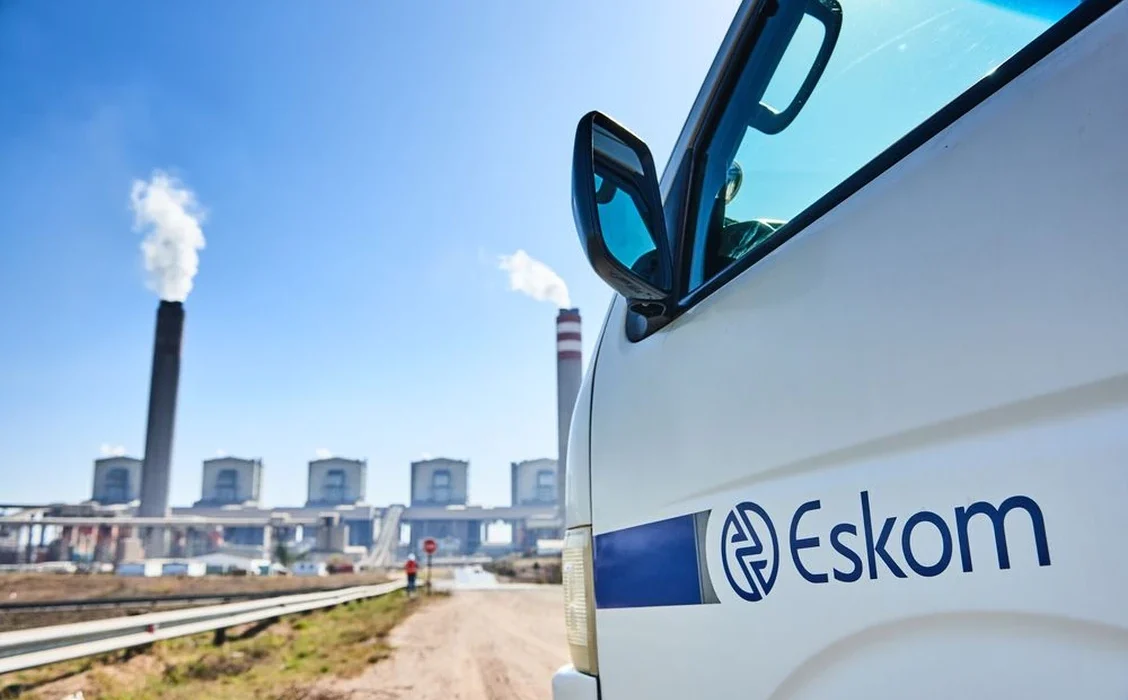
At the center of this fragile but growing optimism is President Cyril Ramaphosa’s multiyear reform effort to break up Eskom, the state utility that once symbolized industrial competence but became the epicenter of corruption, state capture and economic decline. The restructuring, separating generation, transmission and distribution, is designed to reduce political interference, unlock private capital and modernize an energy system built for the 20th century.
The new National Transmission Company of South Africa (NTCSA), expected to be fully operational soon, is viewed by investors as a turning point. By creating an independent entity to manage the grid, Pretoria aims to emulate models used in markets such as Chile and parts of the EU, where unbundling accelerated renewable integration and brought down costs through competition.
The financial implications are significant. South Africa’s risk premium has long reflected Eskom’s failures: high sovereign borrowing costs, weakened credit ratings and a chronic drag on productivity. The utility’s more than 400 billion rand debt pile still hangs over public finances like a storm cloud. Any structural improvement in electricity supply could, over time, narrow credit spreads, lift business sentiment and support higher levels of foreign direct investment, economists say.
Corporate South Africa has responded faster than government. Since restrictions on private power generation were removed, major mining houses, steel manufacturers, telecom operators and retailers have accelerated investment in renewable capacity. Solar projects on mine sites, wind farms financed through private power agreements and battery-storage pilots are expanding at a pace unimaginable five years ago. Energy analysts estimate that privately generated electricity has more than doubled in the past two years, now shaving off a measurable portion of demand once solely reliant on Eskom.
This shift mirrors a broader trend across emerging markets seeking energy independence and insulation from commodity shocks. Vietnam’s rooftop solar surge, India’s mixed-market model and Brazil’s blend of hydro, wind and bioenergy show how diversified systems have strengthened resilience. South Africa, by contrast, remained tethered to coal, politicized state control and ageing plants, until rolling blackouts forced a reckoning.
Blackouts have not disappeared, but their intensity has eased. For households and small businesses, the difference is emotional as much as economic. Clinics have reported fewer interruptions to cold-chain storage; small manufacturers, once forced to halt production for hours, now operate with greater predictability. Economists estimate that sustained reductions in load-shedding could add up to two percentage points to GDP growth over the medium term, with job creation spilling into construction, renewable supply chains and energy-related services.
Ramaphosa’s challenge is to convert early momentum into irreversible reform — before politics intervene. The scars of Eskom’s past remain raw. The Zondo Commission exposed how patronage networks hollowed out the utility, corrupted coal contracts and silenced reformers. The attempted poisoning of a former Eskom chief executive underscored the entrenchment of criminal syndicates in the energy sector. Those networks have not vanished.
The administration’s push for a “just energy transition” is also fraught. Coal-dependent provinces fear job losses; unions remain suspicious of privatization by stealth; and communities living near coal plants worry that “transition” translates into displacement without dignity. South Africa must balance decarbonization with social stability, a tension that also grips Indonesia, India and parts of China. The country’s $8.5 billion Just Energy Transition Partnership with Western donors has been slow to disburse, as disagreements persist over whether funding should favor grid upgrades, private renewables or coal-sector social cushioning.
Grid constraints now pose the biggest immediate bottleneck. New renewable projects, especially in the wind-rich Cape regions, cannot connect fast enough to the network to replace failing coal units elsewhere. Energy specialists warn that without accelerated grid investment, South Africa risks a paradox: having clean power available, but nowhere to transmit it.
Still, something fundamental has shifted. For more than a decade, South Africa lived in crisis-response mode, treating electricity supply as a political emergency rather than an economic prerequisite. Today, policymakers speak of competitiveness, green industrialization and export potential. South Africa now frames energy reform not merely as a domestic fix, but as a gateway to participate in global clean-tech value chains, from battery minerals to green hydrogen and electric-vehicle components.
Eskom Economic Outlook
The next three years will determine whether South Africa consolidates its fragile gains or slips back into crisis. Economists outline three variables that will shape Eskom’s economic trajectory:
Execution discipline: Reform must survive electoral cycles. If operational independence of the NTCSA is protected, and private-sector participation expands, South Africa could transition to a more diversified energy mix by 2027.
Debt and fiscal management: Eskom’s debt restructuring plan must move faster. Without clarity, the state’s contingent liabilities risk pressuring the sovereign rating. A modest improvement in supply could boost investor confidence, reduce risk premiums and unlock lower borrowing costs across the economy.
Green industrial strategy: If grid expansion aligns with industrial policy, South Africa could emerge as a hub for renewable manufacturing, hydrogen exports and critical-minerals processing, positioning itself more like Morocco or Brazil, rather than remaining a coal-locked outlier.
Analysts caution that upside is real, but so is the risk of reversal. A relapse into heavy blackouts could trigger capital flight, stall investment and re-ignite social tensions. Yet for now, South Africa’s energy outlook is more hopeful than at any point in the past decade, a cautious but unmistakable pivot from collapse toward structural reset.
Whether this becomes a permanent recovery will depend on something that has long eluded Eskom and the government that stewards it: consistency.