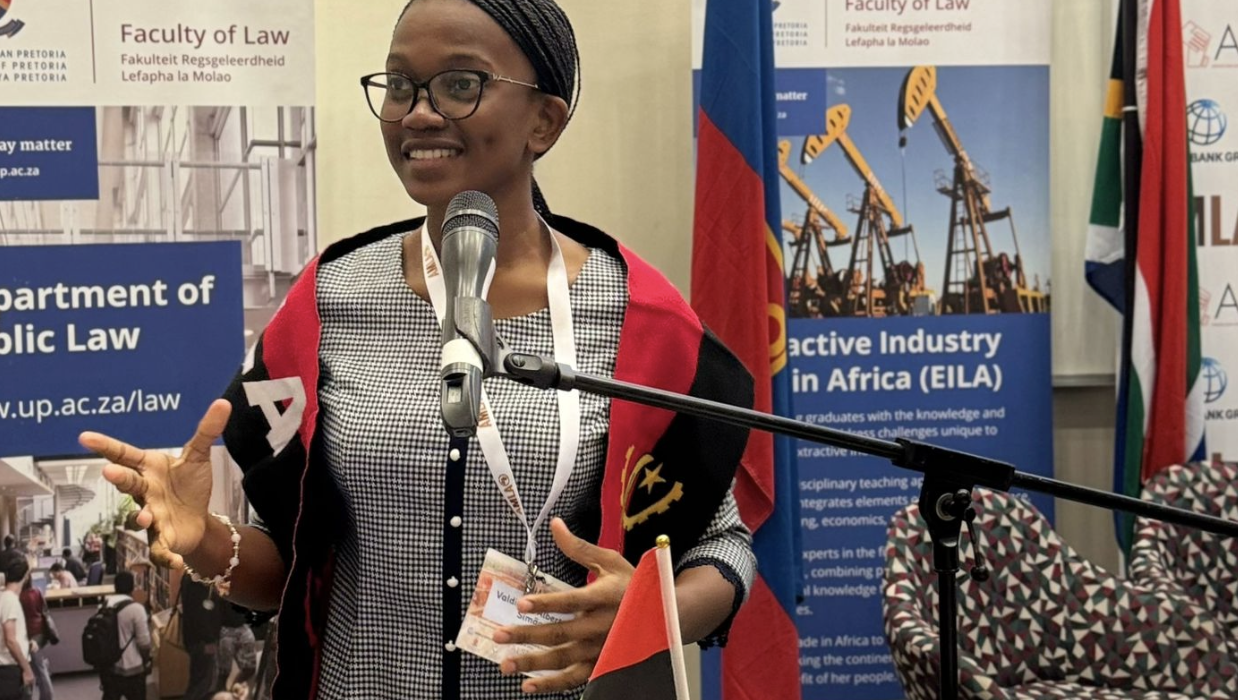
Angolan researcher from Agostinho Neto University to present her study on AI governance and constitutional accountability in emerging digital economies
Johannesburg, South Africa — Legal scholars, policymakers, technology experts and researchers from across the continent are set to gather on 24–25 March 2026 at the African Cyber Law Conference 2026, to discuss one of the most pressing questions facing emerging economies: how to regulate artificial intelligence without compromising constitutional accountability, national sovereignty and fundamental rights.

AfricaHeadline Reports Team
editorial@africaheadline.com
The conference, to be held at the Chalsty Centre, Wits School of Law, University of the Witwatersrand, will take place under the theme “Resilient and Responsible Design: Governing AI, Expression and Digital Media”, focusing on the legal, political and institutional challenges created by the rapid expansion of artificial intelligence and digital platforms across Africa.
Among the confirmed participants is Angola, represented by Valdirene Alberto Simão, a law student at Agostinho Neto University (UAN), who will present the paper:
“Algorithmic Sovereignty in Africa: Constitutional Accountability and the Governance of AI in Emerging Digital Economies.”
The presentation is scheduled for the academic paper session on the first day of the conference, dedicated to legal frameworks, public policy and governance models for artificial intelligence.
Algorithmic sovereignty emerging as strategic issue for African states
One of the central themes of the African Cyber Law Conference 2026 will be algorithmic sovereignty, a concept increasingly discussed in international legal and policy forums as countries seek to maintain control over digital infrastructures and automated decision-making systems.
Algorithmic sovereignty refers to the ability of a state to regulate artificial intelligence technologies operating within its jurisdiction, ensuring that automated processes remain subject to national law, constitutional principles and democratic oversight.
Experts warn that many African countries are rapidly adopting digital technologies developed abroad, often without sufficient legal mechanisms to supervise how algorithms are used in public administration, finance, security, media and online platforms.
The study to be presented by the Angolan researcher argues that the lack of constitutional control over automated systems may weaken regulatory autonomy, particularly in emerging digital economies that depend heavily on foreign technology providers, according to her research.
According to the paper, algorithmic sovereignty should be treated as a component of national sovereignty, alongside economic, territorial and legal sovereignty.
Governing artificial intelligence in emerging digital economies
Across Africa, governments and institutions are increasingly adopting AI-based systems for administrative management, financial services, surveillance, digital media and online platforms, raising complex legal questions related to liability, transparency and data protection.
Participants are expected to argue that simply importing regulatory models from Europe or the United States may not be sufficient, as African states must develop legal frameworks adapted to their own institutional realities, economic structures and constitutional traditions.
In this context, the Angolan paper proposes the creation of constitutional accountability mechanisms for automated decision-making, ensuring that decisions produced by AI systems can be reviewed, explained and challenged within national legal systems.
The study highlights that AI governance in emerging economies must balance innovation with legal certainty, preventing technology from operating outside democratic control.
Constitutional accountability and fundamental rights in the age of AI
A third key theme of the conference will be the need to ensure that the expansion of artificial intelligence does not undermine constitutional guarantees and fundamental rights.
Legal experts are expected to discuss the growing use of automated systems in areas such as criminal justice, public administration, credit scoring, border control and content moderation, raising concerns about discrimination, lack of transparency and limited avenues for legal appeal.
The Angolan study argues that African constitutions should evolve to include explicit principles governing the use of artificial intelligence, including: The right to explanation of automated decisions; Judicial oversight of algorithmic systems; State and corporate liability; Protection of human dignity in digital environments
According to the research, without clear constitutional safeguards, the expansion of AI could weaken democratic oversight and increase dependence on global technology platforms.
Conference to bring together international experts over two days of plenaries and paper sessions
The African Cyber Law Conference 2026 will run over two days, bringing together universities, government representatives, technology companies and legal professionals.
Day 1 — Tuesday, 24 March 2026 – Plenaries · Keynote · Paper Sessions · Book Launch
Day 2 — Wednesday, 25 March 2026 – Keynotes · Paper Sessions · Closing Plenary · Awards
The event is considered one of the leading African academic and policy forums dedicated to cyber law, artificial intelligence governance and digital regulation.
Angola’s participation reflects growing African voice in global AI governance debate
The participation of Valdirene Alberto Simão, representing Agostinho Neto University, highlights the increasing involvement of African academic institutions in international discussions on digital law, cyber governance and artificial intelligence regulation.
Observers note that the inclusion of researchers from emerging economies is essential to ensure that global rules for artificial intelligence are not defined solely by major technological powers.
As artificial intelligence becomes a central driver of economic development, debates on algorithmic sovereignty and constitutional accountability are expected to intensify, with African states seeking to ensure that technological progress does not come at the cost of legal autonomy, democratic control and national sovereignty.
AfricaHeadline | International Desk | Technology & Policy
© 2026 AfricaHeadline. All rights reserved.