Nairobi – France’s strategic position in the Sahel has significantly weakened over the past decade, following a sustained military presence that failed to deliver long-term stability. Through operations such as Barkhane, Paris deployed up to 5,000 troops across the region at an estimated annual cost exceeding €1 billion.

AfricaHeadline Reports Team
editorial@africaheadline.com
Despite these efforts, armed groups linked to al-Qaeda and ISIS expanded their operational reach, while insecurity deepened across Mali, Burkina Faso and Niger. In Burkina Faso alone, large portions of territory have remained outside effective state control in recent years, contributing to one of the fastest-growing displacement crises in the world, with more than two million people forced from their homes.
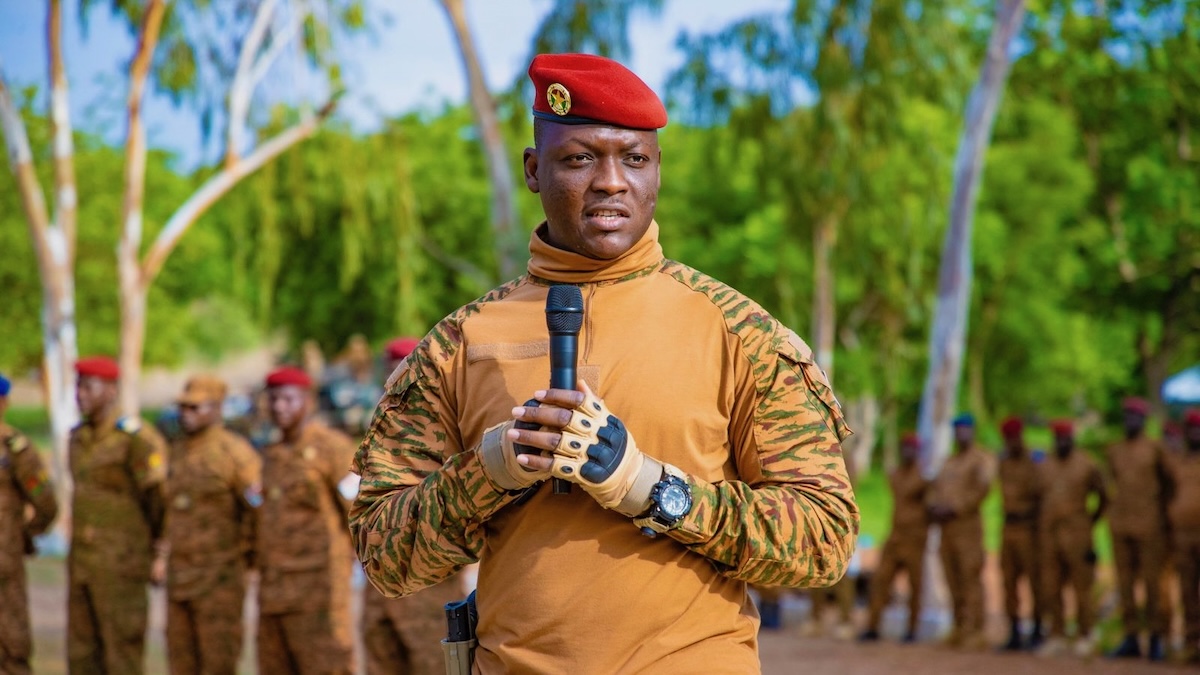
The rise of Ibrahim Traoré in 2022 marked a turning point in the country’s political trajectory and its relationship with France. His leadership emerged amid widespread frustration over insecurity and dissatisfaction with previous governments. In early 2023, Burkina Faso formally requested the withdrawal of French troops, becoming the third country in the Sahel to do so after Mali and Niger. The decision reflected a broader regional shift away from traditional security partnerships and toward alternative alliances.
Key moments in France’s decline in the Sahel
2013 – France launches military intervention in Mali
France begins Operation Serval to halt jihadist advances in northern Mali, marking the start of its long-term military engagement in the Sahel.
2014 – Operation Barkhane expands across the Sahel
Operation Barkhane replaces Serval, extending French military operations across five Sahel countries with a regional counterterrorism mandate.
2015–2019 – Insurgency spreads across borders
Armed groups affiliated with al-Qaeda and ISIS expand from Mali into Burkina Faso and Niger, significantly increasing attacks and destabilising rural areas.
2020 – First military coup in Mali
Mali’s political crisis deepens as the military takes power, straining relations with France and raising questions about the effectiveness of external security support.
2021 – France begins scaling down Barkhane
Paris announces a gradual reduction of its military footprint, acknowledging limits to its long-term engagement strategy.
2022 – Ibrahim Traoré takes power in Burkina Faso
A second coup in Burkina Faso brings Traoré to power, reflecting growing dissatisfaction with security failures and political instability.
2022–2023 – French troops expelled from Mali and Burkina Faso
Both countries formally end military cooperation with France, accelerating the decline of French influence in the region.
2023 – Niger coup reshapes regional dynamics
A military takeover in Niger leads to the suspension of cooperation with France and further weakens Western presence in the Sahel.
2025 – Sahel states exit CEDEAO
Burkina Faso, Mali and Niger formally withdraw from the regional bloc, consolidating a political and strategic break from existing West African structures.
France’s loss of influence has not been limited to government relations. Public sentiment in several Sahelian capitals has increasingly turned against Paris, with repeated demonstrations highlighting deep-rooted grievances tied to both current security challenges and historical perceptions of external influence. This shift has coincided with major geopolitical changes, including the formation of a new regional bloc by Burkina Faso, Mali and Niger and their withdrawal from the CEDEAO in 2025, a move that underscored a clear break from existing regional frameworks.
As France reduced its presence, other global actors expanded their footprint in the region. Russia has strengthened its security cooperation with several Sahelian governments, while China and Turkey have increased their economic and infrastructure engagement. This evolving landscape reflects a broader reconfiguration of external influence in West Africa, as countries seek diversified partnerships in response to shifting political and security priorities.
However, the security situation across the Sahel remains highly volatile. Armed groups continue to operate across porous borders, and state institutions face persistent capacity challenges. Structural pressures, including rapid population growth, limited economic opportunities and climate-related stress, continue to drive instability and complicate recovery efforts. These dynamics highlight the limits of externally driven military solutions in the absence of broader governance and development reforms.
Within this context, Ibrahim Traoré has consolidated his position domestically, supported by a narrative centred on sovereignty and national control. At the same time, Burkina Faso continues to face significant security and economic constraints, and the effectiveness of its current strategy remains closely tied to its ability to deliver tangible improvements in stability and living conditions.
France’s experience in the Sahel underscores the challenges of sustaining long-term influence through military engagement alone. The region has evolved into a complex geopolitical arena where domestic dynamics, public sentiment and external competition intersect. As the Sahel continues to redefine its alliances and priorities, the balance of power is shifting, with implications that extend far beyond the region.
__
By AfricaHeadline Editorial Desk
© 2026 AfricaHeadline Media Network. All Rights Reserved.