Africa and France push for ‘Sovereign partnership’ at Nairobi Summit
- East AfricaEconomicKenyaWorld
- May 13, 2026
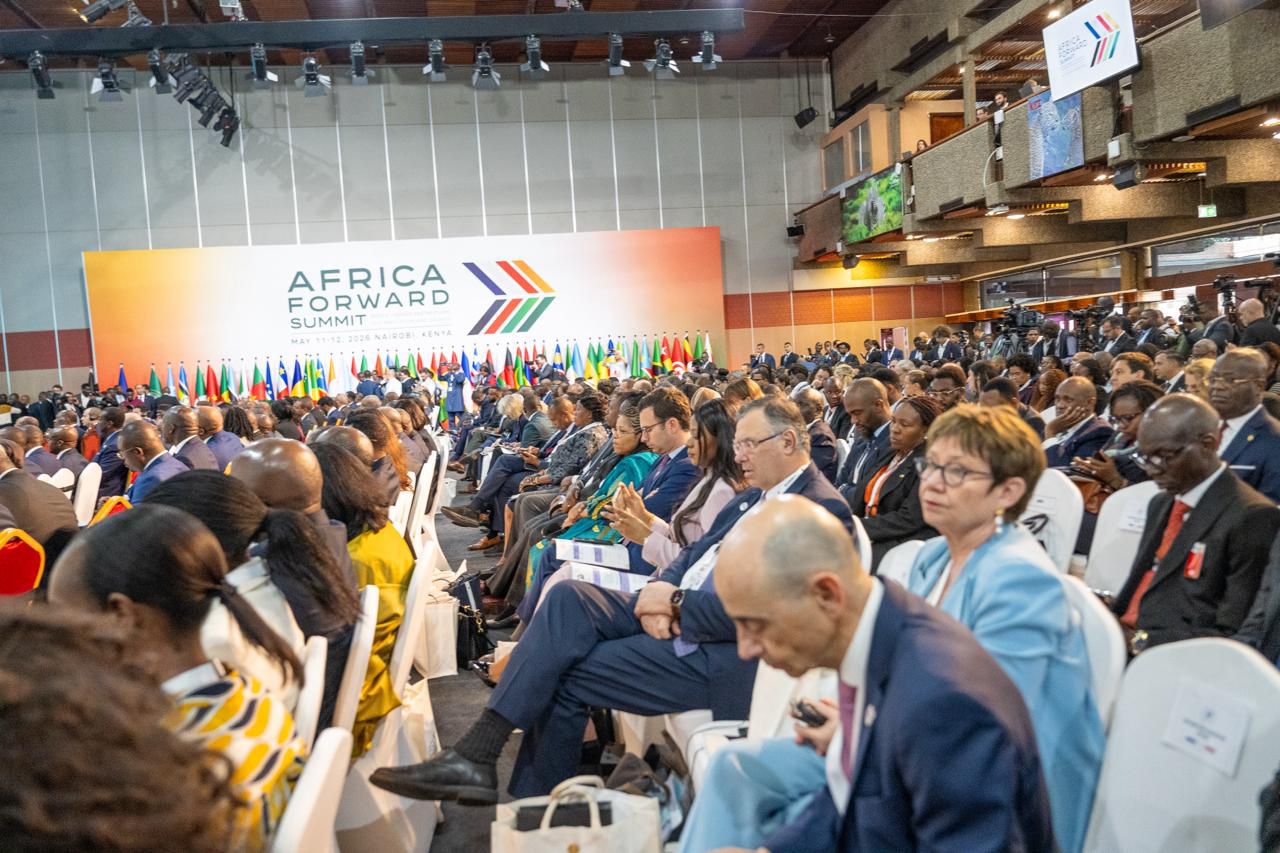

Nairobi – At the Africa Forward Summit in Nairobi’s Kenyatta International Convention Centre, African and European leaders sought to redefine relations between the continent and France around investment, economic sovereignty and strategic cooperation rather than traditional aid dependency.

AfricaHeadline Reports Team
editorial@dw-demosnewstaion.online
Opening the summit alongside Emmanuel Macron, William Ruto said Africa’s future partnerships must be grounded in “sovereign equality, mutual respect and shared responsibility”, arguing that the continent no longer seeks charity but long-term investment capable of supporting structural economic transformation.
The gathering brought together 24 African presidents, five prime ministers, senior international officials and global investors, underscoring growing international competition for influence across African markets amid rising geopolitical fragmentation.
Ruto used the summit to press for reforms to the global financial system, warning that African economies continue to face disproportionately high borrowing costs, distorted credit-risk perceptions and limited access to concessional financing despite the continent’s expanding economic potential.
The Kenyan leader argued that Africa possesses more than $4tn in long-term domestic savings, including over $1tn in pension and insurance assets, alongside more than $500bn in central bank reserves, resources he said could increasingly finance the continent’s own development ambitions.
He also defended the creation of the African Credit Rating Agency, describing it as an effort to correct longstanding biases within international rating systems that continue to inflate financing costs for African governments and discourage long-term investment into productive sectors.
For his part, Macron attempted to reposition France’s relationship with Africa around what he described as a “renewed partnership” based on respect and shared economic interests. The French president highlighted £23bn in private-sector investments linked to Africa, including £14bn from French companies and £9bn invested in African businesses, as evidence of what he called a new model of sustainable economic cooperation.
The summit also reflected broader African ambitions around industrialisation, infrastructure and intra-African trade integration under the African Continental Free Trade Area.
Ruto said Africa must accelerate investment in ports, railways, aviation infrastructure, transport corridors and digital connectivity to transform the continent into a more integrated economic space. He further argued that green industrialisation and clean-energy investment could position Africa as a globally competitive manufacturing and export hub over the coming decades.
Addressing governance reform, António Guterres described Africa’s exclusion from permanent representation on the UN Security Council as “a century-old injustice”, warning that the current international order remains structurally disconnected from African realities.
Behind the diplomatic language, the Nairobi summit exposed a broader shift in Africa’s positioning within the global economy.
African leaders increasingly appear determined to move away from development models centred on aid and external dependency towards frameworks based on investment, domestic capital mobilisation, industrial policy and strategic geopolitical bargaining.
The message from Nairobi was clear: Africa no longer wants to be treated primarily as a recipient market, but as a strategic economic and political partner in a rapidly changing global order.
__
By AfricaHeadline Editorial Desk
Strategic Insight. African Perspective.
© 2026 AfricaHeadline Media Network. All Rights Reserved.
**This material is protected under international copyright and intellectual property laws. No part of this publication may be reproduced, distributed, transmitted or republished in any form or by any means without prior written authorization from AfricaHeadline Media Network.**