Angola signals a post-oil future in Nairobi
- AngolaEast AfricaEconomicKenyaSouthern Africa
- May 13, 2026
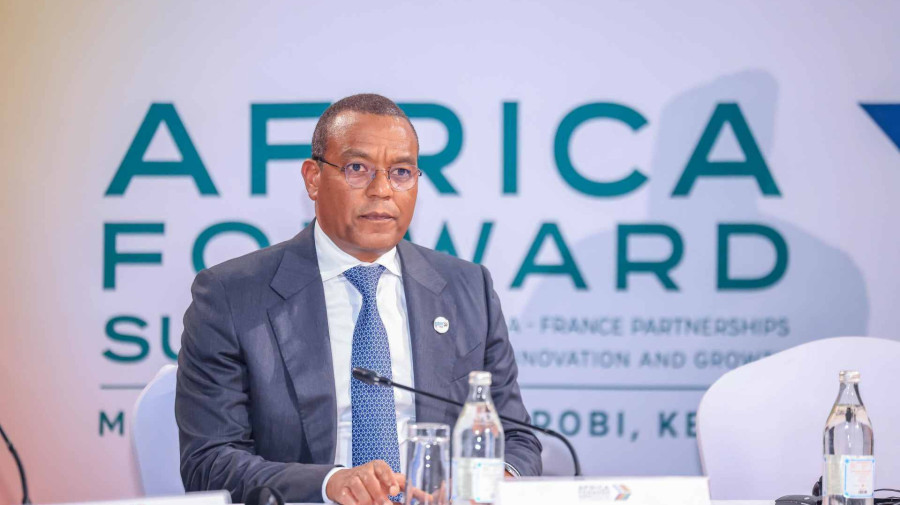

Nairobi – At the Africa Forward Summit held at Nairobi’s Kenyatta International Convention Centre, Angola used the platform to deliver a broader economic message: Africa’s food security challenge has evolved into a question of sovereignty, macroeconomic resilience and long-term strategic stability.

AfricaHeadline Reports Team
editorial@dw-demosnewstaion.online
Speaking before policymakers, investors and regional leaders, José de Lima Massano argued that African economies can no longer treat agriculture as a secondary social sector. Instead, he framed it as a core pillar of economic security in an increasingly fragmented global environment.
What Angola Told Africa in Nairobi
The intervention came at a time of mounting global uncertainty.
Conflict in the Middle East, persistent supply-chain disruptions and elevated transport and insurance costs continue to pressure food-importing economies across Africa. Rising fertilizer prices and volatile energy markets have exposed the structural vulnerability of countries still heavily dependent on imported food products.
For Angola, the speech represented more than diplomatic positioning. It reflected Luanda’s attempt to redefine its economic identity beyond hydrocarbons.
“Africa’s agricultural agenda must be approached as a continental strategic security agenda,” Massano said, calling for accelerated investment in irrigation, mechanisation, logistics infrastructure, agro-industry and rural financing.
The message aligns closely with the continent’s broader push towards industrialisation and intra-African trade integration under the African Continental Free Trade Area, particularly as governments seek to reduce exposure to external commodity and supply shocks.
Angola’s delegation also used the summit to showcase the country’s ongoing economic transition.
According to figures presented during the address, agriculture represented 25.43 per cent of Angola’s GDP in 2025, compared with 13.66 per cent in 2015, effectively doubling its contribution within a decade and overtaking the oil sector in the country’s productive structure.
For one of sub-Saharan Africa’s largest oil producers, the numbers carry both economic and political significance.
They reflect a broader effort by the Angolan government to reposition growth around domestic production, agro-industry and non-oil exports after years of dependence on crude revenues and external price cycles.
Massano further stated that Angola’s 2024/2025 agricultural campaign surpassed 30.4mn tonnes of national production, representing annual growth of 8.5 per cent. Officials linked the increase to ongoing food security programmes, expanded rural investment and greater participation from cooperatives and the private sector.
Another strategically important announcement concerned the planned inauguration, in 2027, of Angola’s first ammonia and urea plant for domestic fertilizer production.
The project reflects a wider trend emerging across African economies seeking to localise critical agricultural inputs amid heightened geopolitical fragmentation and continued volatility in global fertilizer markets following the Russia-Ukraine conflict.
Yet significant structural challenges remain.
Despite rising agricultural output, Angola continues to face logistical bottlenecks, limited storage infrastructure, constrained rural credit access and high transportation costs, all of which continue to weigh on productivity and competitiveness outside the country’s principal agricultural corridors.
Still, the broader signal from Nairobi was unmistakable.
Angola is seeking to position itself as part of a new generation of African economies attempting to shift away from extractive dependence towards production-led growth models centred on agriculture, industrial transformation and regional trade integration.
Behind the language of food security lies a more strategic calculation: in an era of geopolitical volatility, supply-chain fragmentation and inflationary pressure, agricultural self-sufficiency is increasingly becoming an instrument of economic power.
Whether Angola can sustain this transition, however, will depend less on summit declarations and more on its ability to deliver infrastructure, financing, industrial capacity and policy consistency at scale over the coming decade.
__
By AfricaHeadline Editorial Desk
Strategic Insight. African Perspective.
© 2026 AfricaHeadline Media Network. All Rights Reserved.
**This material is protected under international copyright and intellectual property laws. No part of this publication may be reproduced, distributed, transmitted or republished in any form or by any means without prior written authorization from AfricaHeadline Media Network.**