Ukraine war in 2025 exposes limits of G7 power as Russia expands battlefield and economic resilience
- AmericaEuropeWorld
- December 9, 2025

AfricaHeadline Investigative Report
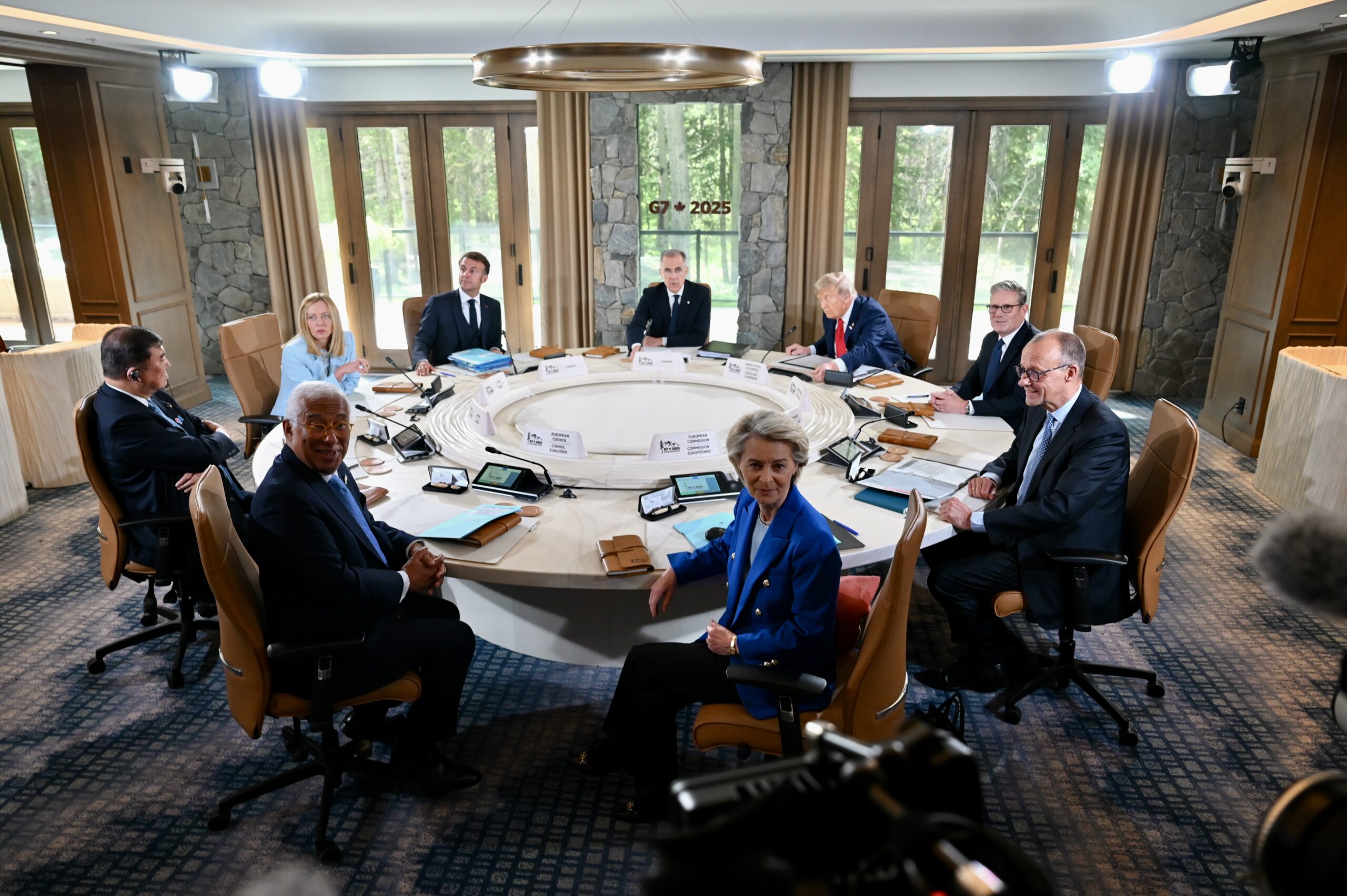
LONDON / WASHINGTON — The prolonged war in Ukraine throughout 2025 has exposed significant limits in the ability of the world’s seven largest economies to influence the trajectory of the conflict, according to diplomats and security analysts interviewed by AfricaHeadline.

AfricaHeadline Reports Team
editorial@dw-demosnewstaion.online
Despite providing more than $250 billion in military and financial support to Kyiv since 2022, the G7 has not managed to weaken Russia’s combat capacity or halt its advances, as Moscow ramped up weapons production and deepened trade ties outside the Western orbit.
Sanctions fall short of intended impact
Western sanctions imposed since 2022 were designed to restrict Russia’s logistics and undermine its military capabilities. However, data from the Russian Central Bank show that GDP contracted by only around 2% between 2022 and 2024, stabilising and partly recovering in 2025 due to growing energy exports to Asia.
“Russia adapted its economy far quicker than many policymakers anticipated,” said a senior European diplomat, speaking on condition of anonymity. “That reduced the shock effect of sanctions and extended the conflict well beyond initial projections.”
Rising political cost in the West
In the United States, Congressional gridlock over new financing packages delayed strategic decisions, while in Europe several governments faced domestic pressure linked to inflation, energy insecurity and voter fatigue over continuing military support.
Analysts say the lack of internal cohesion limited the G7’s ability to execute a unified strategy.
“The G7 entered 2025 with coordinated messaging but fragmented operational capacity,” said Maria von Bremer, a researcher at the European Security Studies Institute.
Russia accelerates defence production
Reports from defence think tanks indicate Russia increased production of ammunition and drones by at least 30%throughout the year, compensating for battlefield losses and reinforcing its positions in eastern Ukraine.
Technological partnerships with China and Iran helped sustain this expansion, giving the Kremlin wider strategic room.
Shifts in global perception
Across Africa, Asia and Latin America, governments adopted more neutral stances on the conflict, with several expanding trade links with Moscow. Diplomats say this reflects a broader perception that the G7 no longer holds absolute influence over international economic decisions.
“The war accelerated multipolar trends that were already shaping the global system,” said an analyst at the Global Policy Centre in Singapore.
Experts warn that the absence of a credible political pathway increases the likelihood of a protracted conflict, with consequences for European security, energy markets and global stability.
NATO officials say allies are exploring additional support mechanisms, but acknowledge that Ukraine’s ability to regain territory remains uncertain.