AfricaHeadline | Outlook
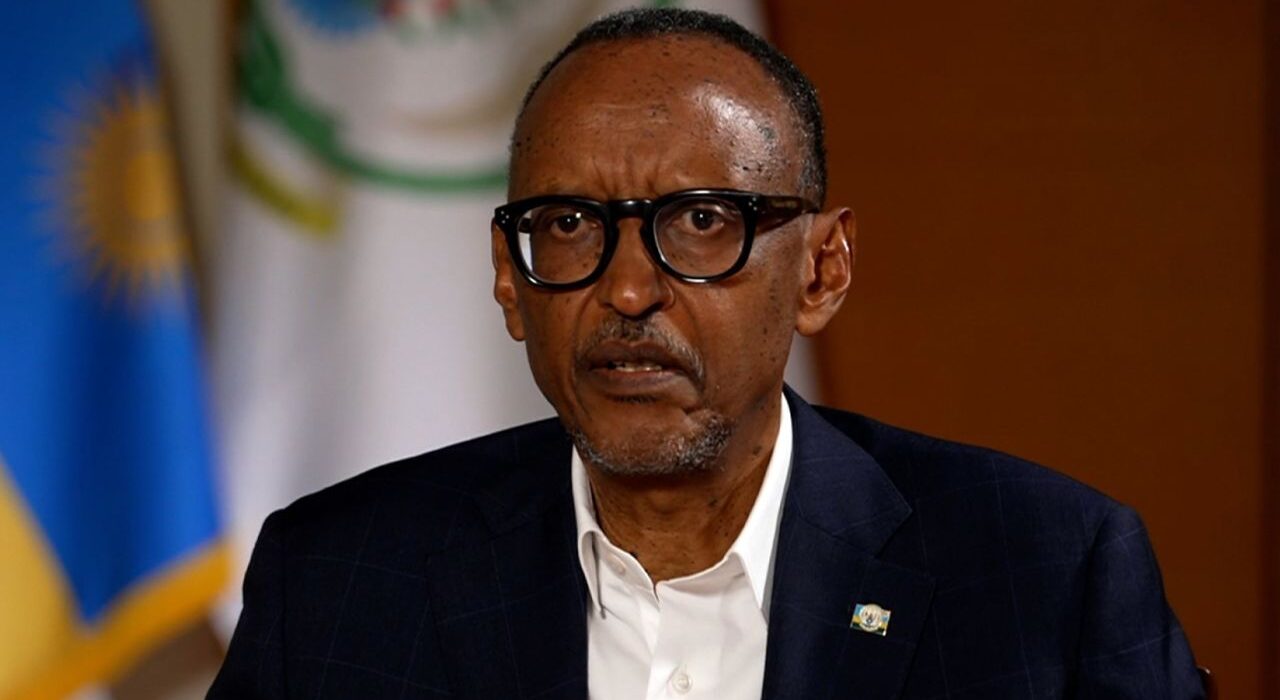
When Rwandan President Paul Kagame spoke about the U.S.-brokered peace agreement between Rwanda and the Democratic Republic of Congo, he presented a polished and confident explanation of the region’s instability. Yet the version he offered reveals less about the reality on the ground and more about the story Rwanda wants the world to accept.

AfricaHeadline Reports Team
editorial@africaheadline.com
Kagame’s interpretation of history is selective. His political framing is incomplete. And his description of Rwanda’s role in eastern Congo obscures patterns that diplomats, researchers and U.N. investigators have documented for more than two decades.
The narrative he promotes is not simply an opinion. It is a political instrument crafted to deflect pressure, preserve influence and avoid accountability.
The past Kagame invokes and the past he omits
There is no dispute that the 1994 genocide shaped Rwanda’s identity and security priorities. Kagame is correct when he says the region continues to live under that shadow.
But the genocide alone does not explain the long chain of events that followed, nor does it justify Kigali’s sustained involvement in Congo’s conflicts.
In the late 1990s, Rwanda played a direct role in both Congo wars. Kigali supported armed groups, carried out military operations across the border and influenced political outcomes in the DRC. These actions are extensively documented in U.N. reports.
Kagame’s silence on these episodes is not accidental. It is a deliberate attempt to frame Rwanda exclusively as a victim of regional instability rather than a central actor shaping it.
Rwanda’s posture on the M23 exposes a credibility gap
Kagame insists Congo bears responsibility for failed agreements. But this argument collapses when measured against extensive evidence linking Rwanda to the M23 rebellion.
The movement’s operations, military discipline and territorial ability do not resemble those of an isolated insurgency. Independent investigations have repeatedly documented logistical and military assistance coming from Rwanda.
Kagame’s denial creates a credibility gap between his statements and observable facts. That gap undermines trust and has repeatedly obstructed peace efforts in the region.
Why the U.S. role unsettles Kigali
The peace agreement negotiated in Washington represents an assertive shift in American diplomacy. For the first time in years, Rwanda and the DRC are brought into a structure that includes external verification mechanisms and clearer obligations.
Kagame publicly minimizes the significance of the U.S. initiative. His posture, however, suggests discomfort.
For decades, regional diplomacy operated in a space where ambiguity worked in Rwanda’s favor. The involvement of Washington, and increasingly Qatar, reduces Kigali’s room for unilateral maneuvering.
His dismissal of the agreement is therefore not about the document itself. It reflects the geopolitical recalibration that produced it.
Mineral wealth and economic inconsistencies
Rwanda presents itself as an emerging producer of strategic minerals such as tungsten, tantalum and tin. Yet the country’s export volumes consistently exceed its domestic production.
This discrepancy has been noted for years by economists, researchers and U.N. experts. Kigali rejects the idea that its export economy depends on minerals sourced from eastern Congo.
But the numbers tell another story. Trade routes and production statistics continue to raise questions that Rwanda prefers not to confront.
Understanding the region’s instability requires acknowledging these economic realities. Conflict in the east of the DRC is not driven only by political grievances. It is also sustained by the economics of extraction.
A leader navigating rising pressure
Kagame’s controlled narrative emerges at a time of increasing scrutiny. Washington has intensified diplomatic pressure. U.S. lawmakers are calling for closer inspection of military support to Rwanda.
New mediators, including Qatar, are reshaping regional dynamics.
International focus on the M23 crisis has sharpened.
Rwanda is no longer the uncontested architect of the regional narrative. Its version of events is being challenged openly.
Kagame’s interview reflects this shift. It is the posture of a leader working to manage the consequences of an evolving geopolitical environment.
The stakes for regional truth and stability
The Great Lakes region has endured cycles of conflict driven by mistrust, competing interests and selective memory. Sustainable peace requires more than diplomatic language. It requires honesty, accountability and the willingness to address uncomfortable facts.
Kagame’s remarks do not meet that standard. They represent a curated version of history, not the full truth. And no peace agreement can succeed if its foundations are built on omissions.
The question now is not whether Kagame believes his narrative. The real question is whether the region can move forward while its leaders continue to retell the past instead of confronting it.
AfricaHeadline – Analysis & Perspective
Editorial Board
editorial@africaheadline.com