Patrice Motsepe and Africa’s economic realignment in 2025
- Business and NetworkingCEOCEO - Leadership Legends
- December 7, 2025

AH Premium Analysis
How one of the continent’s most influential investors interprets Africa’s shifting macroeconomic cycle and the geopolitics of critical minerals
Johannesburg
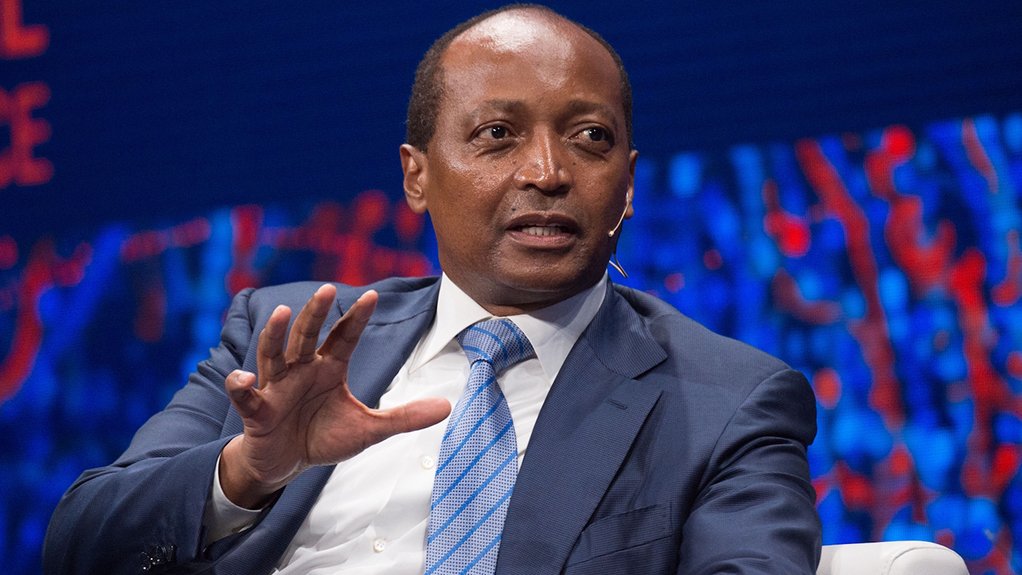
Patrice Motsepe’s position in African business gives him an unusually clear vantage point from which to observe the continent’s economic landscape at a moment of global restructuring. In 2025, Africa stands at an inflection point defined by moderate growth, elevated fiscal risks, mounting institutional pressures and intensifying international competition for the minerals underpinning the global energy transition.

AfricaHeadline Reports Team
editorial@dw-demosnewstaion.online
Motsepe’s investment footprint across 58 African markets, along with a diversified portfolio in mining, energy, financial services and telecommunications, offers a practical lens through which global investors can interpret emerging regional dynamics.
Growth returns, but divergence persists across Africa
The IMF projects Sub-Saharan Africa will grow by 3.8 per cent in 2025, up from 3.3 per cent in 2024. The expansion is driven by renewed global demand for critical minerals such as copper and cobalt, a steady decline in inflation in key markets, and the revival of energy and mining projects shelved during earlier periods of volatility.
Yet these aggregate numbers mask wide disparities. Large economies like Nigeria and South Africa remain constrained by structural weaknesses, while markets such as Angola, Côte d’Ivoire, Tanzania and Ethiopia exhibit more resilient momentum.
For institutional investors, the implication is clear. Africa cannot be approached as a monolithic investment frontier. Each country behaves as its own regulatory and political micro-environment.
Motsepe’s strategy reflects this reality. His decisions are anchored in a granular assessment of domestic institutions, rather than regional macro trends.
Governance as the true indicator of investment risk
A striking feature of Motsepe’s approach is his insistence that investment decisions should be guided not by sectoral preferences but by internal governance structures. Firms with transparent shareholder arrangements, reliable audits and competent management teams tend to withstand political and regulatory shocks far better than sector peers.
This assessment has proven accurate in jurisdictions where regulatory volatility is a defining feature of the business landscape, including the Democratic Republic of Congo, Zambia, Mozambique and Sudan.
For sovereign wealth funds and private equity firms building exposure to African assets, the message is increasingly relevant. Operational risk in Africa is shaped more by institutional capacity than by industry fundamentals.
The new geopolitics of critical minerals
The minerals that power the global energy transition have become Africa’s most strategic economic asset. Copper, cobalt, manganese and nickel are central to electric grids, electric vehicles and battery technologies. Much of this supply lies in Southern and Central Africa.
Countries such as the DRC, Zambia, Angola, Botswana and Namibia are now the focus of competing geopolitical interests. The US, EU, China and India are each attempting to secure long-term supply agreements as they overhaul their industrial and climate policies.
Motsepe’s portfolio positions him at the centre of this race. But geology alone no longer defines competitiveness. Regulatory stability, including predictable fiscal regimes, faster administrative processes and enforceable environmental standards, has become equally decisive.
African states that can guarantee these fundamentals stand to attract investment flows currently held back by uncertainty.
South Africa. High potential, underperformance and internal constraints
South Africa remains Africa’s most sophisticated economy, with deep capital markets and advanced industrial capacity. Yet structural weaknesses continue to weigh heavily on performance.
Unemployment is the most pressing concern. The national rate stands at roughly 32 per cent and youth unemployment exceeds 55 per cent. High crime levels pose significant operational risks, forcing companies to line-item security costs into budgets.
Corruption remains a persistent challenge. Although institutional reforms since 2021 have strengthened some oversight mechanisms, investor confidence is recovering only gradually.
The electricity crisis is the most damaging constraint. Eskom’s instability has inflicted cumulative losses exceeding USD 30 billion since 2019. Motsepe attributes much of the problem to poor governance, political interference and a long-standing failure to prioritise merit-based appointments.
Economic diplomacy and the growing relevance of reputation
For African markets, reputation has become a macroeconomic variable. Diplomatic tensions between Pretoria and Washington in recent years influenced investment flows from US multinationals.
At the same time, the EU has redirected significant climate-transition financing toward Morocco, Namibia and Mauritania, citing regulatory stability and geopolitical alignment.
Motsepe argues that South Africa must align foreign policy, regulatory clarity and legal predictability if it wishes to regain competitive footing.
CAF as a case study in African institutional reform
Under Motsepe’s leadership, the Confederation of African Football moved from more than USD 140 million in accumulated debt to financial stability. Tighter audits, more transparent contracts and professionalised management structures helped transform an institution previously mired in governance failures.
For global investors, the CAF turnaround serves as a symbolic indicator. African institutions can be reformed when leadership, incentives and execution discipline align.
Motsepe’s reading of Africa in 2025 describes a continent undergoing structural transition. The opportunities are significant, but they are conditional on governance, regulatory stability, security, diplomatic posture and administrative capacity.
Africa is no longer simply an “emerging frontier”. It is a strategic and highly competitive environment in which returns depend on precise interpretation of institutional risks.
Motsepe appears to have built his investment philosophy around exactly that principle.