Sarkozy and the Libyan connection: A Pan-African legacy and France’s colonial shadows
- LibyaNorth AfricaPoliticsWorld
- September 25, 2025

AfricaHeadline | Investigative Desk
Independent African journalism. Facts, depth, and accountability.
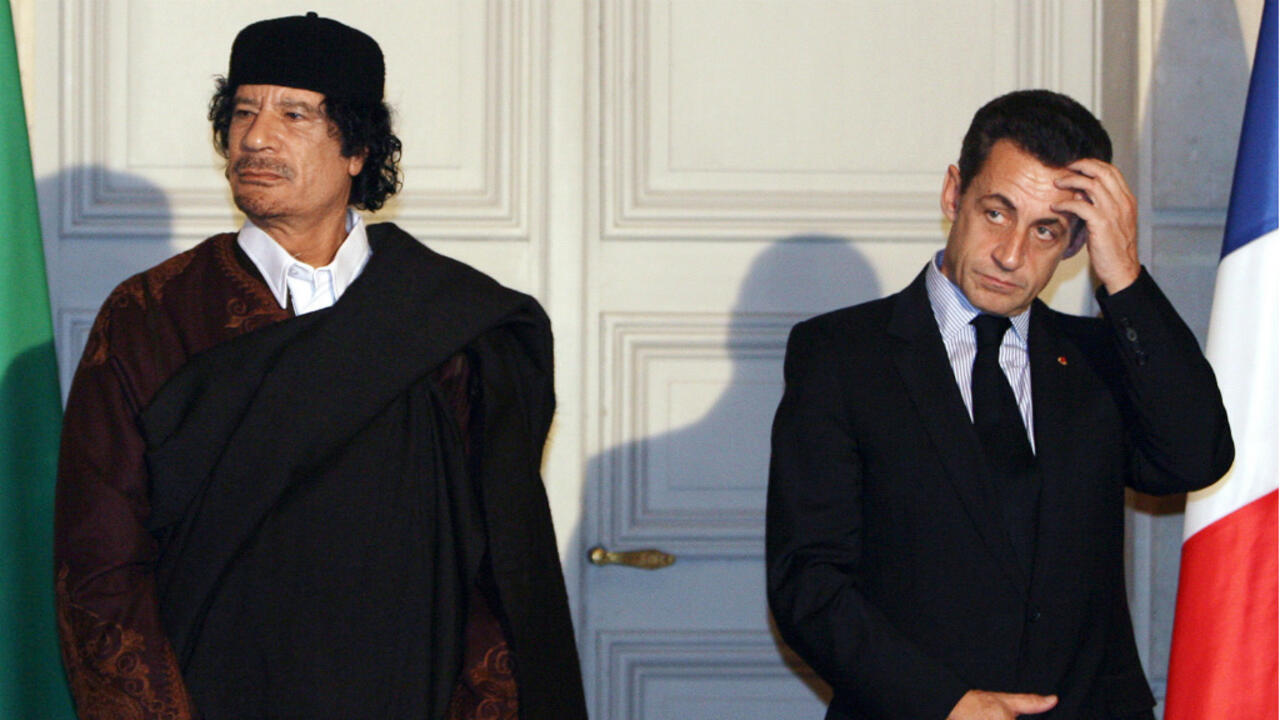
PARIS – Nicolas Sarkozy, once hailed as the energetic reformer of French politics, was found guilty this week of criminal association in a long-running case that has shaken France’s Fifth Republic: the alleged Libyan financing of his 2007 presidential campaign.

AfricaHeadline Reports Team
editorial@dw-demosnewstaion.online
The Paris Criminal Court ruled that Sarkozy allowed his closest associates to pursue funding from Muammar Gaddafi’s Libya between 2005 and 2007. While he was acquitted of charges of passive corruption and misuse of public funds, the conviction exposed one of the deepest scandals of modern French politics. It blended electoral ambition, hidden money, and France’s controversial role in Africa.
Muammar Gaddafi was not simply a foreign leader. He was a driving force behind the pan-African movement, pushing for continental unity, an African currency, and greater independence from Western financial systems. His push for African sovereignty often collided with France’s entrenched interests in its former colonies, where Paris maintained vast influence through political, military, and economic networks widely criticized as Françafrique.
The Sarkozy case illustrates the contradiction. France publicly promoted democracy in Africa while its political elites privately sought campaign money from a leader who championed Africa’s independence from Western dominance.
The verdict went beyond Sarkozy. Claude Guéant, his powerful campaign director, was convicted of corruption, influence peddling, forgery, and aggravated money laundering. Former minister Brice Hortefeux was also found guilty.
For investigators, the network resembled a parallel political machine linking Paris and Tripoli through covert financial flows. It revealed how French politics could be compromised by the very African leaders whom France alternately courted and undermined. It exposed not just individual wrongdoing but structural hypocrisy.
At home, the case fuels urgent calls for stricter oversight of campaign financing in France. Abroad, it reopens debate over France’s role in Africa, where its interventions and influence have long been shadowed by corruption and dependency.
For many African observers, Sarkozy’s trial is not just about one man’s misconduct. It is a reminder that French democracy was financed, in part, with African money, even as Paris condemned and destabilized the very leaders it secretly depended on.
Sarkozy still awaits final sentencing, but the conviction all but ends his hopes of returning to political prominence. Yet the broader implications reach beyond his personal downfall.
The case has become a test of French democracy. Can institutions hold powerful figures accountable, and is France willing to confront its own complicity in perpetuating corruption in Africa?
For Africa, the lesson is equally stark. Gaddafi’s panafricanist agenda sought to liberate the continent from Western financial dependency. France, instead of supporting that vision, exploited it by turning Africa’s wealth into political currency in Paris.
Investigative Timeline
Sarkozy, Libya, and the African Question (2005–2025)
2005–2006: First contacts
Envoys linked to Sarkozy open secret talks with Libyan officials. Gaddafi, pursuing his pan-African vision, sees in these contacts a way to strengthen his continental project.
2007: Electoral triumph
Sarkozy wins the presidency. Testimonies later describe millions of euros in Libyan funds flowing into his campaign.
2009–2010: Ambiguous ties
Gaddafi is welcomed in Paris with state honors, but tensions rise as his call for African independence clashes with French interests.
2011: War in Libya
France leads NATO’s intervention against Gaddafi. Analysts argue that beyond democratic rhetoric, Paris also sought to silence a leader who threatened the neocolonial order.
2012–2013: The leaks emerge
French investigative outlets publish documents alleging illicit Libyan financing. Judicial inquiries are opened.
2016–2018: Prosecution accelerates
Sarkozy’s allies are detained. In 2018, the former president is formally indicted for corruption and illegal campaign financing.
2019–2023: Parallel scandals
Other convictions damage Sarkozy’s credibility. New evidence links Libyan funds directly to French networks.
2025: Historic ruling
The Paris court convicts Sarkozy of criminal association. Guéant and Hortefeux are also found guilty. The case becomes a symbol not just of personal downfall but of France’s longstanding corruption in Africa.
Sarkozy’s conviction is more than a personal disgrace. It exposes a system where France, while denouncing corruption in Africa, secretly relied on African money to finance its own democracy.
For Africans, Gaddafi’s legacy remains contested, but his panafricanist vision sought to free the continent from Western dependency. France, instead of embracing that aspiration, turned it into political collateral.
This is not just a trial of one man. It is a mirror held up to France itself, a reminder that the credibility of Western democracies can collapse when their African policies are built on corruption, exploitation, and denial of the very sovereignty they claim to defend.