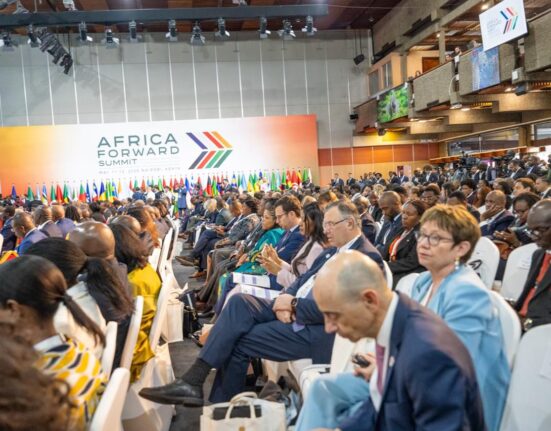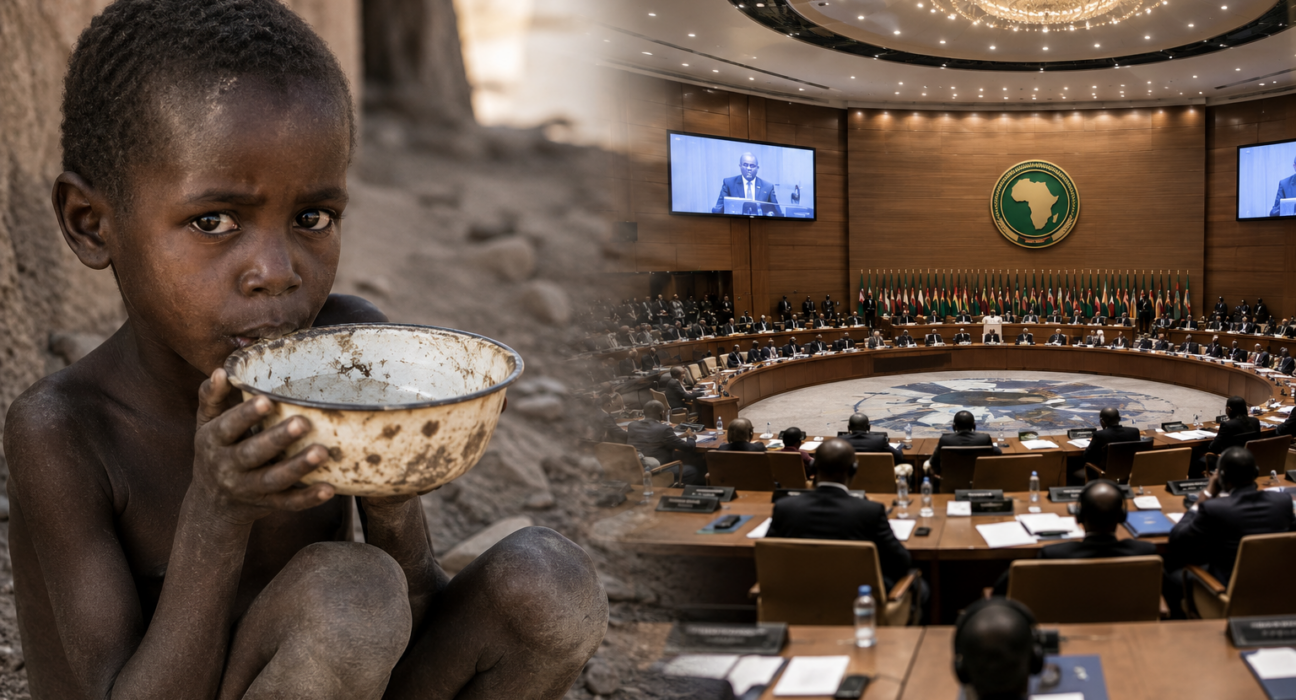
Uagadugu – For decades, many African leaders have sought to convince the world that Africa is modern, stable, sophisticated and civilised. Governments built convention centres, hosted international summits, multiplied diplomatic speeches and invested heavily in the institutional image of their states. Across many African capitals, presidential palaces expanded faster than national food systems, public healthcare networks or agricultural support structures.

AfricaHeadline Reports Team
editorial@africaheadline.com
The problem is that, in many cases, the aesthetics of power have advanced far more rapidly than the social dignity of ordinary citizens.
Perhaps the greatest contradiction in contemporary Africa lies precisely there, the continent richest in natural resources and among the richest in arable land continues to carry some of the world’s highest levels of hunger, multidimensional poverty and food insecurity. Africa’s crisis is no longer merely economic, it has become moral, structural and profoundly civilisational.
The tragedy is not simply the existence of poverty, the tragedy is the political normalisation of poverty.
In many African countries, public debate has become excessively centred on international image: rankings, diplomatic forums, multilateral summits and narratives of economic growth, meanwhile, in urban peripheries and rural communities, millions of families continue to live under the weight of extreme informality, youth unemployment and silent food insecurity.
The question therefore becomes unavoidable: who exactly is the modern African state working for?
Colonial history explains part of this reality. Yet perhaps the deepest legacy of colonialism was not merely economic or territorial. Perhaps it was psychological. Many African states remain trapped in a permanent search for external validation. International recognition has, in several cases, become more important than the internal recognition of their own populations.
In some contexts, governments appear more concerned with impressing foreign investors, multilateral institutions and international partners than with building resilient food systems capable of shielding citizens from global shocks.
Africa has become remarkably efficient at organising conferences on development, yet it continues to struggle to transform macroeconomic growth into affordable food, productive employment and structural improvements in living conditions.
The paradox is brutal.
The continent possesses nearly 60 per cent of the world’s uncultivated arable land, vast water reserves, strategic minerals and one of the youngest populations on Earth, yet millions of Africans remain dependent on imported food, humanitarian assistance and emergency survival programmes.
No civilisation can claim genuine sovereignty while remaining structurally dependent on imported basic food supplies.
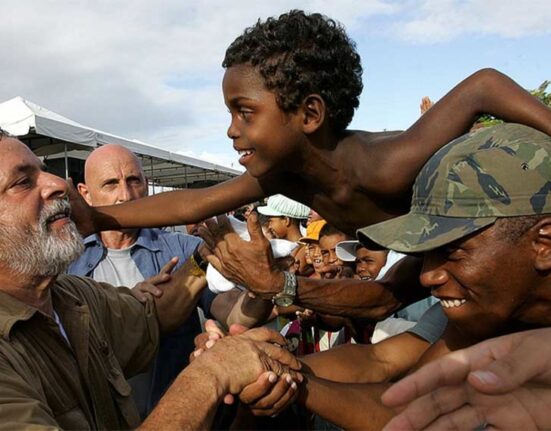
It is precisely at this point that the so-called “Lula effect” becomes relevant to the African debate, the principal achievement of the social policies introduced during the early administrations of Luiz Inácio Lula da Silva was not merely income redistribution, it was the transformation of hunger into a central matter of state policy.
The Fome Zero programme understood something many governments still underestimate: fighting hunger is not charity. It is national strategy. It is political stability. It is economic sovereignty. It is human dignity.
Most importantly, the Brazilian model attempted to integrate social protection, family farming, public procurement, school feeding and economic inclusion. In other words, poverty reduction ceased to be merely welfare policy and became an instrument of productive and social reorganisation.
Africa could adapt many of those lessons to its own realities without mechanically copying any foreign model.
The true pan-Africanism of the 21st century may no longer lie solely in revolutionary speeches about historical liberation or continental unity. It may instead depend on the ability to build food independence, technological sovereignty, local industrialisation and economic systems capable of protecting African populations themselves.
Because there is an uncomfortable truth the continent still hesitates to confront openly, Africa’s political independence was never fully accompanied by economic and food sovereignty.
In many cases, colonial structures merely changed faces, the economic model remained excessively extractive, dependent and oriented towards raw material exports, while domestic food production continued to be chronically underfinanced.
The result is a continent that exports strategic resources while importing food.
Africa exports oil, copper, cobalt, gold and diamonds, yet remains vulnerable to the international prices of wheat, rice and fertilisers.
That dependency became even more evident after the Covid-19 pandemic and the global disruptions triggered by the war between Russia and Ukraine, which exposed the alarming fragility of food systems across several African economies.
Perhaps this is precisely where Africa now requires a new generation of leadership: less obsessed with appearing developed and more committed to building real development.
A leadership capable of understanding that rural roads are also strategic infrastructure, that school meals are also national security policy. That family farming is also geopolitics. That feeding one’s own people is a far more powerful demonstration of sovereignty than any diplomatic speech.
Ultimately, Africa’s greatest historical humiliation may no longer be the memory of colonisation itself.
It may be the fact that a continent rich enough to feed much of the world still struggles to feed its own children.
__
By AfricaHeadline Editorial Desk
© 2026 AfricaHeadline Media Network. All Rights Reserved.