Congo signs $23bn oil deal with China’s Wing Wah to boost production and local content
- Business and NetworkingChinaRepublic of the Congo
- September 5, 2025
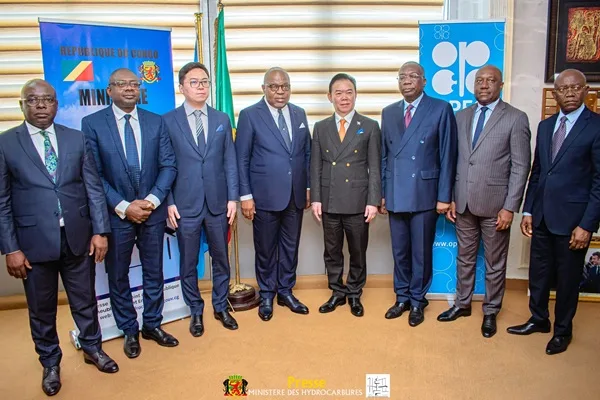

Johannesburg – The Republic of the Congo has signed a $23bn hydrocarbon agreement with Chinese oil and gas company Wing Wah, in a move designed to lift national crude output to 200,000 barrels per day by 2030 and expand local participation in the sector.

AfricaHeadline Reports Team
editorial@dw-demosnewstaion.online
The deal, covering the integrated development of the Banga Kayo, Holmoni and Cayo permits, was signed in August by Bruno Jean-Richard Itoua, Congo’s hydrocarbons minister, Jean-Jacques Bouya, minister of state, and Wing Wah president Xiao Lianping. It commits more than $23bn in investment and envisages cumulative production exceeding 1.3bn barrels by 2050.
Officials said the agreement would become a central pillar of Congo’s wider economic strategy, offering substantial fiscal and parafiscal revenues. It also includes provisions to cut gas flaring by developing infrastructure for domestic gas use and a training centre aimed at building local skills across the energy industry.
The project features an integrated gas monetisation programme with phased expansion of LNG, LPG, butane and propane capacity to meet domestic demand and secure export opportunities. Additional infrastructure such as scalable gas treatment facilities, on-site power generation and water management systems is also envisaged.
Wing Wah already employs more than 3,000 Congolese workers in the country. Social benefits from the project include the supply of surplus power and treated water to nearby communities.
The company has an established presence in Congo through the Banga Kayo onshore block, where it has drilled about 240 wells. Current production from the field is around 45,000 barrels per day, with peak output expected to reach between 50,000 and 80,000 bpd.
The latest agreement follows an amended production sharing contract signed last year for Banga Kayo, which set out a three-phase development plan. The government in Brazzaville has promoted such public–private partnerships as a model for resource monetisation in Africa.
NJ Ayuk, executive chairman of the African Energy Chamber, described Congo’s approach as “a model for other African nations rich in natural resources”, adding that the country was positioning itself to leverage oil and gas investments for sustainable growth.