Lula to Trump: Brazil will not kneel before the U.S.
- AmericaOpinionsWorld
- September 16, 2025
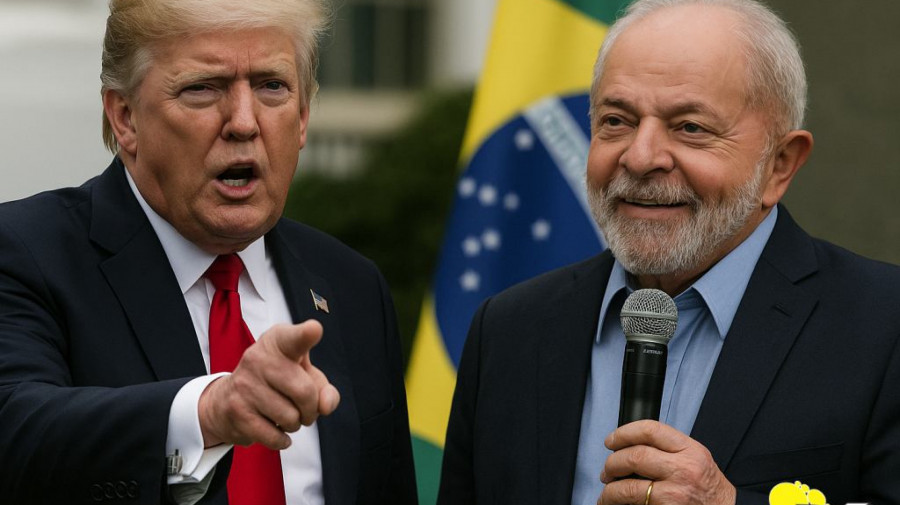

Lula did not bow. And he made it clear that Brazil will not bow to Donald Trump either.
“We Brazilians do not have a ‘mutt complex.’ Brazil will not kneel before the U.S. government,” the president declared in a speech mixing defiance, nationalism, and a direct warning to the White House.

AfricaHeadline Reports Team
editorial@dw-demosnewstaion.online
The remark is symbolic. And it carries historical weight. The term “mutt complex,” coined by playwright Nelson Rodrigues, describes a sense of inferiority that has long haunted Brazil. Lula now reclaims the expression to reject that role and project a different image: that of a nation demanding respect and autonomy in the face of the world’s leading superpower.
Donald Trump’s return to the White House reignited tensions. The Republican imposed tariffs on Brazilian steel, aluminum, and agricultural goods. He branded Brazil “one of the worst trading partners.” And he went further, revoking visas for members of Brazil’s Supreme Court on allegations of judicial abuse.
For Washington, these are acts of national defense. For Brasília, they are interference. Lula responded firmly. He took the case to the World Trade Organization, invoked Brazil’s Reciprocity Law, and promised that national sovereignty “is not up for negotiation.”
The tough talk is not only rhetoric. The government is seeking alternatives. It has strengthened trade ties with China, expanded dialogue with the European Union, and reached out to African countries as new commercial partners. The clear aim is to reduce dependence on the United States.
Brazilian diplomats describe the approach as “firmness with alternatives.” Publicly, Lula strikes a political posture. Behind the scenes, Brasília is working to avoid isolating the economy.
At home, Lula’s words resonate as a direct response to public expectations of national pride. By declaring that Brazil will not kneel, he speaks both to his political base and to millions of Brazilians who see the U.S. as a difficult, often arrogant partner. The rhetoric strengthens his image as a sovereign leader determined to protect national interests.
But it is also political fuel. In a polarized climate, confronting Trump helps Lula draw sharp contrasts and consolidate support.
There is a cost. U.S. tariffs could squeeze exporters. Sanctions could deter investment. And a confrontational tone may close doors to trade talks at a time when Brazil still needs to expand its markets.
Analysts warn that Lula’s challenge is to turn words into results. Confronting Trump requires more than strong statements. It demands international coordination, solid alliances, and the ability to withstand pressure from Washington without plunging Brazil into economic turmoil.
Lula’s defiant posture is already resonating abroad. In the Global South, Brazil is emerging as a voice of resistance to U.S. dominance. For investors, the question is different: how far will this confrontation go? Can the country balance political sovereignty with economic pragmatism?
Lula wants to change the narrative. From a Brazil marked by the “mutt complex” to a nation standing tall, eye to eye with the United States. But the question remains:
Brazil may refuse to kneel. Yet how long can it afford the price of challenging the world’s most powerful nation?