Russia–Africa: Seven years on, the $40bn trade pledge remains unfulfilled
- OpinionsOptinions & WorldRussiaWorld
- October 31, 2026
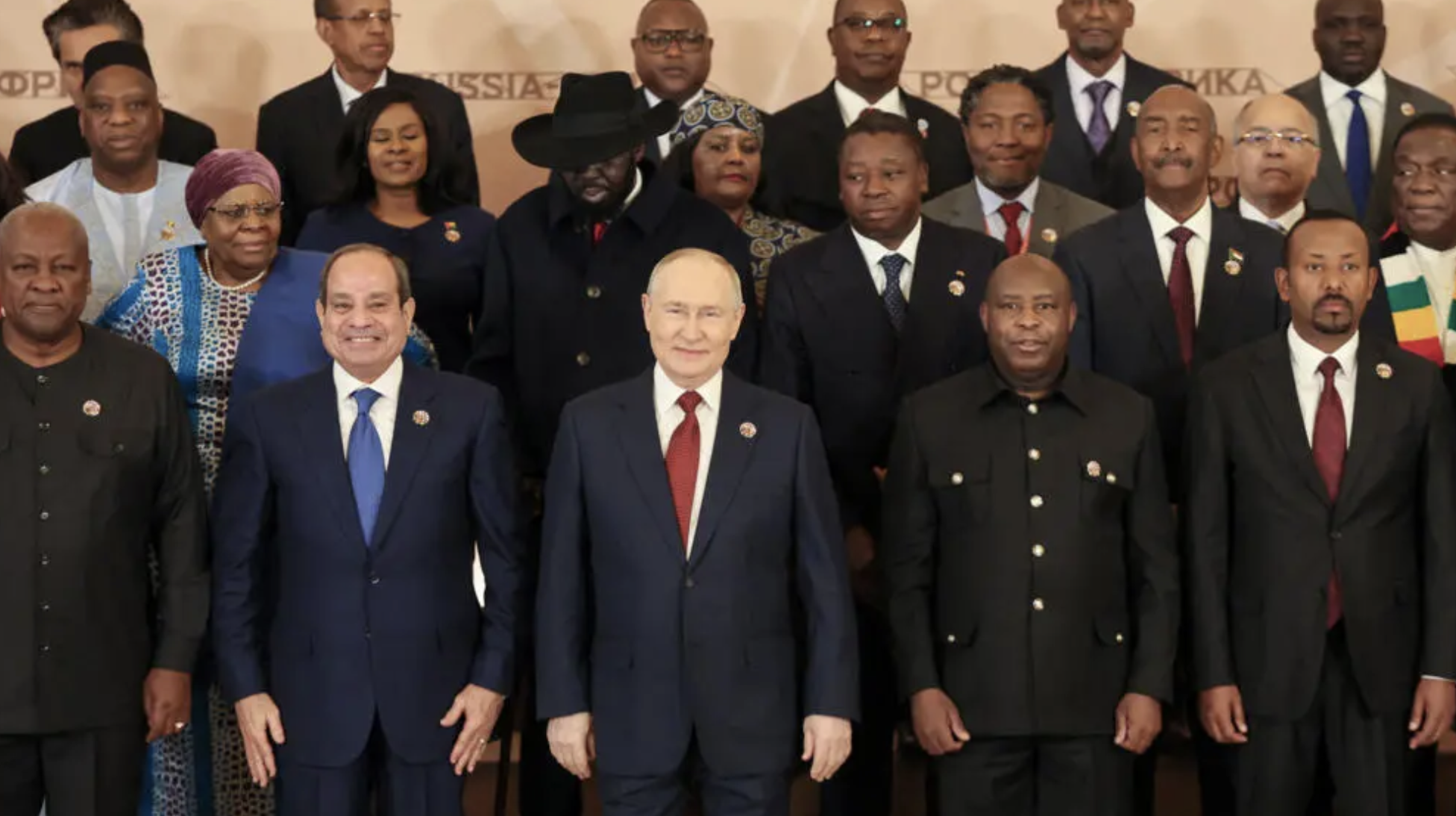

Bilateral trade exceeded $27bn in 2025 but remains well below the target set by Vladimir Putin in 2019. With a trade balance heavily tilted in Moscow’s favour, geographical concentration and limited productive investment, the third Russia–Africa Summit has exposed the challenge of turning geopolitical influence into tangible economic returns.
MOSCOW — In 2019, at the first Russia–Africa Summit in Sochi, Vladimir Putin set out an ambitious economic target: to double bilateral trade to $40bn within four to five years. Seven years later, that ambition remains unfulfilled. Trade between Russia and African countries stood at approximately $27bn in 2025, leaving a shortfall of about $13bn against the original target.
The gap is significant because Moscow’s political engagement with Africa has expanded, while the economic relationship has remained relatively shallow. Russia has strengthened its diplomatic presence, expanded military and energy co-operation and sought to consolidate alliances across the Global South. Yet that influence has not translated into a commercial and industrial footprint comparable with those of Africa’s principal economic partners.
More importantly, the 2025 figures require a closer examination than headline growth alone suggests. According to Russian customs data, trade with Africa showed limited momentum last year: Russian exports fell 6.5 per cent to $22.7bn, while imports from the continent rose 26.1 per cent to $4.4bn. The increase in Russian purchases partly offset the contraction in exports, leaving bilateral trade at approximately $27bn.
The gap between political ambition and commercial performance points to a structural weakness: Moscow has secured markets for its products but has yet to establish a sufficiently diversified economic relationship to sustain more balanced growth.
A trade balance tilted towards Moscow
The composition of bilateral trade offers perhaps the clearest indication of the relationship’s underlying economics.
In 2025, Russia exported approximately $22.7bn in goods to Africa and imported just $4.4bn from the continent. The resulting Russian trade surplus was about $18.3bn.
In effect, for every dollar of African goods purchased by Russia, African countries bought approximately $5.20 in Russian exports.
Wheat, cereals, fertilisers, fuels, chemicals and equipment account for significant portions of Russian exports. African sales to Russia, by contrast, remain concentrated in a narrower range of agricultural products, raw materials and other commodities.
This imbalance does not necessarily mean that trade is detrimental to Africa. Access to Russian cereals, fertilisers and energy products can support food security, agricultural productivity and lower production costs. The problem is the limited extent to which these commercial ties generate opportunities for African exports with greater value added.
The central economic question is therefore not simply how much trade takes place, but how the value generated by that trade is distributed. If Africa continues to import processed agricultural and industrial goods while exporting predominantly primary commodities, expanding trade could reinforce existing dependencies rather than create new productive capacity.
The imbalance also has financial implications: a persistent surplus in Moscow’s favour limits the ability of African exporters to capture a larger share of the revenue generated by bilateral commerce.
Russia remains a relatively small trading partner
The scale of the relationship becomes clearer when compared with Africa’s principal trading partners.
In 2025, trade between the European Union and Africa reached approximately $395bn, while China–Africa trade approached $348bn. US–Africa trade stood at about $105bn, according to the comparative figures cited in the underlying analysis.
At approximately $27bn, Russia remains considerably smaller.
The difference reflects not only the relative size of the economies involved, but also their capacity to provide financing, establish corporate operations, integrate supply chains and diversify the goods and services exchanged.
China has developed a substantial presence in infrastructure, mining, manufacturing and logistics. The European Union retains an established network of commercial, financial and industrial relationships. The US, despite a smaller trading relationship than the EU or China, continues to command considerable financial and corporate influence.
Russia, by contrast, maintains a more concentrated presence in strategic sectors, particularly agriculture, energy, defence and commodities.
There is another important consideration: Africa accounted for approximately 3.9 per cent of Russia’s total external trade in 2025. Despite the continent’s growing geopolitical importance to Moscow, it remains a relatively marginal component of Russia’s overall trading structure.
Geographical concentration: a partnership that has yet to reach the continent
Another structural weakness is the concentration of commercial flows in a small number of markets.
Egypt accounted for approximately 39 per cent of Russia–Africa trade, according to Russian customs figures cited by Deutsche Welle. This concentration demonstrates the extent to which the relationship remains dependent on a limited number of partners, particularly in North Africa.
Algeria also occupies a strategic position, notably in military equipment, energy and industrial co-operation. South Africa maintains significant commercial and diplomatic ties with Moscow, including through the BRICS framework.
Meanwhile, several sub-Saharan economies continue to account for relatively small shares of bilateral trade.
For Russia, this concentration limits market diversification. For Africa, it suggests that the partnership has yet to develop a genuinely continental commercial network capable of integrating economies across Central, East, West and Southern Africa.
The potential is evident in markets such as Angola, Nigeria, Ethiopia, Kenya, Tanzania and Ghana, particularly in agriculture, energy, mining, fertilisers, transport and manufacturing.
But economic potential is not the same as realised investment. Expansion will depend on access to financing, legal certainty and commercially viable projects.
Investment: the gap between agreements and deployed capital
Foreign direct investment is where the Russia–Africa relationship faces one of its greatest challenges.
Russia has technological capabilities and industrial experience in sectors relevant to Africa’s development, including nuclear energy, oil and gas, mining, fertilisers, engineering and infrastructure.
Nuclear co-operation illustrates this strategic presence. Moscow has signed intergovernmental nuclear co-operation agreements with at least 15 African countries. The El Dabaa nuclear power plant in Egypt is among the most significant projects associated with this strategy.
Yet agreements should not be confused with productive capacity already delivered. El Dabaa remains under construction, while Ethiopia’s proposed nuclear project is still at an early, prospective stage.
The distinction between announced commitments, financing mobilised and capital actually deployed is essential to assessing the economic returns of the partnership.
UNCTAD reported that Africa attracted $97bn in foreign direct investment in 2024, although the figure falls to approximately $62bn when a major international financing project in Egypt is excluded. European investors remain among the continent’s largest sources of investment stock, alongside the US and China.
Comparable data are insufficient to establish a reliable precise share for Russian investment in Africa. Nevertheless, Russia’s investment presence remains considerably less prominent than that of the continent’s leading international investors.
To change this, Moscow would need to move beyond a strategy centred on supply contracts and intergovernmental agreements towards productive investment, local corporate participation, domestic processing of raw materials and technology transfer.
The financial constraint: sanctions, payments and the cost of capital
Financial considerations add another layer of complexity to the relationship.
Since 2022, western sanctions against Russia have increased the costs and difficulties associated with certain international banking transactions, cross-border payments, insurance, financing and technology procurement.
For African companies, these restrictions can create additional risks when entering into contracts with Russian counterparties, particularly where banks, suppliers or financial institutions subject to sanctions are involved.
The use of national currencies, bilateral clearing arrangements and alternative payment systems has consequently emerged as a potential means of reducing exposure to dollar- and euro-based transactions.
But replacing the settlement currency does not, by itself, resolve problems involving financing, convertibility, liquidity, insurance or access to international markets.
Using the rouble or African currencies requires mechanisms capable of balancing trade flows, reducing conversion costs and providing exchange-rate predictability.
There is an opportunity for African central banks and Russian financial institutions to develop more efficient trade-settlement arrangements. Any such mechanism, however, must remain consistent with international compliance requirements and risk-management standards.
Without a functioning financial architecture, trade expansion is likely to remain constrained, even where governments are politically committed to deeper co-operation.
The issue is particularly important for African economies seeking financing for major energy, transport and industrial projects, where the cost of capital and availability of guarantees often determine whether investment is commercially viable.
Russia’s geopolitical strategy and the search for new markets
Moscow’s engagement with Africa cannot be separated from the broader transformation of the international economic order.
Facing western sanctions and financial restrictions linked to the war in Ukraine, Russia has sought to diversify its markets, deepen relations with emerging economies and consolidate diplomatic support across the Global South.
Africa offers strategic opportunities: critical natural resources, expanding consumer markets, substantial infrastructure needs and a collective voice in multilateral institutions.
For Moscow, the relationship provides opportunities for trade, access to strategic commodities, energy co-operation and greater international influence.
For African governments, closer ties can help diversify suppliers of food, fertilisers, technology, military equipment and energy solutions.
But diversification only delivers economic benefits when governments retain the capacity to negotiate favourable terms. Moving closer to Russia should not mean replacing one external dependency with another.
Africa’s strategy should be to use competition among Russia, China, the EU, the US, India, Turkey and Gulf countries to secure better financing, market access, industrial development and technology transfer.
Economic sovereignty is not measured by the number of diplomatic partners a country has, but by its ability to choose, negotiate and secure outcomes that benefit its domestic economy.
The third summit: a renewed agenda, but delivery remains the test
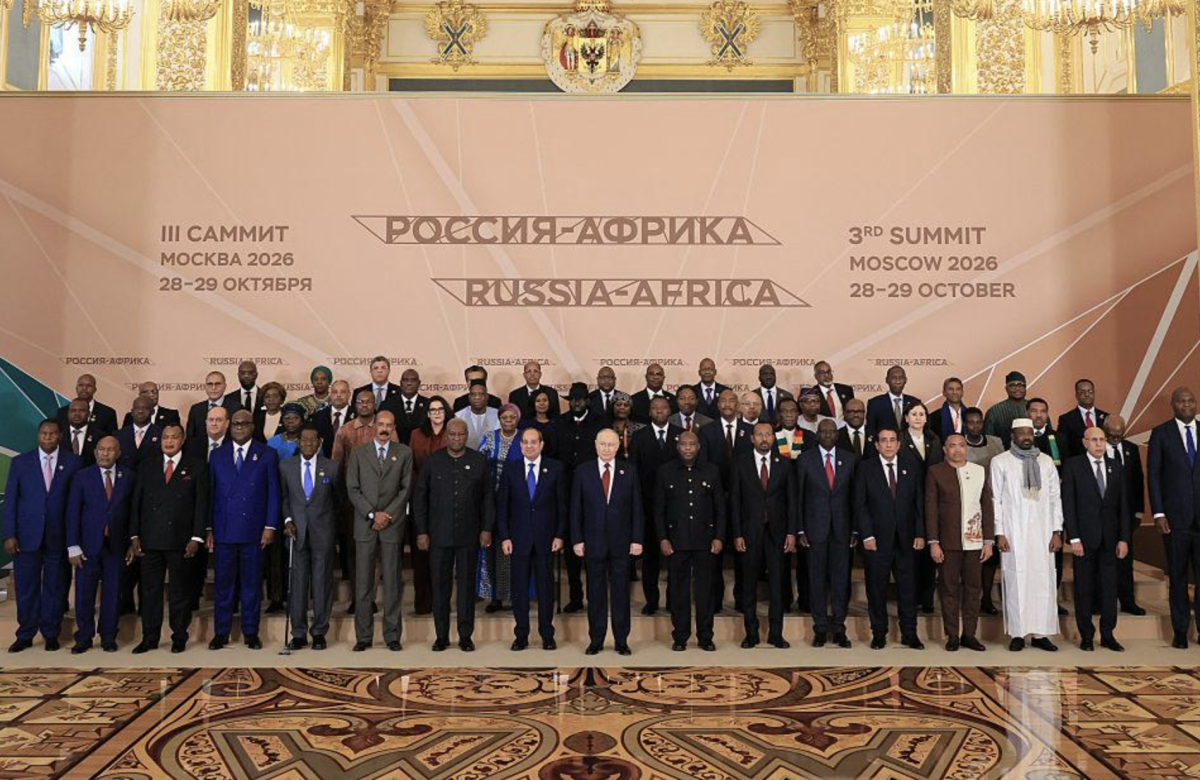
The third Russia–Africa Summit, held in Moscow on October 28–29 2026, sought to renew political and economic commitments between the two sides.
The meeting brought together delegations from 48 African countries, including 22 represented by heads of state or government. Vladimir Putin again presented Russia as an alternative strategic partner to western powers, pledging to expand technological co-operation, create jobs, support industrialisation and increase supplies of cereals and fertilisers.
Among the institutional outcomes was the adoption of the 2027–2029 Action Plan for co-operation between the African Union and the Russian Federation, covering 19 areas.
The agenda includes trade, investment, energy, transport, agriculture, science, technology, artificial intelligence, cybersecurity, education and security.
The summit’s final declaration also highlights the expansion of African exports of value-added products, the localisation of industrial production and the processing of mineral resources in countries of origin.
These are relevant commitments. But an important qualification remains: the African Union’s Action Plan is a framework for co-operation rather than a legally binding instrument creating rights and obligations under international law.
Its effectiveness will therefore depend on the ability to translate political priorities into funded programmes, enforceable contracts and projects with measurable performance indicators.
The third summit offers another opportunity to address the shortcomings of previous meetings. But the credibility of the partnership will depend less on the number of documents signed than on the implementation of the commitments made.
2027–2030: three scenarios for the economic relationship
The future of the partnership will depend on commercial, financial and geopolitical developments. Three scenarios help frame the outlook for the coming years.
| Scenario | Economic outlook |
|---|---|
| Continuity | Trade remains concentrated in cereals, fertilisers, energy and equipment, with limited growth in productive investment. |
| Selective expansion | New contracts in energy, mining, agriculture and infrastructure, accompanied by greater participation from African companies. |
| Structural transformation | Industrialisation, domestic processing, long-term financing, diversified African exports and technology transfer. |
The first scenario is closest to the current structure of the relationship. The second would require greater capital mobilisation, functioning payment mechanisms and a broader geographical distribution of investment. The third would entail a fundamental shift in the economic relationship.
The $40bn target could remain a political benchmark, but it should no longer be treated as the principal measure of success.
Trade worth $40bn, dominated by Russian exports of finished goods and African exports of raw materials, could represent higher commercial volumes without any meaningful structural transformation of African economies.
Genuine progress would mean reaching that figure with a larger share of processed African products, greater industrial investment, stronger participation by local businesses and a more balanced distribution of economic benefits.
The real economic return for Africa
Russia remains a relevant partner in strategic sectors. It possesses technological expertise, energy capabilities, industrial experience, agricultural resources and diplomatic influence that could contribute to specific African development priorities.
But geopolitical relevance should not be confused with economic scale.
Seven years after the Sochi pledge, bilateral trade remains below $40bn, the trade balance is heavily tilted towards Moscow and Russia’s presence in productive investment has yet to match the strategic importance it attaches to the continent.
The central question for African governments should not simply be how much Russia is prepared to sell or how much it intends to buy. It should be how much it is willing to invest, produce and develop on African soil.
Angola, for example, could assess the partnership through specific economic priorities: fertilisers to support agricultural productivity, energy technology, mineral exploration and processing, technical training, infrastructure and industrial development.
The same principle applies across the continent: agreements should serve national priorities and deliver measurable economic benefits.
The next phase of Russia–Africa relations needs to move beyond declaratory diplomacy towards an implementation agenda built around trade targets, financial commitments, deadlines, accountability mechanisms and independent assessments of results.
A strategic partnership is not measured by the number of summits held, the speeches delivered by political leaders or the memorandums signed. It is measured by capital invested, factories built, technology transferred, jobs created and the value added that remains within African economies.