South Africa: Ramaphosa chooses a compass over a megaphone on illegal immigration
- PoliticsSouthern Africa
- July 26, 2026
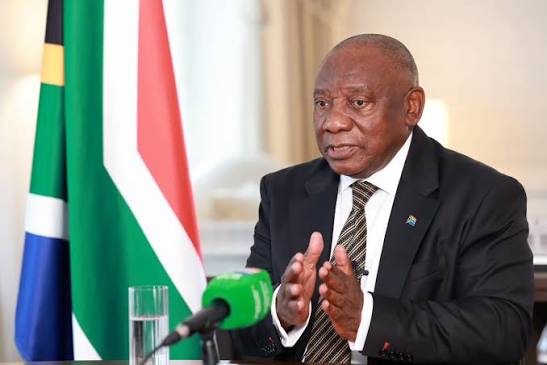

South Africa’s president is tightening border controls while resisting pressure to turn migrants into scapegoats for the country’s economic and social challenges
LAGOS — Few issues test political leadership more than illegal immigration. For any government, ignoring public concern risks fueling populism. Reacting too aggressively, however, can quickly transform an administrative challenge into a humanitarian, diplomatic and economic crisis.
South African President Cyril Ramaphosa appears to have chosen the more difficult path, acknowledging that illegal immigration is a serious national concern without allowing it to become the catch-all explanation for the country’s deep-rooted economic and social problems.
The balancing act comes at a particularly sensitive moment. South Africa continues to grapple with one of the world’s highest unemployment rates, stubborn economic inequality, violent crime and mounting pressure on public services. In such an environment, blaming undocumented migrants for job losses, crime and strained public resources offers an easy political message. Ramaphosa’s government has deliberately resisted adopting that narrative as official policy.
That restraint should not be mistaken for inaction.
Since the establishment of the Border Management Authority (BMA) in 2023, the government has stepped up border enforcement, expanded immigration inspections and intensified operations targeting human trafficking networks, document fraud and organized cross-border crime. Authorities have also accelerated efforts to modernize immigration systems, improve identity verification and strengthen cooperation among police, customs and immigration agencies.
Government officials argue that effective migration management requires stronger institutions rather than louder political rhetoric.
The administration’s approach reflects a broader philosophy: illegal immigration is primarily a governance and border-management issue, not the root cause of South Africa’s structural economic challenges.
Official crime statistics and numerous academic studies have repeatedly shown that, while undocumented migration presents genuine policy challenges, there is no conclusive evidence that international migrants are responsible for South Africa’s exceptionally high levels of violent crime. Researchers continue to identify inequality, organized crime, unemployment, social exclusion and institutional weaknesses as the principal drivers of insecurity.
That distinction has become increasingly important in the digital age.
Several recent incidents have demonstrated how allegations involving foreign nationals can spread rapidly across social media before police investigations establish the facts. In some cases, claims initially blamed on migrants were later found to be inaccurate or unsubstantiated, but not before they had fueled public anger and political mobilization.
For Ramaphosa’s administration, allowing social media narratives to dictate public policy would undermine confidence in democratic institutions and the rule of law.
The government has therefore sought to separate immigration enforcement from xenophobia.
Officials have repeatedly emphasized that law enforcement operations should focus on undocumented migration, organized criminal networks and document fraud rather than targeting entire immigrant communities. The distinction is politically sensitive but central to Pretoria’s effort to preserve constitutional protections while responding to legitimate public concerns over border security.
The strategy also carries significant economic considerations.
South Africa remains the region’s largest industrial economy and the principal trading hub of the Southern African Development Community (SADC). Regional supply chains, labor mobility and cross-border investment depend heavily on stable diplomatic relations with neighboring countries. Policymakers argue that broad anti-immigrant measures could damage regional trade, discourage investment and weaken Pretoria’s leadership role across southern Africa.
The African National Congress (ANC), which has governed South Africa since the country’s first democratic elections in 1994, increasingly frames the debate around what officials describe as “strong borders and strong institutions.”
Rather than portraying migrants as the source of South Africa’s economic difficulties, the government says its priority is restoring the state’s capacity to regulate migration, dismantle trafficking networks, improve border administration and cooperate more closely with neighboring governments.
Criticism, however, has come from multiple directions.
Opposition parties accuse the administration of moving too slowly to secure the country’s borders, while human rights organizations continue to warn against abuses during immigration enforcement operations and the growing spread of anti-immigrant rhetoric online.
Ramaphosa therefore finds himself navigating competing political pressures: responding to widespread concerns about illegal immigration without allowing legitimate security issues to evolve into institutionalized xenophobia.
For the president, the challenge extends beyond migration policy itself.
It is also about preserving South Africa’s constitutional democracy while maintaining regional integration, protecting investor confidence and ensuring that complex structural problems are addressed through evidence-based policymaking rather than emotionally charged political narratives.
Supporters of the government’s approach argue that durable migration policy depends on more than arrests and deportations. It requires effective border management, modern administrative systems, regional cooperation, sustained economic growth and job creation.
Those goals may not generate the immediate political impact of more confrontational rhetoric, but Pretoria believes they offer a more sustainable path for a country whose economy remains deeply interconnected with its neighbors.
Ramaphosa’s leadership is therefore defined less by dramatic political messaging than by institutional management. His government has sought to demonstrate that South Africa can strengthen border security, enforce immigration laws and combat transnational crime without abandoning the constitutional values that have underpinned the country’s democracy for more than three decades.
In an era when migration has become one of the world’s most polarizing political issues, South Africa is attempting a more complicated balancing act: protecting national sovereignty while preserving the rule of law, addressing legitimate public anxieties without validating misinformation, and managing illegal immigration as a question of governance rather than political mobilization.