Russia–Africa Summit: The $27bn question behind Moscow’s African ambitions
- EconomicWorld
- October 31, 2026

Moscow wants access to Africa’s minerals, energy markets and trade routes. African governments want capital, technology and industrial investment. But with bilateral trade still dwarfed by China’s and Europe’s, the real test is whether Russia can finance its ambitions, and generate returns for African economies.
AfricaHeadline | Financial Analysis | October 2026
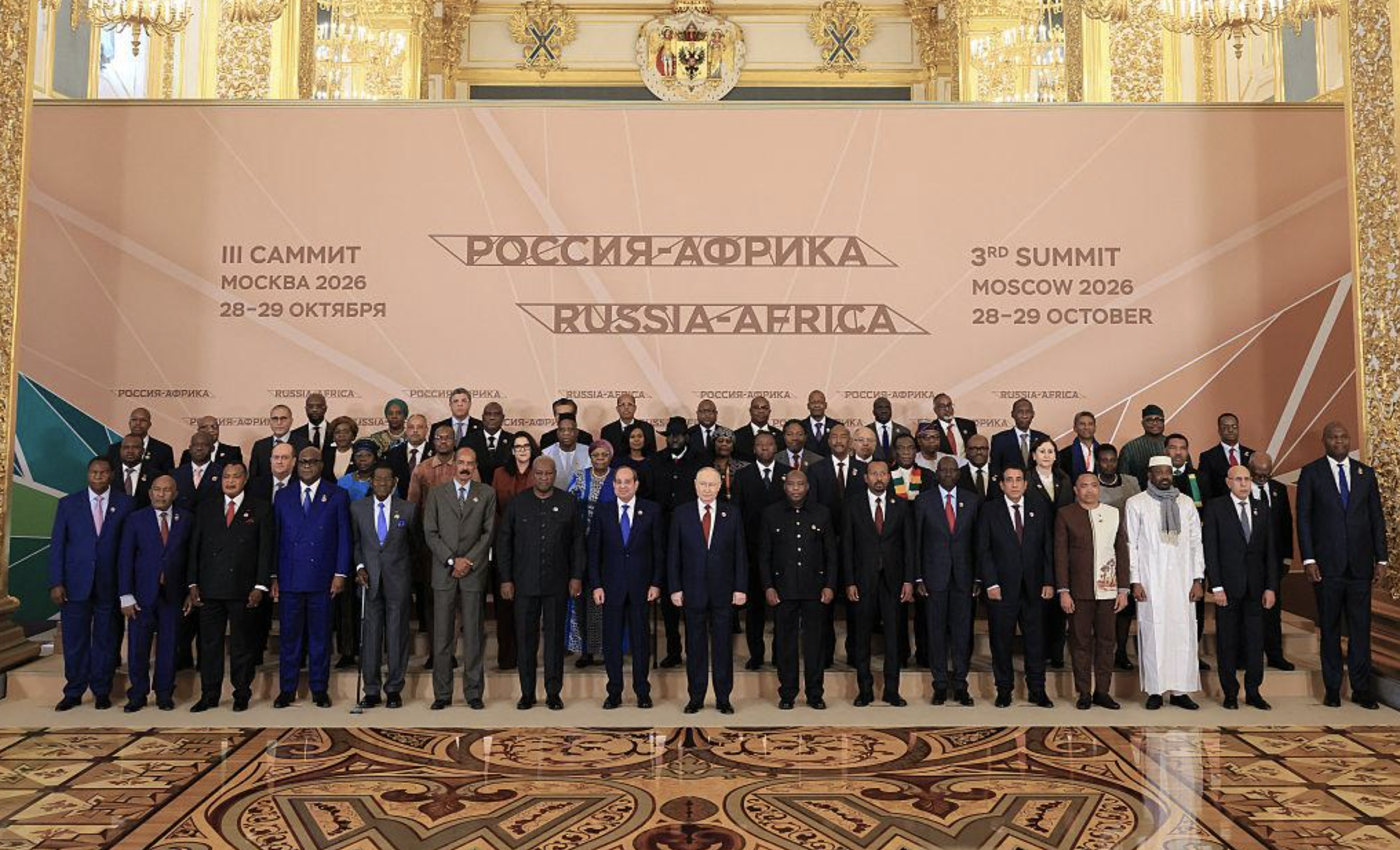
LAGOS — The third Russia–Africa Summit in Moscow on 28–29 October was less about diplomatic alignment than an economic proposition: turning political relationships into commercial assets.
For President Vladimir Putin, Africa offers markets for Russian exports, access to strategic minerals and opportunities to expand economic ties beyond Western financial systems. For African governments, the attraction lies in diversifying investment partners, securing infrastructure finance and attracting technology for industrial development.
Yet the financial relationship remains relatively small. Russia–Africa trade exceeded $27bn in 2025, according to Kremlin figures, compared with approximately $348bn in Africa–China trade and $395bn with the European Union, based on estimates cited by Chatham House.
The gap highlights Moscow’s central challenge: translating geopolitical influence into commercial scale.
The investment gap
Mining and energy illustrate both the opportunity and the financing constraints.
Russian aluminium producer Rusal and Ghana’s state-owned GIADEC agreed to develop joint ventures covering bauxite extraction and alumina refining. The proposed facilities target annual capacity of five million tonnes of bauxite and 1.2 million tonnes of alumina. Rusal is expected to hold majority stakes, while Ghana retains minority participation, including a 10 per cent non-dilutable interest in each venture.
The project could strengthen Ghana’s domestic aluminium value chain and give Rusal access to strategic raw materials. But the decisive financial variables remain undisclosed: total capital expenditure, funding sources, construction schedules and expected returns.
Without these figures, production targets remain industrial ambitions rather than evidence of committed investment.
Nuclear energy presents an even larger financing challenge. Russia’s state-owned Rosatom is pursuing projects with Egypt, Uganda, Ghana and Ethiopia. Such developments can generate decades of revenues from engineering, fuel supplies and maintenance, but require substantial upfront capital, sovereign guarantees and long-term payment commitments.
For African governments, the central question is not simply whether Russia can build these facilities, but whether the financing structure is affordable and whether projected electricity revenues can support the debt incurred.
Trade is not investment
Agriculture provides a more immediate commercial relationship. Russia supplied more than 18mn tonnes of grain to African markets in 2025, according to Putin, reinforcing its position as an important supplier of wheat and fertilisers.
But commodity imports and productive investment have very different economic effects. Grain purchases generate trade flows; domestic fertiliser production, agricultural processing and storage infrastructure can create employment, industrial capacity and recurring export revenues.
The same distinction applies to financial cooperation. Moscow wants to expand payments in national currencies and promote alternative settlement arrangements, including cooperation with the Pan-African Payment and Settlement System.
Such mechanisms could reduce transaction costs and dependence on traditional financial intermediaries. However, their effectiveness depends on currency liquidity, convertibility, banking access and settlement reliability. They cannot automatically eliminate exposure to sanctions or foreign-exchange volatility.
The cost of geopolitical alignment
Russia’s ability to finance its African ambitions also faces constraints. The war in Ukraine continues to absorb fiscal and industrial resources, while Western sanctions complicate access to international finance, technology and supply chains.
This raises questions about project execution, equipment availability and long-term maintenance. For African borrowers, there are additional risks involving sovereign guarantees, currency mismatches, debt sustainability and the concentration of critical infrastructure in a single foreign supplier.
The summit’s 2027–2029 action plan contains 236 measures, but policy commitments are not equivalent to financed projects. African governments should distinguish memorandums of understanding from binding contracts, financial close and actual capital disbursement.
Africa’s return on capital
For Angola and other resource-rich economies, the opportunity lies in using competition between international partners to secure investment in mineral processing, energy infrastructure, agriculture and industrial technology.
The relevant performance indicators are measurable: foreign capital deployed, domestic procurement, skilled employment, tax revenues, technology transfer and the proportion of value added retained locally.
Russia wants markets, minerals and strategic influence. African governments want capital, industrialisation and economic diversification.
The financial verdict on the Moscow summit will depend not on the value of agreements announced, but on the capital actually committed, the projects reaching financial close and the economic returns retained in Africa.
In the end, geopolitical influence may open the door. Only bankable investments can deliver the economic transformation African governments are seeking.