Daniel Chapo’s $30bn bet on Mozambique’s economic transformation
- Economic OutlookMozambique
- August 29, 2026
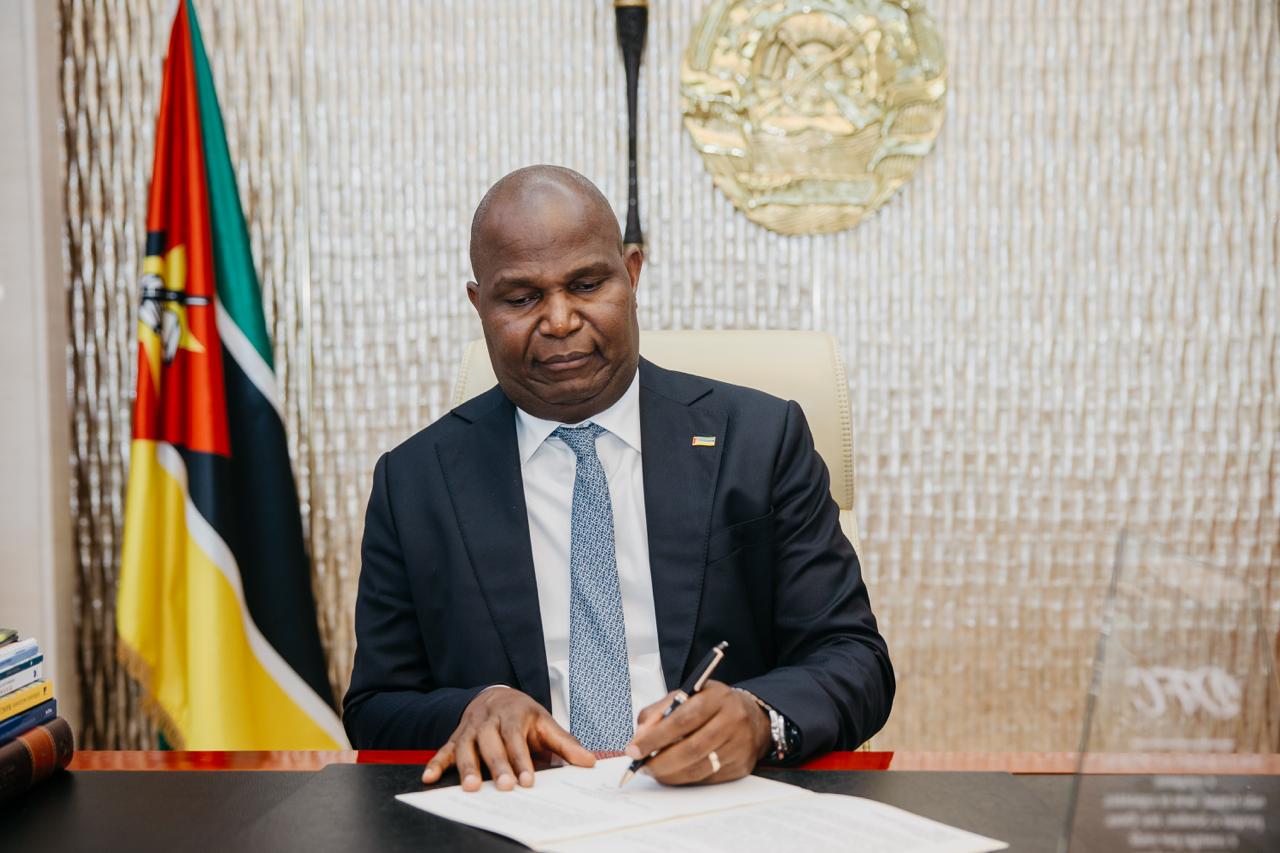

A country emerging from economic contraction is preparing for an investment wave larger than its annual economy. President Daniel Chapo is betting that gas, power and infrastructure can turn that extraordinary influx of capital into jobs, industry and a broader economic revival.
LUANDA — Mozambique has an economy worth about $22.3bn and a pipeline of major investments potentially exceeding $30bn. That arithmetic captures both the scale of the opportunity confronting President Daniel Chapo and the difficulty of turning it into lasting prosperity.
At the centre of the investment wave is the roughly $20bn Mozambique LNG project, one of Africa’s largest energy developments. Alongside it sit the planned $5bn-$6bn Mphanda Nkuwa hydropower project, the government’s $2.75bn Economic Recovery and Growth Plan, known as PRECE, and an initiative intended to mobilise as much as $3bn of private investment.
For Chapo, who took office after one of the most turbulent political periods in Mozambique’s recent history, these projects offer something bigger than an economic rebound.
They provide an opportunity to redefine the country’s development model.
His government is effectively betting that natural gas, electricity, transport corridors and public-private investment can be connected to agriculture, manufacturing and domestic businesses, allowing Mozambique to move from an economy dependent on commodities and informal employment towards a more diversified production base.
The question is no longer whether Mozambique can export gas.
It is whether Chapo can prevent the gas boom from creating two Mozambican economies: a highly productive, dollar-generating extractive sector integrated into global markets, and a much larger domestic economy characterised by low productivity, informality and limited access to capital, that may prove the defining economic test of his presidency.
Starting from a weak base
Chapo’s ambitions come against a difficult backdrop.
Mozambique’s economy contracted 0.5 per cent in 2025, while growth of only about 0.9 per cent is projected for 2026. With population growth close to 3 per cent a year, such expansion is insufficient to raise average incomes substantially, public finances provide another constraint.
The fiscal deficit was estimated at 4.5 per cent of GDP in 2025, after 6.2 per cent in 2024, while public debt remains high. The stock of government debt approached $17bn in early 2025.
The pressure reaches the private sector.
Credit to private companies and households fell from the equivalent of 19.3 per cent of GDP in November 2023 to 16.5 per cent in November 2025, illustrating one of the central problems confronting Chapo: Mozambique needs private investment to diversify its economy precisely when domestic businesses face restricted access to finance.
The government must therefore manage an awkward transition.
It needs to maintain fiscal discipline and service a heavy debt burden while simultaneously financing infrastructure, agriculture, education and other investments required to make the coming gas boom economically inclusive, and the largest revenues from LNG will not arrive immediately.
The $20bn anchor
The most important immediate change is the restart of Mozambique LNG, the Golfinho/Atum development in the Rovuma Basin, led by TotalEnergies, is designed to produce approximately 13.1mn tonnes of liquefied natural gas annually from two liquefaction trains.
Activities resumed in 2026 after years of disruption linked to the insurgency in Cabo Delgado, first exports are targeted for 2029.
The scale is exceptional. At roughly $20bn, Mozambique LNG alone is equivalent to almost 90 per cent of the country’s current annual GDP.
During construction, the project is expected to support as many as 7,000 direct jobs for Mozambicans, while more than $4bn of contracts are expected to be available to domestic companies.
But those numbers reveal the distinction Chapo must navigate.
LNG can dramatically increase exports, foreign-exchange earnings and government revenue without necessarily transforming employment across a country of roughly 35.6mn people, extractive industries are highly capital-intensive.
The economic prize therefore lies less in the gas itself than in everything Mozambique can build around it.
From exporting gas to building industry
This is where Chapo’s strategy could become more consequential, Mozambique LNG could potentially make available as much as 400mn cubic feet of gas a day for the domestic market.
Used strategically, that gas could support electricity generation, fertiliser production, cement, ceramics, glass, food processing and other industries.
The choice is fundamental.
Mozambique can become principally an exporter of hydrocarbons, or it can use hydrocarbons as an input into a broader industrial economy.
For Chapo, the second path offers the possibility of creating something that previous commodity booms across Africa have frequently struggled to deliver: strong economic linkages between natural-resource exports and domestic production.
That would also reduce one of Mozambique’s biggest vulnerabilities.
A country capable of exporting billions of dollars of natural gas but still dependent on imported manufactured goods, agricultural inputs and processed food would have captured only part of the economic value of its resources.
Gas-to-power, gas-to-fertiliser and gas-to-industry could produce a much larger domestic multiplier.
Electricity could become Mozambique’s second advantage
Energy is another pillar of the strategy, Mozambique already possesses significant hydroelectric resources. The next generation of projects could turn electricity into an industrial advantage.
The proposed Mphanda Nkuwa hydropower plant on the Zambezi river would add 1,500MW of installed capacity and generate approximately 8,600GWh annually.
Its expected investment cost of between $5bn and $6bn makes it another project of transformative scale.
Further south, the 450MW Temane gas-fired power plant, combined with the roughly 560km Temane-Maputo transmission line, strengthens the backbone of the national electricity system.
The economic case extends beyond household electrification.
Reliable and competitively priced electricity could support manufacturing, mineral processing, agro-industry and regional exports, for Chapo, electricity can therefore become more than a public utility, it can become industrial policy.
Mozambique versus Tanzania
The regional comparison shows why execution matters, Mozambique and Tanzania share several structural advantages: long Indian Ocean coastlines, natural gas resources, large agricultural sectors, tourism potential and strategic access to regional markets.
Yet their recent economic trajectories have diverged.
Mozambique is projected to grow only about 0.9 per cent in 2026, compared with roughly 5 per cent for Tanzania. Zambia is projected at approximately 3.8 per cent.
Tanzania’s advantage has not come from a single megaproject. Its stronger performance reflects a broader combination of infrastructure investment, agriculture, services, domestic market development and greater macroeconomic continuity.
For Chapo, the lesson is important, Mozambique does not merely need a successful LNG industry. It needs the productive ecosystem surrounding it.
That means roads carrying agricultural output rather than simply serving megaprojects; electricity powering factories rather than only being exported; and ports handling increasingly sophisticated Mozambican products alongside commodities.
Three corridors, one economic strategy
Geography provides another potential advantage, the Maputo, Beira and Nacala corridors connect the Indian Ocean with neighbouring economies and some of southern Africa’s most important production centres.
Mozambique can therefore serve a market considerably larger than its domestic population.
Malawi, Zambia, Zimbabwe and other regional economies depend to varying degrees on access to ports and transport corridors.
For decades, Mozambique’s geography has been understood principally as a logistical advantage.
Chapo has an opportunity to turn it into an industrial one, factories and agro-processing centres located along these corridors could combine access to electricity, railways, roads, ports and regional markets.
The emerging economic proposition would then rest on four interconnected assets:
Natural resources, energy, logistics and domestic production.
The more effectively those assets are integrated, the less Mozambique will depend on simply exporting unprocessed resources.
The $2.75bn bridge to the domestic economy
If LNG represents the international face of Chapo’s economic programme, PRECE may prove more important to its domestic legitimacy.
The Economic Recovery and Growth Plan is valued at approximately $2.75bn, including about $800mn earmarked for direct support to the economy, its significance lies partly in timing.
LNG exports are expected from 2029. Small and medium-sized Mozambican businesses need capital now.
Agriculture needs irrigation, storage and processing capacity now, young people entering the labour market need opportunities now.
PRECE therefore has the potential to become a bridge between today’s constrained domestic economy and tomorrow’s resource revenues.
Its success will depend less on the headline amount than on allocation.
If financing reaches productive companies, farmers and entrepreneurs outside the largest corporate groups, it could expand the domestic supply base before LNG reaches full production.
If access is concentrated among politically connected or already established businesses, much of that opportunity will be lost.
Transparency over beneficiaries, repayment rates, provincial distribution and jobs created will therefore be as important as the size of the programme.
The financing dilemma
There is nevertheless a difficult financial equation underneath Chapo’s strategy, the state has limited fiscal room, domestic credit is constrained and significant LNG revenues remain several years away.
Borrowing heavily against anticipated gas revenues would accelerate investment today but could recreate precisely the debt vulnerabilities Mozambique has spent years trying to overcome.
Excessive fiscal tightening carries the opposite danger.
Reducing productive public investment in roads, schools, electricity and healthcare to stabilise debt could weaken the foundations required for private-sector expansion.
The government therefore needs to accomplish two apparently conflicting objectives: restore fiscal credibility while creating sufficient space for investment.
That makes private capital increasingly important.
The Pact for Inclusive Economic Growth, which aims to mobilise as much as $3bn, could provide part of the answer if it successfully channels international capital towards productive investment rather than consumption or purely extractive activities.
Chapo’s economic project ultimately depends on crowding private investment in, rather than allowing government financing requirements to crowd it out.
Agriculture is the employment test
Gas may eventually dominate exports, but agriculture will remain crucial to employment and household incomes.
That distinction matters politically, more than half a million young Mozambicans are estimated to enter the labour market each year. No LNG development, however large, can employ them all.
Agriculture and agro-processing offer a much broader employment base.
The three major transport corridors provide natural locations for agro-industrial clusters combining electricity, storage, laboratories, financing, training and transport.
Rice, maize, soyabeans, cashew nuts, sesame, fruit, livestock and fisheries could increasingly move from primary production into domestic processing.
The strategic objective should be straightforward: capture more value between the farm and the port.
If Mozambique can raise agricultural productivity while processing a larger share of what it produces, the economic effects of infrastructure investment would extend much further into rural areas.
Cabo Delgado: where the strategy will be judged
Nowhere is the connection between investment, security and legitimacy more visible than Cabo Delgado.
The province contains extraordinary natural wealth but has also suffered insurgency, displacement and economic destruction.
Improved security helped create the conditions for the LNG restart, but military stabilisation is only the first stage.
Chapo now faces the harder task of turning security into economic normality.
Local employment, schools, healthcare, roads, markets, vocational training and meaningful participation by Cabo Delgado businesses in the gas economy would provide evidence that the resources extracted from the province also generate prosperity within it.
Success would carry implications far beyond the LNG project, Cabo Delgado could become a demonstration of the central proposition behind Chapo’s presidency: that investment and state capacity can reinforce political stability.
Failure would expose the opposite risk, world-class energy infrastructure surrounded by communities that see few benefits from it.
Political stability as an economic asset
Chapo is also attempting to rebuild political stability after the disputed 2024 elections, his Inclusive National Dialogue has created an institutional channel for discussing political, electoral and constitutional reform.
For businesses considering investments measured in decades rather than years, the credibility of those institutions matters.
Capital can price commodity risk and currency risk. Persistent political uncertainty is harder to price.
Chapo’s approach appears to combine gradual institutional reform with an effort to restore investment and economic activity.
The political calculation is understandable: growth can help stabilise the country, while stability encourages further investment, but the two must reinforce each other.
Political stabilisation without credible institutions would remain fragile. Institutional reform without employment and rising incomes would struggle to satisfy a young population demanding economic opportunity.
The 2029 test
By 2029, Mozambique’s official economic targets envisage growth accelerating to around 7.2 per cent, helped by the beginning of LNG exports, that number will attract headlines, it may not be the most important one.
A more revealing government target is 5.65 per cent growth excluding LNG.
If Mozambique approaches that rate while agriculture, manufacturing, tourism, logistics and services expand, Chapo will have evidence that his government has begun changing the underlying economy.
If overall GDP surges because LNG production starts while the rest of the economy remains weak, the transformation will be much less profound.
That distinction separates a resource boom from economic development.
Chapo’s bigger wager
Daniel Chapo does not need to prove that Mozambique possesses valuable resources. Global energy companies have already made that judgment.
Nor does he need to demonstrate that LNG can increase GDP. Once production reaches sufficient scale, the arithmetic will largely take care of that.
His wager is more ambitious, it is that Mozambique can use a historically unusual concentration of investment to build the infrastructure, businesses and productive capacity required for a broader economic take-off.
The pieces are increasingly visible: $20bn of LNG investment, as much as $6bn for Mphanda Nkuwa, a $2.75bn recovery programme, a potential $3bn private-investment initiative, new power infrastructure and three strategic transport corridors, individually, they are large projects.
Chapo’s challenge is to make them function as a single economic strategy.
By 2029, Mozambique may therefore need to look beyond LNG cargoes leaving Cabo Delgado to judge whether that strategy has worked.
The more revealing indicators will be the factories operating along its corridors, the amount of electricity consumed by domestic industry, the value of agricultural products processed locally, the share of contracts won by Mozambican companies and the number of productive jobs created.
If those indicators move alongside gas exports, Chapo could leave Mozambique with something considerably more valuable than an LNG boom: an economy increasingly capable of growing beyond it.