What João Lourenço told the world about Angola: Growth is recovering, but the test is delivery
- AngolaPolitics
- October 15, 2026
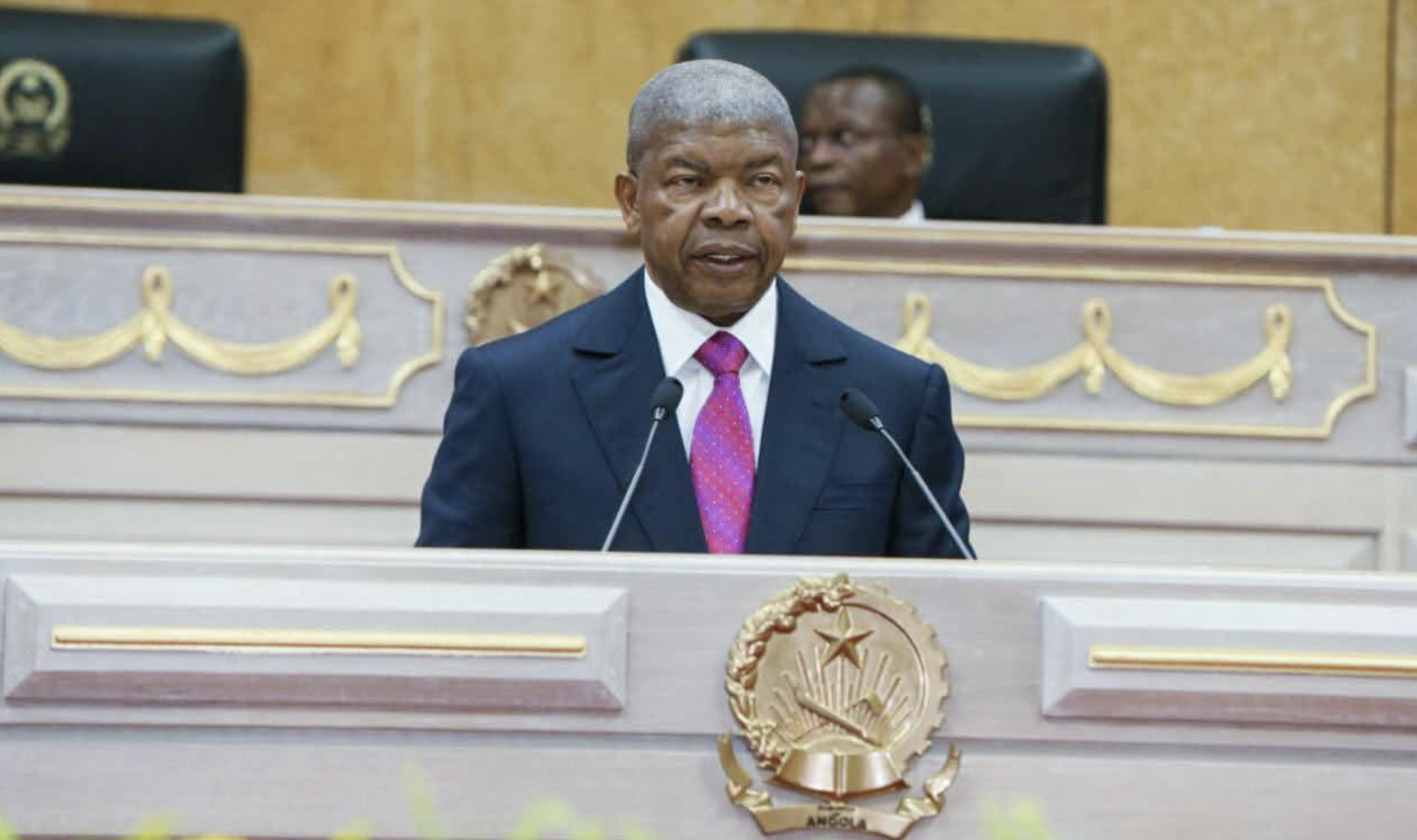

Angola’s president presented a case for economic renewal built on faster non-oil growth, lower public debt and renewed investor interest. The harder question is whether these gains can translate into productive investment, formal jobs and higher household incomes.
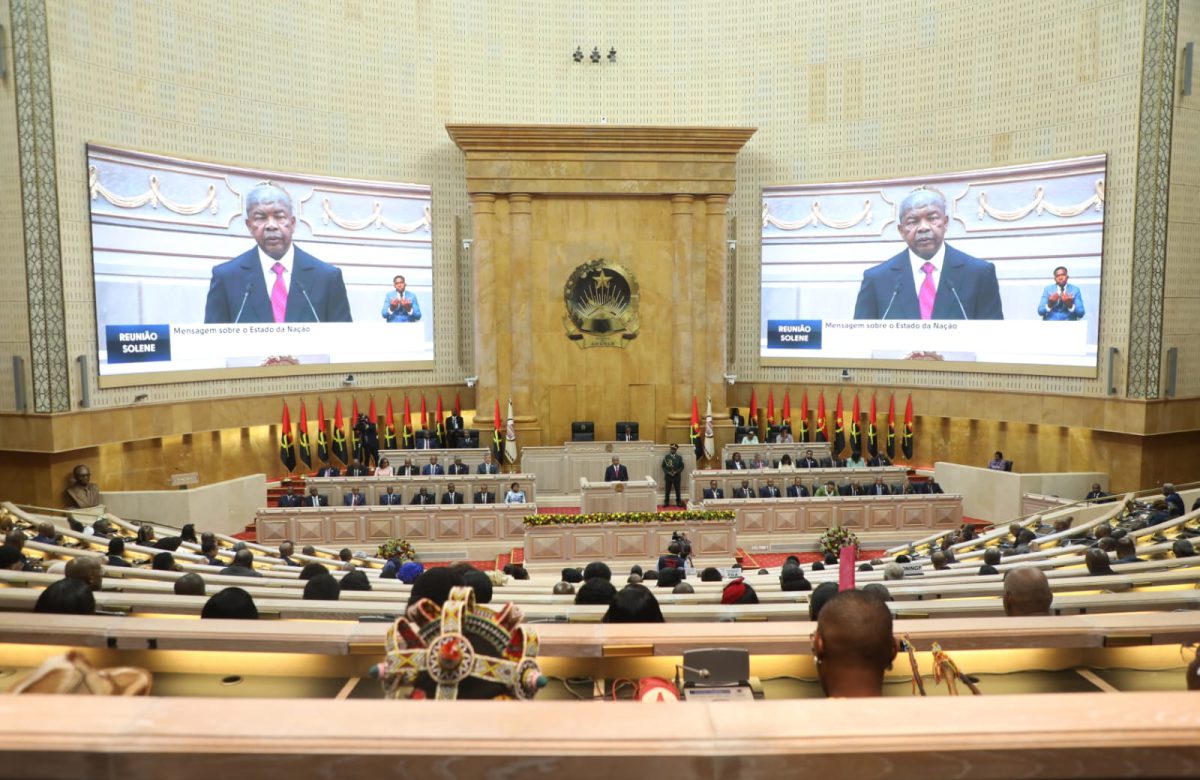
JOHANNESBURG — President João Lourenço used his 2026 State of the Nation address to present Angola as an economy moving beyond the worst of its macroeconomic instability and towards a more diversified model of growth. The figures he cited suggest a recovery is under way. But they also expose the distance between improved headline indicators and the structural transformation the country needs.
Gross domestic product grew by 5.3 per cent year on year in the first quarter of 2026, according to the figures presented in the presidential address, with the non-oil economy expanding by 6.2 per cent. Overall economic growth averaged 4 per cent over the preceding two years, while non-oil growth averaged 5.2 per cent. Nominal GDP was estimated at $141.7bn.
The figures support the government’s argument that activity beyond oil is becoming a more important driver of expansion. They do not, on their own, establish how broadly the benefits of growth are being distributed, how much new productive capacity has been created or whether the recovery can be sustained if oil production and prices disappoint.
That distinction matters for Angola, where petroleum has long shaped exports, public revenue and access to foreign currency. Lourenço acknowledged continuing weaknesses in the oil and gas sector, attributing its subdued performance to mature fields, recurring operational problems and lower investment. The government’s stated objective is to keep production above one million barrels a day. The challenge is to reduce the economy’s exposure to oil without allowing weakness in its traditional source of revenue to undermine the wider recovery.
Debt and inflation: progress, with qualifications
One of the strongest figures in the address was the reported decline in public debt from 115.9 per cent of GDP in 2020 to 51.2 per cent in 2026. Lourenço argued that the reduction should leave more public resources available for essential services rather than interest payments.
The improvement is significant in the government’s account of fiscal consolidation. Yet the debt-to-GDP ratio is not a complete measure of fiscal health. The address does not provide a detailed decomposition of how much of the decline reflects changes in nominal GDP, exchange-rate effects, debt repayment or other factors. Nor does the ratio alone establish the cost of servicing debt, the maturity profile of obligations or the fiscal room available for new spending.
Inflation has also eased. The president said the rate fell from 27.5 per cent in 2024 to 10.8 per cent in June 2026. This is a meaningful moderation in the pace of price increases, but it does not mean prices have returned to previous levels. For households, the practical test is whether wages and employment opportunities are improving sufficiently to restore purchasing power after years of pressure on living costs.
The address also reported a fall in unemployment from 31.5 per cent in 2024 to 21.3 per cent in the first quarter of 2026. That is an important indicator, but its interpretation depends on the underlying labour-market definitions and the quality of the jobs created. A lower unemployment rate does not by itself show how many people have secured stable, formal and adequately paid work.
Angola’s net international reserves stood at $16.2bn, equivalent, according to the address, to eight months of imports. The government also said the total financing made available to economic agents had doubled, from 4.4tn kwanzas in 2022 to 8.9tn kwanzas in May 2026. The figures point to stronger external buffers and a larger pool of financing. The next question is how much of that funding reaches viable businesses and results in additional production, exports and employment.
Diversification will be measured in farms and factories
The central economic question is whether non-oil growth can become a durable expansion in domestic production. Agriculture illustrates both the opportunity and the scale of the task.
According to the presidential address, 50.7 per cent of Angola’s employed population, about 6.4mn people, work primarily in agriculture, livestock, forestry and fisheries. The document records 3,323,242 family farms and 5,858 business farms, but says only 125 of the business farms were effectively in production.
The figures reveal a gap between the size of the agricultural workforce and the productive capacity of commercial farming. Expanding output will require more than access to land. Reliable transport, storage, irrigation, inputs, credit, processing facilities and access to markets will determine whether producers can raise productivity and supply industry and consumers consistently.
The government reported that the availability of certified seeds increased from 2,850 tonnes in 2023 to 6,930 tonnes in 2025, a rise of 143.2 per cent. That is a measurable input-side improvement. Its economic significance, however, ultimately depends on yields, post-harvest losses, production costs, food prices and the extent to which domestic supply can compete with imports.
The same principle applies to industrial policy. Diversification becomes more meaningful when it increases the share of goods produced and processed in Angola, strengthens local supply chains and generates employment beyond subsistence activity and the public sector. The address sets out a broad ambition, but the figures presented do not yet provide a complete assessment of productivity growth, formal job creation or the value added generated by new private investment.
Investment: commitments are not the same as capital deployed
Lourenço presented investment as a central instrument for expanding the non-oil economy. The address reported that foreign investment in non-oil sectors rose by 54 per cent compared with the preceding period. The document does not specify the comparison period in the passage cited, limiting the extent to which the increase can be assessed without further data.
The president also highlighted Angola’s international economic diplomacy, including the Lobito Corridor, which is intended to strengthen regional transport and logistics links and facilitate the movement of minerals, agricultural products and other goods. The strategic case is clear: infrastructure can connect producers to markets, reduce transport bottlenecks and make investment outside the oil industry more commercially viable.
But infrastructure announcements need to be assessed at different stages. Financing pledges, guarantees, signed contracts, disbursements and operational projects are not interchangeable. For investors, the relevant measures are whether funding has been released, construction is advancing, logistics costs are falling and businesses are using the infrastructure to increase trade.
The same scrutiny applies to the government’s wider investment agenda. Angola’s capacity to attract capital will depend not only on its natural resources and geographical position, but also on predictable regulation, access to foreign exchange, contract enforcement, reliable electricity and the ability of domestic firms to participate in new supply chains.
Anti-corruption and the credibility test
The address also presented anti-corruption measures as part of the effort to improve governance and the business environment. Lourenço cited legal reforms, judicial proceedings and the recovery or seizure of financial and physical assets. The document refers to approximately $13bn in assets seized or frozen in the period from 2022 to 2026.
That figure requires careful interpretation. Assets seized, frozen, subject to judicial proceedings or ordered to be confiscated are not necessarily the same as assets finally recovered and available to the public treasury. A credible assessment requires clarity about the legal status of the assets, the amounts actually returned to the state and how recovered funds have been used.
The distinction is important for investors as well as citizens. Anti-corruption policy can improve confidence only when enforcement is transparent, institutions apply the law consistently and public accounts make it possible to follow the money. The address sets out the government’s case for progress, but the figures cited should be read as official claims rather than an independent audit of the final fiscal impact.
Digital infrastructure and public services
The president also linked national development to digital infrastructure and improved public services. The address reports more than 1,300km of additional national broadband fibre infrastructure, free internet access points in all 18 provinces and an estimated eight million beneficiaries. It also refers to the National Cloud and a Government Data Centre.
These initiatives could improve connectivity and support digital public services, business development and access to information. Their impact will depend on affordability, network reliability, actual usage, cybersecurity and the ability of public institutions to deliver services digitally rather than simply move existing administrative processes online.
The same implementation question applies to health and education. The address reports 736 health facilities constructed between 2017 and the first quarter of 2026 and projects that more than 9.1mn pupils will be accommodated in the 2026–27 school year. These are relevant measures of infrastructure and planned capacity. They do not, by themselves, establish the quality of care, staffing levels, classroom conditions, learning outcomes or equitable access across provinces.
Angola’s international proposition
Lourenço’s message to the international community was that Angola is seeking to combine fiscal consolidation with economic diversification, investment in infrastructure and a broader role in regional trade. The country has identifiable advantages: natural resources, agricultural potential, a strategic Atlantic coastline and transport links that could connect inland production to regional and international markets.
The economic case will ultimately rest on execution. Lower public debt, slower inflation and faster non-oil growth can create more favourable conditions for investment, but they are not substitutes for higher productivity, stronger firms and employment that improves household living standards.
The most consequential measure of Angola’s progress will therefore not be the number of reforms announced or investment commitments secured. It will be whether capital is deployed, infrastructure becomes operational, domestic production becomes more competitive and more Angolans gain access to stable, productive work.
The 2026 address presents evidence of a macroeconomic recovery and a clear policy ambition. The next stage is to demonstrate that these gains are durable, broadly shared and capable of reducing the economy’s dependence on oil. That is the test facing Angola’s government, and the question international investors should continue to ask.