AfDB’s Sidi Ould Tah sets out strategy to close Africa’s $400bn financing gap
- CEO
- September 13, 2026
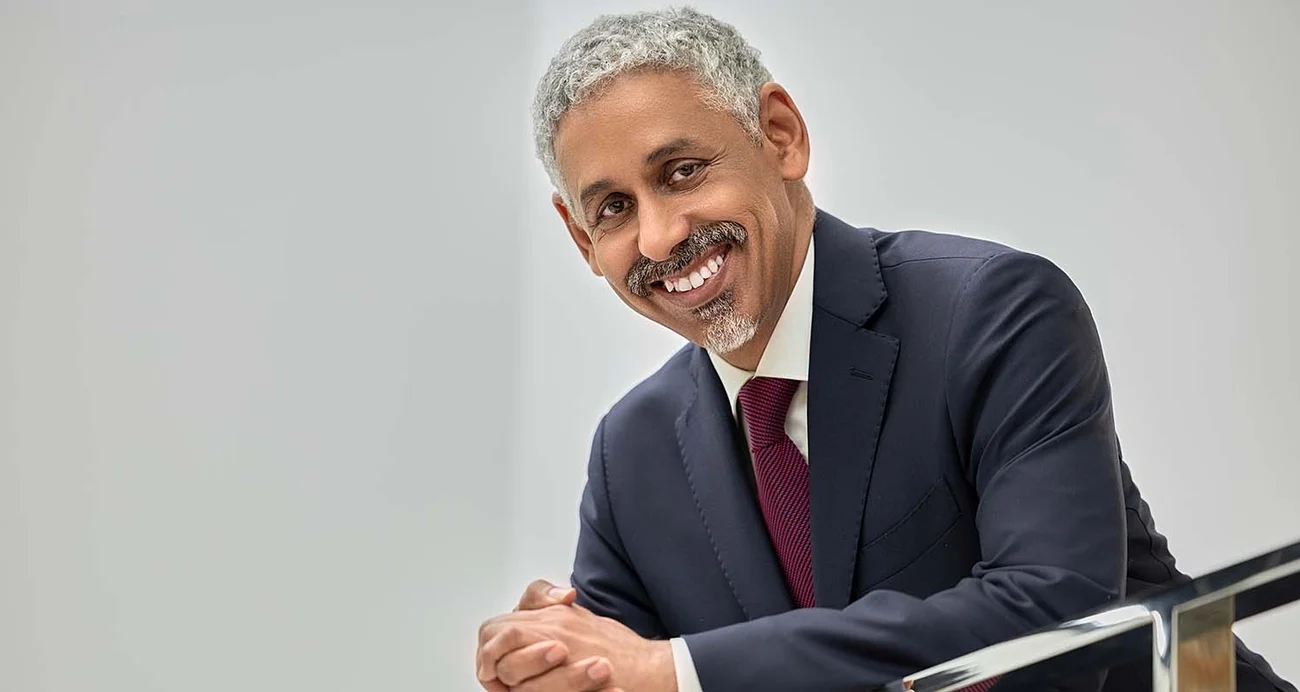

ABIDJAN — When Sidi Ould Tah was elected president of the African Development Bank Group on May 29, 2025, shareholders gave him more than a mandate to lead one of Africa’s most important development-finance institutions.
With more than 76 per cent of the vote, the strongest first-term electoral margin in the bank’s history, they also signalled expectations for a more ambitious approach to capital mobilisation, financial reform and Africa’s position in the global economy.
The timing is critical. Africa faces an annual development-financing gap of more than $400 billion, while governments are contending with elevated debt burdens, higher global borrowing costs, climate shocks and growing pressure to invest in energy, infrastructure, food production, industrial capacity and digital connectivity.
Ould Tah’s response is a strategic recalibration rather than a departure from the African Development Bank’s existing agenda.
The institution’s High 5 priorities, Light Up and Power Africa, Feed Africa, Industrialize Africa, Integrate Africa and Improve the Quality of Life, remain the foundation.
But the new president is seeking to concentrate the bank’s financial and institutional capacity around four priorities: expanding access to capital, reforming Africa’s financial systems, converting demographic growth into economic opportunity, and building climate-resilient infrastructure while increasing value addition to natural resources.
The first priority is arguably the most consequential for investors: mobilising and multiplying development finance rather than simply expanding lending.
Ould Tah has proposed a model in which the bank uses its balance sheet, guarantees and risk-mitigation instruments to crowd in private capital and other development-finance institutions. His ambition is significant: to turn every $1 of capital mobilised into $10 or more of productive investment.
That approach reflects a broader transformation in development finance. The question is no longer simply how much money multilateral banks can lend, but how effectively they can use relatively scarce public and concessional capital to reduce risk for institutional investors, commercial banks and private companies.
The African Development Bank has already expanded its financial capacity substantially, its authorised capital increased from approximately $94 billion in 2014 to $318 billion in 2024, more than tripling over a decade. Yet the scale of Africa’s infrastructure and development requirements means that a larger balance sheet alone will not close the financing gap.
The strategic question is therefore leverage.
Africa needs capital for roads, ports, electricity networks, railways, telecommunications, industrial parks and climate adaptation. But it also needs financing structures capable of making such projects bankable. Guarantees, blended finance, local-currency instruments and project-preparation facilities could become as important as conventional sovereign lending.
The second pillar, reforming and consolidating Africa’s financial institutions and developing its financial talent, addresses a less visible constraint. Fragmented capital markets, limited institutional capacity and dependence on foreign-currency financing increase the cost of investment.
Strengthening regional financial institutions and mobilising domestic savings could allow a greater share of African capital to finance African development.
Demographics add another dimension, Africa’s rapidly expanding population could create one of the world’s largest labour forces and consumer markets. But demographics are not automatically an economic dividend. Without jobs, skills, electricity, connectivity and productive investment, population growth can become a fiscal and political challenge rather than an engine of prosperity.
This makes the fourth pillar particularly important: infrastructure and value addition.
Africa remains a major producer of oil, gas, copper, cobalt, lithium, iron ore, gold and other commodities, yet much of the higher-value processing takes place outside the continent. The strategic opportunity is to move from exporting resources to developing domestic processing, manufacturing and regional supply chains.
That agenda is becoming increasingly relevant as global supply chains are reorganised around energy security, critical minerals and geopolitical resilience.
Countries able to combine natural resources with reliable electricity, efficient transport infrastructure, industrial capacity and predictable regulation will be better positioned to attract long-term capital.
Digital technology cuts across all four priorities. Ould Tah has identified the digital economy as an underlying enabler of the strategy, reflecting the growing importance of fintech, digital payments, artificial intelligence, telecommunications and data infrastructure in reducing transaction costs and expanding financial inclusion.
The challenge, however, is execution.
The African Development Bank operates across 54 regional member countries and 27 non-regional members, each with different fiscal conditions, political priorities and investment environments. A strategy based on leverage will require rigorous project selection, stronger risk management and measurable development outcomes.
Ould Tah’s mandate therefore comes with a clear financial test: whether the bank can convert its expanded balance sheet into a significantly larger pool of private and institutional capital for African projects.
If it succeeds, the institution could evolve from being primarily a provider of development finance into a more powerful capital-mobilisation platform for the continent.
That would represent a significant shift in Africa’s development-finance model. The continent does not simply need more money, it needs mechanisms capable of turning limited public capital into much larger pools of long-term private investment, and converting that investment into electricity, factories, infrastructure, jobs and productive capacity.
The credibility of Ould Tah’s presidency will ultimately be measured not by the scale of the strategy, but by the volume, quality and economic impact of the capital that reaches Africa’s projects.