The secret operation that took Lumumba’s children from Congo to Cairo
- Egypt
- September 9, 2026

In October 1960, three children of Congo’s first prime minister were secretly evacuated from Léopoldville. The operation reveals a little-known chapter of Pan-African solidarity, although some details still rely on oral testimony.
Special Report | AfricaHeadline
In a nutshell:
- Three of Patrice Lumumba’s children were evacuated from Léopoldville on October 28, 1960.
- The operation is attributed to Egyptian diplomat Mohamed Abdel Aziz Ishak.
- Gamal Abdel Nasser granted the family protection in Cairo.
- Testimonies and photographs document the operation, although some details have yet to be independently verified.
When three of Patrice Lumumba’s children were secretly flown out of Congo in October 1960, the newly independent country was on the verge of collapse. The prime minister was isolated, surrounded by enemies and restricted in his movements. Less than three months later, he would be assassinated.
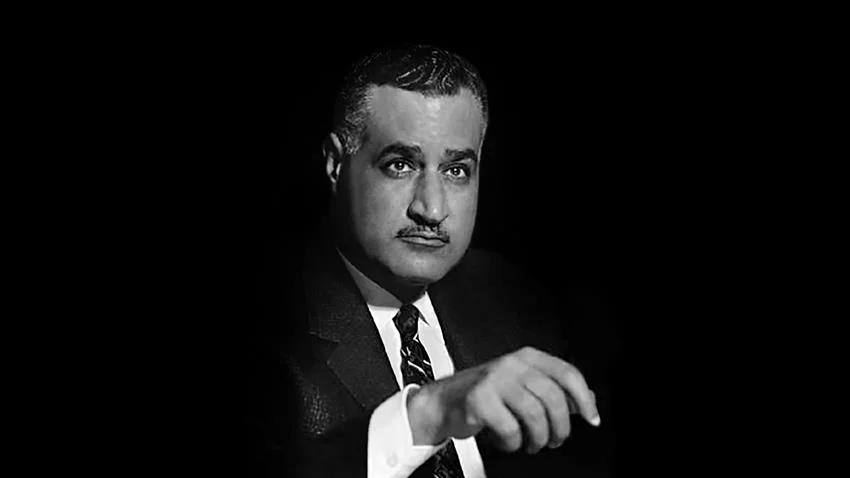
The evacuation of François, Guy-Patrice and Juliana Lumumba to Cairo remains one of the least-known episodes of the Congo Crisis. More than a family rescue mission, it demonstrated Egypt’s willingness under Gamal Abdel Nasser to turn Pan-African solidarity into tangible support for anti-colonial leaders and movements.
A prime minister under siege
Congo gained independence from Belgium on June 30, 1960, with Joseph Kasa-Vubu as president and Patrice Lumumba as prime minister. The new republic quickly descended into a crisis marked by military mutiny, Belgian intervention and the secession of Katanga and South Kasai.
On September 5, Kasa-Vubu announced Lumumba’s dismissal, the decision came amid a constitutional dispute, controversy over the government’s handling of the military crisis and growing Western hostility towards Lumumba’s turn to the Soviet Union for assistance. Lumumba responded by declaring the president removed, while parliament continued to recognise his authority as prime minister.
The confrontation opened the way for Colonel Joseph-Désiré Mobutu to intervene. On September 14, Mobutu announced the “neutralisation” of the country’s principal political leaders and temporarily transferred the administration to a College of Commissioners-General.
Lumumba’s residence in Léopoldville, now Kinshasa, was caught between two security cordons. Congolese troops controlled the outer perimeter, while peacekeepers from the United Nations Operation in the Congo maintained a protective presence around the house.
Although the UN had not formally placed him under house arrest, Lumumba was effectively confined. His family was also exposed to the hostility of forces seeking to remove him permanently from political life.
The secret evacuation
According to Escape to Cairo, a documentary podcast produced by Kerning Cultures, François, Guy-Patrice and Juliana Lumumba were taken out of Léopoldville on October 28, 1960.
The operation is attributed to Mohamed Abdel Aziz Ishak, an Egyptian diplomat and official of the Egyptian African Association who had established a relationship of trust with Lumumba.
Much of what is known about the mission comes from Bahgat Ishak, the diplomat’s son. His account is an important piece of oral history, but some of its details have not yet been corroborated by independent diplomatic or military records.
According to Bahgat, the operation was staged to look like a kidnapping, in an attempt to prevent Mobutu’s forces from realising that it was an organised evacuation. Ishak allegedly carried cases of whisky in his vehicle and handed out bottles at checkpoints to secure passage. The three children travelled hidden beneath blankets.
Their arrival at the airport was reportedly also tense. Danish officials, possibly connected to the UN contingent in Congo, are said to have questioned the children’s departure. Ishak then reportedly invoked his diplomatic status and sought the support of Egyptian officers to secure their passage.
Because these details rely principally on a family account recorded decades later, they should be understood as attributed testimony rather than fully corroborated fact.
Under Nasser’s protection
In Cairo, the children were initially taken in by the Ishak family. The diplomat’s wife, whom the Lumumba children called “Mama Zizi”, reportedly welcomed them without having been told all the details of the operation in advance.
The children subsequently came under the protection of President Gamal Abdel Nasser, an Associated Press photograph dated December 12, 1960, shows François and Guy-Patrice with the Egyptian leader’s children. The Congolese siblings were attending a French school in Cairo at the time.
Pauline Opango Lumumba, the prime minister’s wife, also later settled in Egypt under the protection of Nasser’s government. Some accounts claim that the Egyptian president sent an aircraft to evacuate her from Congo. That detail, however, has not been verified to the same standard as the departure of the three children.
Not all of Lumumba’s children took part in the same operation or reached Egypt under the same circumstances. The family’s departure should therefore be understood as a series of separate movements rather than a single collective evacuation.
Lumumba’s fate
As his children settled in Cairo, Lumumba tried to escape his political confinement. On the night of November 27, he left his residence and attempted to reach Stanleyville, now Kisangani, where his ally Antoine Gizenga was establishing a rival government.
Lumumba was captured on December 1 while attempting to cross the Sankuru River. After being detained and subjected to abuse, he was transferred to Camp Hardy in Thysville.
On January 17, 1961, Lumumba, Maurice Mpolo and Joseph Okito were flown to Katanga, the secessionist territory controlled by Moïse Tshombe. Congolese authorities decided on the transfer amid intense Belgian pressure and intervention.
Documents examined in later investigations showed that Belgium’s minister for African affairs, Harold d’Aspremont Lynden, supported sending Lumumba to Katanga despite the evident threat the territory posed to his life.
The three prisoners were tortured and executed that night by a firing squad composed of Katangese personnel, with Belgian officers playing an operational role. Julien Gat commanded the firing squad, while police commissioner Frans Verscheure exercised authority at the execution site.
Their bodies were buried, later exhumed, dismembered and dissolved in acid. Belgian officer Gérard Soete helped destroy the remains and kept teeth taken from Lumumba’s body. Belgium returned one of them to the family in June 2022, more than six decades after the assassination.
The CIA, Belgium and different levels of responsibility
Subsequent investigations established that Lumumba’s elimination cannot be explained solely by internal Congolese rivalries.
The US Senate’s Church Committee concluded in its 1975 report, Alleged Assassination Plots Involving Foreign Leaders, that the CIA had devised plans to kill Lumumba, including an operation involving poison.
The inquiry did not, however, establish that the US intelligence agency participated directly in the January 17 execution. A distinction must therefore be made between the CIA’s assassination plots and the physical killing of Lumumba in Katanga.
A Belgian parliamentary commission, which completed its investigation in 2001, concluded that members of the Belgian government and other Belgian nationals contributed to the circumstances that led to Lumumba’s death. It did not find that the Belgian government had issued a formal execution order, but acknowledged an “irrefutable portion of responsibility” and assigned Belgium moral responsibility.
In 2002, Brussels formally apologised to Lumumba’s family and the Congolese people. The return of the tooth preserved by Soete offered a symbolic measure of reparation in 2022, but fell short of ending demands for justice.
In March 2026, a Brussels court ordered former diplomat Étienne Davignon to stand trial over his alleged involvement in crimes connected to Lumumba’s unlawful detention and transfer. Davignon died in May before the trial could take place, ending criminal proceedings against the last surviving Belgian suspect.
Pan-Africanism as protection
Nasser’s decision to protect Lumumba’s children was not an isolated gesture. Following Egypt’s 1952 revolution and the nationalisation of the Suez Canal in 1956, Cairo sought to establish itself as a centre of anti-colonial activism, non-alignment and Afro-Arab cooperation.
Nasser maintained relationships with leaders such as Ghana’s Kwame Nkrumah and provided African liberation movements with political support, training, diplomatic space and access to the media.
Seventeen African countries gained independence in 1960. The Congo Crisis nevertheless demonstrated that formal sovereignty did not eliminate the influence of former colonial powers or the pressure exerted by rival Cold War blocs.
By sheltering Lumumba’s children, Nasser protected a family in danger while strengthening Egypt’s position as a champion of African liberation. Solidarity and diplomatic strategy went hand in hand.
An African story that remains incomplete
Juliana Lumumba spent part of her childhood in exile, later studied in Paris and returned to the Democratic Republic of Congo, where she held government positions. She also became one of the leading voices in the campaign to preserve her father’s memory and recover his remains.
With no body and no grave for decades, Juliana described Lumumba as “a hero without a grave”. The return of his tooth in 2022 finally made a symbolic funeral possible, but it did not settle the question of responsibility for his assassination.
The operation that took three of Lumumba’s children to Cairo remains partly obscured by gaps in the documentary record. Their evacuation, presence in Egypt and protection by Nasser are supported by testimonies and photographic evidence. Other details, the whisky handed out at checkpoints, the confrontation at the airport and the alleged aircraft sent for Pauline Lumumba, continue to rely on oral or indirect accounts.
That caution does not weaken the story. In a Congo contested by domestic, colonial and geopolitical interests, a discreet diplomatic operation allowed three children to escape the persecution that would culminate in their father’s assassination less than three months later.
The episode endures as a tangible, if little-known, expression of Pan-African solidarity: while foreign powers plotted to remove Lumumba from history, Cairo helped protect his children, and, through them, part of his memory.