Angolan Banks face reported wave of Cyberattacks amid rising Phishing campaigns
- Science & Tech
- June 30, 2026
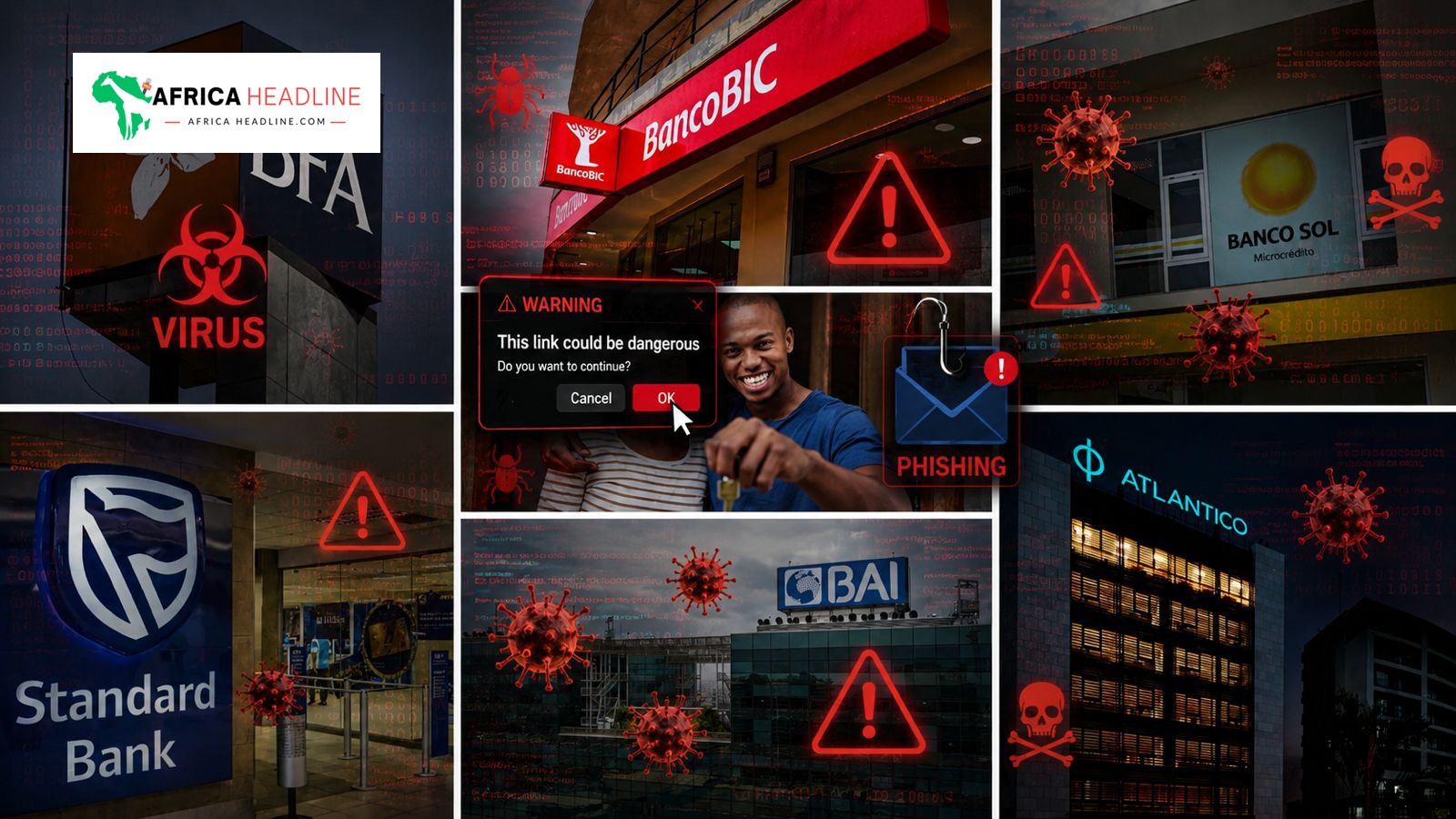

LAGOS – Several institutions within Angola’s banking sector are reportedly facing a wave of cyberattacks, according to information circulating among cybersecurity professionals and banking customers. Among the banks cited are Banco KEVE, Banco BIC, Banco Atlântico and Banco de Poupança e Crédito (BPC), although neither the financial institutions nor the relevant authorities have officially confirmed the scope or impact of the alleged incidents.
Preliminary reports suggest that attackers are employing a combination of sophisticated cyber intrusion techniques, including Trojan malware, network sniffing tools and highly targeted phishing campaigns. The apparent objective is to steal customers’ online banking credentials, personal information and other sensitive financial data.
One of the tactics reportedly being used involves the distribution of malicious links through messaging applications and social media platforms.
These messages allegedly incorporate images of senior state officials and government figures to create an appearance of legitimacy and increase the likelihood that recipients will click on the links. Once activated, victims may be redirected to fraudulent websites or unknowingly install malware that compromises their devices, enabling cybercriminals to gain unauthorized access to banking credentials and financial information.
Cybersecurity experts advise customers to avoid opening unsolicited links or attachments, verify the authenticity of communications received via digital channels, and access banking services only through official websites and mobile applications.
They also recommend enabling multi-factor authentication, keeping devices and security software up to date, and immediately reporting any suspicious activity to their financial institution.
As of publication, Angolan authorities and the banks reportedly targeted have not released an official assessment of the incidents or confirmed the extent of any financial losses. If verified, the attacks would underscore the growing sophistication of cyber threats facing Africa’s financial sector and highlight the increasing importance of investment in cyber resilience, fraud prevention and public awareness.